



Explorer
Nepal launches its first satellite from USA
NepaliSat-1 is a low orbit satellite which will be in the 400-km distance from the Earth's surface. It will be stationed at the International Space Station for a month and then it will be sent to orbit the earth, according to NAST.
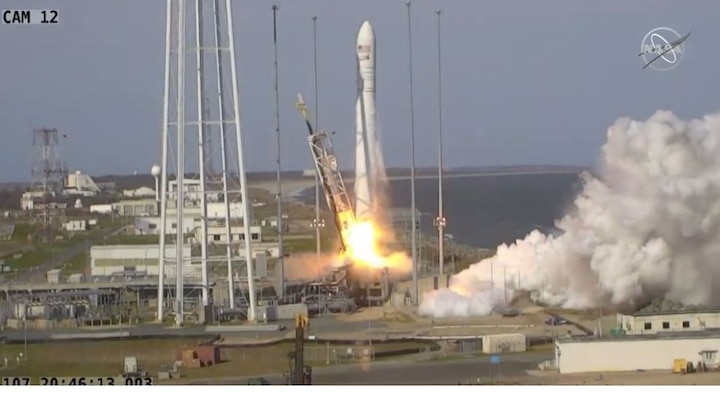
Photo tweeted by @IamBijaya7.
Kathmandu: Nepal Thursday successfully launched its first satellite NepaliSat-1 into space from America, evoking unbridled excitement among the people and scientists. The satellite developed by the Nepalese scientists was launched at 2:31 am (Nepal time) from Virginia in United States, according to Nepal Academy of Science and Technology (NAST). Two Nepali scientists, Aabhas Maskey and Hariram Shrestha who are currently studying at Japanese Kyushu Institute of Technology, developed the satellite under the BIRDS project of their institute. Prime Minister K P Sharma Oli congratulated all the scientists and institutions involved in the development of the satellite. He said it was a matter of prestige for the country to have its own satellite. Spokesperson for NAST Suresh Kumar Dhungel said they invested in the satellite in a bid to open new paths for space engineering in the country. He said with the help of NepaliSat-1, ground station located at NAST office will communicate and gather images of the geographical area of the country. NepaliSat-1 is a low orbit satellite which will be in the 400-km distance from the Earth's surface. It will be stationed at the International Space Station for a month and then it will be sent to orbit the earth, according to NAST. The satellite will take photographs on a regular basis to gather geographical information of the country. The satellite has a Nepali flag and the NAST logo. It also has the name of the scientists involved in the making of the satellite. Nepal Academy of Science and Technology has invested nearly Rs 20 million for the satellite that weighs 1.3 kilograms, a small satellite with limited capability. Nepal's first entry into space has brought huge excitement among people and scientists. NAST initiated the launch of the country's own satellite under the BIRDS project of the Japanese Kyushu Institute of Technology. The BIRDS project has been designed in association with the United Nations and aims at helping countries launch their first satellite.
Top Headlines
World

‘Americans Said No To War’: Iran’s Ghalibaf Welcomes US Midterm Results
World

Democrats End Decades Of Republican Dominance In Texas, Make Historic Gains In Kansas
World

Trump Shares ‘VETO’ Hat After US Midterm Setback, Says He's Ready To ‘Accept Results’
World

Democrats Win Majority In US Midterm Elections, Multiple Governors' Offices Turn Blue











See Today's Weather 
powered by