Australia To Have More Missiles, Nuclear-Powered Submarines As It Faces Greater Security Challenges
Australia released its new National Defence Strategic Review in which it said Canberra plans to enhance ties with India while China continues to threaten the global rules-based order in Indo-Pacific.
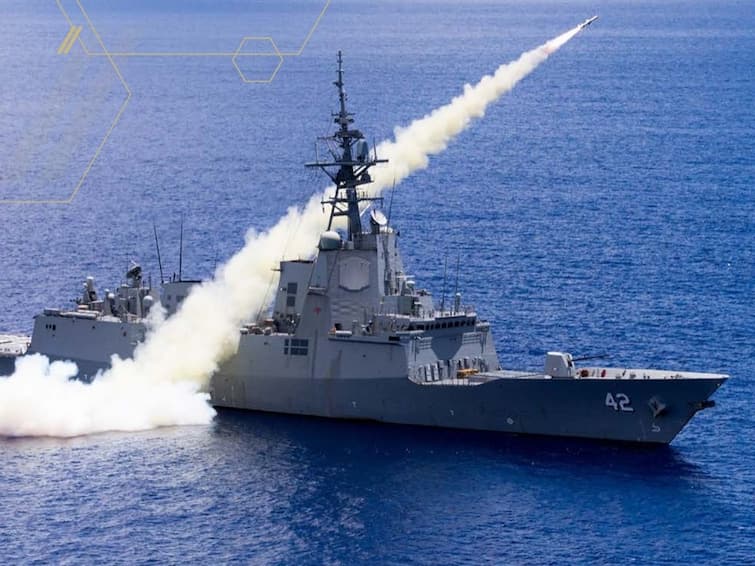
Australia plans to overhaul its defence capabilities from the scratch by building more modern-age powerful missiles and submarines looking at a “radically different” world from the time of the Second World War, according to Canberra’s new defence policy.
In a major announcement Monday, the Anthony Albanese government released its new National Defence Strategic Review 2023 that will seek to take the country’s defence budget to $19 billion thereby doing away with the “strategy of denial” and embracing a more offensive stance to make Australia “more secure”.
“It is the most ambitious review of Defence’s posture and structure since the Second World War…Since the end of the Second World War, there have been innumerable strategic papers, defence reviews and white papers aimed at guiding Defence’s contribution to our security. During this period, Australia has faced significant security risks, but our current strategic circumstances are now radically different,” the Defence Policy document said.
It also said, “Major power competition involves threats and risks far beyond and quantifiably different to any faced since the end of the Second World War. Australia’s current strategic circumstances require a new strategic conceptual approach.”
According to Australia’s new defence assessment, China has been modernising its military at a blistering pace and its military build-up is currently “the largest and most ambitious of any country since the end of the Second World War.”
While Canberra plans to work together with China on issues such as climate change and others, it will continue to stand up to Beijing’s increasing military belligerence in the Indo-Pacific region.
“This build-up (in China’s military) is occurring without transparency or reassurance to the Indo-Pacific region of China’s strategic intent. China’s assertion of sovereignty over the South China Sea threatens the global rules-based order in the Indo-Pacific in a way that adversely impacts Australia’s national interests. China is also engaged in strategic competition in Australia’s near neighbourhood,” the document said.
The defence review said, for the first time in 80 years, Australia has decided to “go back to the fundamentals”.
“Australia’s strategic circumstances and the risks we face are now radically different. No longer is our alliance partner, the United States, the unipolar leader of the Indo-Pacific. Intense China-United States competition is the defining feature of our region and our time. Major power competition in our region has the potential to threaten our interests, including the potential for conflict. The nature of conflict and threats have also changed,” it added.
Inevitably, the AUKUS partnership, which seeks to build nuclear-armed submarines for Australia in collaboration with the US and UK, was accorded the topmost priority.
“The ambition of the AUKUS partners is to support technological transfers as well as break down barriers for intellectual property transfer, domestic manufacturing, and domestic maintenance of key weapons, technology and capabilities. This requires dedicated senior-level focus,” it said.
'Rise Of Missile Age' Pushes Australia To Build All Forms Of Missiles
According to the Australian government, with the rise of ‘missile age’ in modern warfare Australia can no longer continue to push away a “tough” defence strategy even as it plans to build an "enhanced, all-domain, integrated air and missile defence capability".
The Albanese government now plans to obtain long-range missiles, surface-to-air missiles, precision strike missiles, long-range anti-ship missile and joint strike missile, among others.
"The rise of the ‘missile age’ in modern warfare, crystallised by the proliferation of long-range precision strike weapons, has radically reduced Australia’s geographic benefits, the comfort of distance and our qualitative regional capability edge," the document noted.
It also said, “To meet the demands of the deteriorating security environment, Defence must invest in the targeting systems and processes required to support the use of advanced and long-range weapons, undersea warfare, and integrated air and missile defence. Existing plans should be accelerated including development of key supporting systems and processing, exploitation and dissemination of intelligence.”
Indo-Pacific The Most Important Geostrategic Region In The World
Under Indo-Pacific, Australia said while AUKUS will be a priority, enhancing ties with India and Japan will also be given substantial importance.
Ties with New Delhi and Tokyo will also be given strategic heft under the Quad, or Quadrilateral Security Dialogue, in which Australia is a member along with the US and the UK.
“External approaches have included measures such as: the adoption of the strategic framework of the Indo-Pacific; expanding regional strategic multilateral, trilateral and bilateral partnerships, including the reinstatement of the Quad partnership with Japan, India and the United States; enhancing United States Alliance force posture arrangements in Australia; capability development being pursued through AUKUS; enhancing regional military exercises; and a substantially heightened focus for Australian diplomacy in the Pacific and Southeast Asia,” it said.
It added, “Australia also needs to continue to expand its relationships and practical cooperation with key powers, including Japan and India, and invest in regional architecture.”
Before You Go
BREAKING NEWS: Champat Rai and Anil Mishra Get Clean Chit in Ram Temple Donation Case

Top Headlines