Asim Munir Beside Shehbaz Sharif In Talks With Xi Jinping, Pakistan Army’s Grip On Power Comes To Fore Again
During Pakistan PM Sharif's China visit, Army Chief Munir's prominent presence alongside him in meetings with President Xi highlighted the Pakistani military's significant influence in country's affairs.


In a significant development for the "all-weather strategic cooperative partnership," Pakistan's Army Chief Field Marshal Asim Munir met with Chinese President Xi Jinping for the first time since assuming his role. The meeting, which took place on Tuesday, was part of a larger delegation led by Pakistani Prime Minister Shehbaz Sharif. The two sides engaged in comprehensive discussions on a range of bilateral and regional issues, according to Deputy Prime Minister and Foreign Minister Ishaq Dar, who was also part of the delegation.
Munir’s presence in the delegation to the Shanghai Cooperation Organisation (SCO) summit and the subsequent Chinese military parade is a notable marker in the evolving relationship. His meeting with President Xi contrasts with his previous visit in July, where he met with Vice President Han Zheng but not the Chinese head of state, unlike his predecessor, General Qamar Javed Bajwa. This latest interaction also follows a recent and rare lunch hosted by US President Donald Trump for Munir, an event that had reportedly "raised eyebrows in China" given the close ties between Beijing and Islamabad.
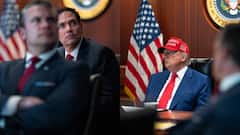
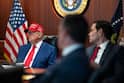
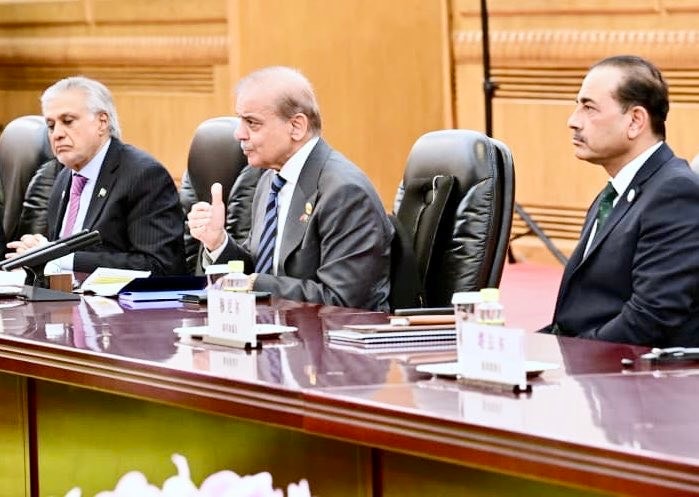
Sharif travelled to China for the SCO summit held between 31 August and 1 September. He is also expected to attend the Victory Parade in Beijing on 3 September. On Tuesday, 2 September, he held bilateral talks with Xi Jinping, where both Munir and Pakistan’s Deputy Prime Minister Ishaq Dar were seen seated with him.
Focus on Strengthening Pak-China 'Shared Future'
During the talks, Xi emphasised the importance of a strong China-Pakistan relationship in the face of rapid global changes. According to China's state-run Xinhua news agency, he said, "a strong China-Pakistan relationship is conducive to safeguarding regional peace and development." He also called on both nations to "accelerate building an even closer China-Pakistan community with a shared future in the new era" to benefit their peoples and "set up a model for the broader neighbourhood."
President Xi further stated that China is "ready to work with Pakistan to build upgraded versions of the China-Pakistan Economic Corridor and the China-Pakistan Free Trade Agreement." He also expressed hope that Pakistan would "take effective measures to ensure the safety of Chinese personnel, projects and institutions in Pakistan."
Shehbaz Sharif, on his part, hailed China's Global Governance Initiative (GGI) as being "of great significance for world peace, development and stability." He affirmed Pakistan's full support for the initiative and its commitment to "work actively to implement it." Sharif also reiterated Pakistan's unwavering adherence to the "one-China principle" and his country's desire to "further strengthen friendship between the two countries and advancing cooperation in all fields." He promised to "spare no effort in ensuring the safety of all Chinese personnel, projects and institutions in Pakistan."
According to the state-run Associated Press of Pakistan (APP) news agency, both sides agreed that their relationship was "unique and unparalleled" and that this should be "reflected in their enhanced bilateral cooperation." They also discussed "important regional and global developments" and committed to "continue close cooperation." Sharif reaffirmed his commitment to the next phase of the upgraded China-Pakistan Economic Corridor (CPEC) and its five new corridors, while also appreciating "China’s unflinching support for Pakistan’s territorial integrity, sovereignty, and socio-economic development."
President Xi confirmed China's continued assistance to Pakistan in all areas of economic growth and development, noting that the two countries are "now ushering in the second Phase of the CPEC that would focus on Pakistan's most important economic sectors." The meeting concluded with Prime Minister Sharif renewing his invitation for President Xi to visit Pakistan next year, a visit that would coincide with the 75th anniversary of the establishment of diplomatic relations between the two nations.
Army’s Dominance in Pakistan
Observers have long pointed out that Pakistan’s democratic governments have functioned under the shadow of its powerful military. The latest optics in Beijing have only reinforced that perception. Even in the past, the army has held sway over governance, with civilian administrations often struggling to exercise independent authority.
The trend was visible earlier as well when, following Operation Sindoor — a military setback for Pakistan against India — US President Donald Trump invited General Munir, not the civilian leadership, to lunch at the White House. Despite facing defeat in the operation, Munir was promoted to the rank of Field Marshal and awarded Pakistan’s second-highest gallantry medal, sparking ridicule that he had effectively decorated himself.
China’s Strategic Importance
China remains a key partner for Pakistan, with ties ranging from defence supplies to infrastructure investments under the Belt and Road Initiative (BRI). Reports also highlight Beijing’s support to Islamabad during Operation Sindoor, extending assistance in satellite imagery and communication.
For Beijing, Pakistan remains a critical ally, and Xi Jinping has sought to frame the relationship as one of deep trust and cooperation. The SCO summit also saw Indian Prime Minister Narendra Modi meet Xi Jinping, where he emphasised “mutual trust and sensitivity” as essential to India-China ties. Xi, during that exchange, described the two neighbours not as adversaries but as partners.


Top Headlines