‘No Religion Teaches Us To Harm Nature’: Ex-SC Judge Abhay Oka Breaks Silence On Firecracker Ban Debate
Former Supreme Court judge Abhay Oka says no faith justifies harming the environment, urging judges to rise above religious sentiments to protect citizens’ rights and ecological balance.

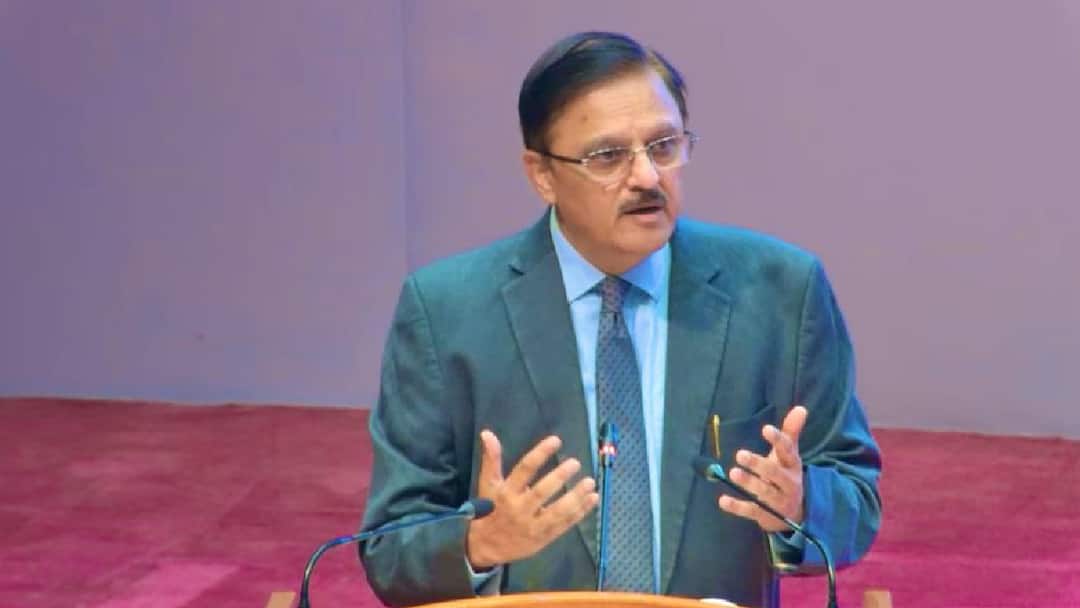
Former Supreme Court judge Justice Abhay S. Oka, who headed the bench that ordered a year-round ban on firecrackers in Delhi-NCR, has spoken publicly after the top court recently allowed the use of “green crackers” during Diwali. Breaking his silence, Justice Oka said no religion in the world condones the destruction of nature.
Delivering a lecture titled “Clean Air, Climate Justice and We – Together for a Sustainable Future”, organised by the Supreme Court Bar Association, Justice Oka urged judges to uphold constitutional duties without being influenced by popular or religious sentiments.
“Judges should not be swayed by religious or emotional appeals if they genuinely wish to safeguard the fundamental rights and duties guaranteed by the Constitution,” he remarked.
‘No Religion Allows Destruction of Nature’
Justice Oka stressed that practices such as bursting firecrackers, immersing idols in water bodies, or using loudspeakers are not recognised as essential religious acts under constitutional protection. He said pollution is too often justified in the name of religion, a worrying trend that must be questioned.
“There is a growing tendency to harm the environment in the name of faith,” he observed. “But if we truly study any religion, we find they all teach compassion, coexistence and the protection of nature. None of them encourage environmental damage or cruelty to living beings in the name of celebration.”
He added that the root cause of India’s environmental crisis lies in the failure of both citizens and the state to perform their fundamental duties under Article 51A of the Constitution.
‘Crackers Are Not Limited to Any One Religion’
Although Justice Oka usually avoids commenting on cases he has adjudicated, he made an exception to speak about the issue of firecrackers. “I said I would not talk about my judgments, but I must refer to firecrackers,” he said.
He pointed out that the use of firecrackers cuts across all religions. “Firecrackers are not confined to Diwali or Hindu festivals alone. People burst them on New Year’s Day, during weddings and other celebrations across communities,” he said.
Then came a question that struck at the core of the debate: “Can anyone honestly claim that bursting firecrackers is an essential religious practice protected by our Constitution? Festivals are meant to bring happiness and togetherness, but where is the joy in causing distress to the elderly, the sick and to animals?”
Idol Immersion and Water Pollution
Turning to another pressing concern, Justice Oka urged people to reconsider how certain traditions affect the environment. “Do our religions really ask us to pollute rivers by having thousands take a dip or by immersing idols made of harmful materials?” he asked.
“Visit Mumbai’s beaches after Ganpati visarjan,” he said. “The damage is visible – plaster of Paris idols, paint residues and debris choking our water bodies. This is not limited to one festival; it happens across many religious events.”
He recalled how some judicial orders in the past had permitted environmentally harmful practices. “One High Court allowed the making of idols taller than six feet using plaster of Paris, in clear violation of the Central Pollution Control Board’s guidelines. These idols were then immersed in the sea, rivers and lakes, causing significant pollution,” he said.
Still, he praised civic authorities for setting up artificial ponds for idol immersions, calling them a “silver lining”. However, he regretted that the public has yet to fully embrace such eco-friendly alternatives.
‘No Faith Permits Loudspeakers or Noise Pollution’
Justice Oka also spoke about noise pollution, noting that celebrations across all religions have become increasingly noisy. “We use loudspeakers that make buildings and vehicles vibrate. I do not believe any religion endorses that,” he said. Citing a Bombay High Court judgment – upheld by the Supreme Court – he explained that using loudspeakers for religious purposes, such as the azaan, is not protected under Article 25 as an essential religious practice.
“Why do we need blaring music to celebrate? Can we not recognise that it harms people, especially the elderly and the infirm? What joy is there in celebrations that cause discomfort and pain to others?” he asked.
Top Headlines