Explorer
Heron Drone: IAF's UAV which tracked Pak fighter jets, enemyradars while Mirage jets bombarded JeM camps
It is capable of Medium Altitude Long Endurance (MALE) operations of up to 52 hours' duration at up to 10.5 km (35,000 ft). An advanced version, the Heron TP, is also known as the IAI Eitan.
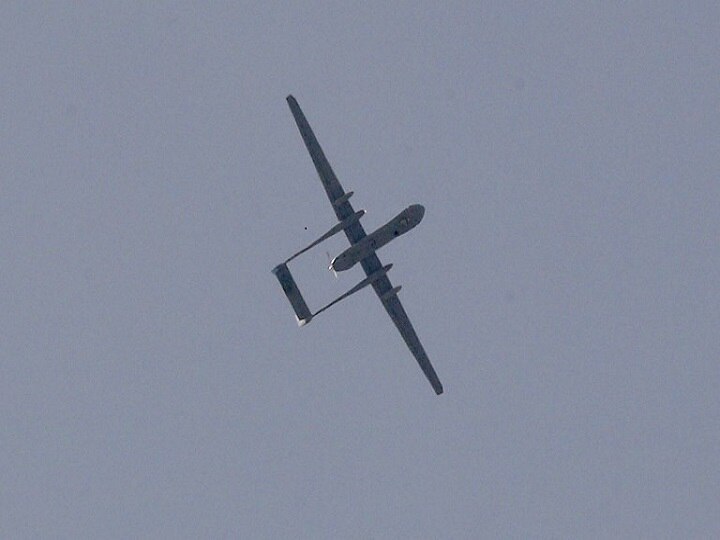
File image/ AFP
New Delhi: The Indian Air Force Mirage fighter jets in the early hours of Tuesday morning carried out precision aeriel strikes to bombard JeM terror camps well within Pakistan teritory, killing more than 200 Jaish-e-Mohammad terrorists. The strikes conducted by the Indian Air Force is seen as a retaliatory step by our security forces for avenging the death of our CRPF soldiers in the dastardly terror attack in Pulwama a fortnight ago. The clinical execution of the arieal strikes by Mirage jets could only be possible due to the activation of Netra Airborne EW&C and deployment of Heron drone to keep an eye on Pakistan Air Force jets and anti-aircraft radars during the strikes. The IAF deployed its Netra AEW&C and Heron UAV- which are termed as ‘Eye in the Sky’ – to monitor the movement of Pakistan Air Force jets and anti-aircraft radars installed across the LoC on Tuesday. Here is all you need to know about the Heron Drone The IAI Heron (Machatz-1) is a medium-altitude long-endurance unmanned aerial vehicle (UAV) developed by the Malat (UAV) division of Israel Aerospace Industries. It is capable of Medium Altitude Long Endurance (MALE) operations of up to 52 hours' duration at up to 10.5 km (35,000 ft). An advanced version, the Heron TP, is also known as the IAI Eitan. The Heron navigates using an internal GPS navigation device, and either a pre-programmed flight profile (in which case the system is fully autonomous from takeoff to landing), manual override from a ground control station, or a combination of both. The Heron can carry an array of sensors, including thermographic camera (infrared) and visible-light airborne ground surveillance, intelligence systems (COMINT and ELINT) and various radar systems, totaling up to 250 kg (550 lb). The payload sensors communicate with the ground control station in real time, using either direct line of sight data link, or via an airborne/satellite relay. Like the navigation system, the payload can also be used in either a fully pre-programmed autonomous mode, or manual real-time remote operation, or a combination of both.
Related Video
Delhi News: Why Bulldozer Action Was Conducted at Night? DCP Nitin Valson Explains Key Reasons
Follow Breaking News on ABP Live for more latest stories and trending topics. Watch breaking news and top headlines online on ABP News LIVE TV
Top Headlines
Cities

Delhi HC Issues Big Directive On Survey Of Encroachments Around Jama Masjid-Check Details
Jammu and Kashmir

Encounter Breaks Out Between Security Forces & Terrorists In Jammu's Kathua
Cities

Fadnavis Cracks Down On BJP’s Local Tie-Ups With Congress, Orders Disciplinary Action
India

‘Surprising And Shocking’: Owaisi On SC Bail Refusal For Umar, Sharjeel











See Today's Weather 
powered by

Justin M Bharucha
Opinion