Vande Mataram At 150: A Bengal Ballad Betrayed By National Blame Games


As India marks 150 years since the composition of Vande Mataram in the 1870s, first penned by Bankim Chandra Chattopadhyay and later embedded in his 1882 novel Anandamath, the song stands as a poignant emblem of resistance and cultural revival. Yet, recent parliamentary proceedings, ostensibly celebrating this milestone, devolved into a partisan spectacle, where historical reverence gave way to mutual accusations. This op-ed dissects the song's profound Bengal origins, its fraught national evolution, the nuanced roles of key figures like Rabindranath Tagore and the Indian National Congress, and the regrettable superficiality of today's discourse.
Far from honouring Bankim's vision, the debate exposed a failure to engage with the song's complexities, reducing it to a tool for scoring political points.
The Bengal Heartbeat: Bankim’s Motherland in Turmoil
Long before Vande Mataram was elevated to the status of a national emblem, it was a distinctly Bengali cry of anguish. Bankim Chattopadhyay, then a deputy magistrate navigating the contradictions of colonial service, wrote it under the shadow of Bengal’s historical wounds, especially the famine-ravaged landscape that had exposed the cruelty of British rule. In Anandamath, where the song finds its dramatic setting, ascetic warriors rise against oppression, and the motherland appears not as an abstract India but as Banga Mata: a goddess shaped by Bengal’s rivers, forests, and sanctuaries.
Bankim’s imagination was anchored in real rebellions like the Sannyasi uprising, where monks and peasants resisted exploitative taxes. His invocation, “Mother, rich with thy streams and forests”, echoes a Bengal that was both fertile and shattered. Yet the song’s later nationalisation has flattened these textures. Its Sanskritised diction, once natural to the 19th-century Bengali ear, today feels distant to many modern readers, mirroring how its regional anguish is often forgotten.
As we mark 150 years of Vande Mataram, remembering its origins is essential. Bankim wasn’t crafting a pan-Indian slogan; he was defending a wounded Bengal whose dignity demanded a voice.
The Stanza Schism: Between Reverence and Religious Fault Lines
Vande Mataram’s rise from a regional hymn to a national symbol has always carried the weight of its own internal tensions. At the heart of this lies the debate over its later stanzas, verses that transform the motherland into a Durga-like goddess, armed with “ten million swords” and voiced by “seven crore throats.” For many freedom fighters, these were soaring metaphors of resistance. But for Muslim leaders in the 1920s and ’30s, they posed a theological challenge, invoking imagery that seemed to sanctify the nation through a distinctly Hindu iconography. In a country already negotiating its fragile pluralism, these concerns could not be dismissed as mere political posturing.
The flashpoint arrived in 1937, when the Congress Working Committee, navigating electoral alliances with the Muslim League, decided that only the first two stanzas, those celebrating the land’s rivers, forests and abundance, would be used in public settings. This was not an act of erasure but one of political craftsmanship. The leadership recognised that an anthem must inspire without alienating, and that mass mobilisation required emotional resonance unclouded by sectarian suspicion.
That sensitivity resurfaced during the framing of the Constitution. Seth Govind Das and others argued passionately for adopting the full song, citing its defiant spirit during the freedom struggle and its performance at the transfer-of-power ceremony in 1947. Yet fractures were visible: some Assembly members notably entered the hall only after the song was sung, signalling unresolved discomfort. Rajendra Prasad’s 1950 decision to accord Vande Mataram “equal status” with Jana Gana Mana without making it compulsory became a subtle but telling compromise. Even Nehru, acknowledging “real grievances” alongside contrived controversies, understood that symbols must bind, not bruise.
Seen through this lens, the so-called “division” of the song was an act of preservation. It ensured that Vande Mataram remained a rallying cry against colonialism while respecting the mosaic of faiths that would become modern India. Ignoring this history today flattens a nuanced debate into a hollow culture war, when in fact it strengthened the foundations of democratic inclusivity.
Tagore’s Ambivalent Embrace: Poet of Unity Amid Cautionary Critique
Rabindranath Tagore, Bengal’s second great literary force after Bankimchandra, embodied the contradictions at the heart of Vande Mataram. In 1896, at the Calcutta session of the Indian National Congress, it was Tagore who first set the poem to music and led its public performance, turning Bankim’s words into a rallying cry. During the anti-Partition of Bengal movement, his stirring melody became the soundtrack of swadeshi marches and boycotts, echoing through the streets as a cultural uprising against colonial authority. Even Gandhi later credited Tagore’s rendition for strengthening the emotional pulse of the freedom struggle.
But as India’s communal landscape grew fraught in the 1930s, Tagore’s position shifted from celebration to careful calibration. When Nehru sought his opinion during debates on the Congress’s 1937 resolution, Tagore responded with characteristic candour. The full song, he noted, was unmistakably a hymn to Durga, steeped in Shakti symbolism. For a secular, multi-faith movement, he argued, only the first two stanzas, those rooted in natural beauty rather than divine imagery, should be used publicly. His caution was neither a retreat nor a repudiation. Tagore himself had composed a more secular “Bande Mataram” variant, a gesture that balanced reverence with inclusivity.
What Tagore defended was not orthodoxy but harmony. For him, nationalism was meaningful only when expressed as inclusive poetry rather than rigid ritual. Those who now condemn the 1937 limitation as a betrayal overlook this essential lesson: Tagore sought to safeguard the song’s unifying power by preventing it from becoming a sectarian emblem. His legacy urges us to honour Vande Mataram not by freezing its form in time, but by renewing its spirit in ways that embrace the diversity of the nation it inspired.
Parliamentary Farce: Blame Games Eclipse Bankim’s Legacy
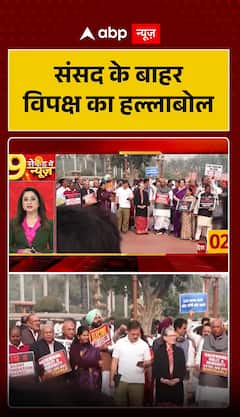
The December 2025 parliamentary session, ostensibly convened to commemorate 150 years of Vande Mataram, revealed instead a stunning void of reflection, a spectacle in which accusation drowned out understanding and Bankim Chandra Chattopadhyay’s legacy was reduced to partisan debris. What should have been an opportunity to revisit the song’s Bengal-born anguish, its literary artistry, and its anti-colonial fire collapsed into a shouting match where history became ammunition and nuance an inconvenience.
The ruling BJP cast the Congress’s 1937 resolution as betrayal, an act of “appeasement” that supposedly mutilated the anthem. This framing ignored the historical reality: Congress did not reject Vande Mataram but adapted its usage to preserve communal harmony in a moment of escalating tensions. The move allowed the song to remain a unifying force in the freedom struggle. Yet, in Parliament, this complexity was flattened into a morality play of nationalists versus appeasers, with little regard for context.
The Opposition, for its part, reacted with predictable defensiveness. Rather than acknowledging whether alternative strategies might have balanced inclusivity with fidelity, such as educational promotion of the full text paired with public recitation of the neutral stanzas, they defaulted to counter-accusations about the government’s politicisation of culture. Their rhetoric, too, ducked uncomfortable questions.
The Trinamool Congress, uniquely positioned to centre Bengal’s interpretive authority, from Anandamath’s famine-scorched backdrop to the archaic magnificence of Bankim’s prose, chose instead to paint the moment as yet another instance of Delhi slighting Bengal. It was a missed chance to reclaim the song’s cultural depth rather than weaponise its symbolism.
As if on cue, fringe voices resurrected tired caricatures of Bankim as a proto-ideologue, divorcing his work from its historical milieu. And the Prime Minister, whose role was to elevate the discourse, instead magnified existing polarities.
What emerged was a hollow commemoration devoid of proposals, no national curriculum on Anandamath, no interfaith renditions, no cross-party homage to Bengal’s literary foundations. Vande Mataram, a cry of sacrifice, was reduced to a pawn in India’s endless partisan theatre. A true celebration must transcend blame and rekindle the song’s Bengal-rooted soul for a genuinely united nation.

Trending News