Earth Could Face Extreme Heat, Volcano Eruptions, and Destruction in 250 Million Years, Warn Scientists
In 250 million years, Earth could face extreme heat, volcano eruptions, and mass extinction as supercontinent Pangaea Ultima forms. Rising carbon dioxide levels may accelerate this catastrophic fate.
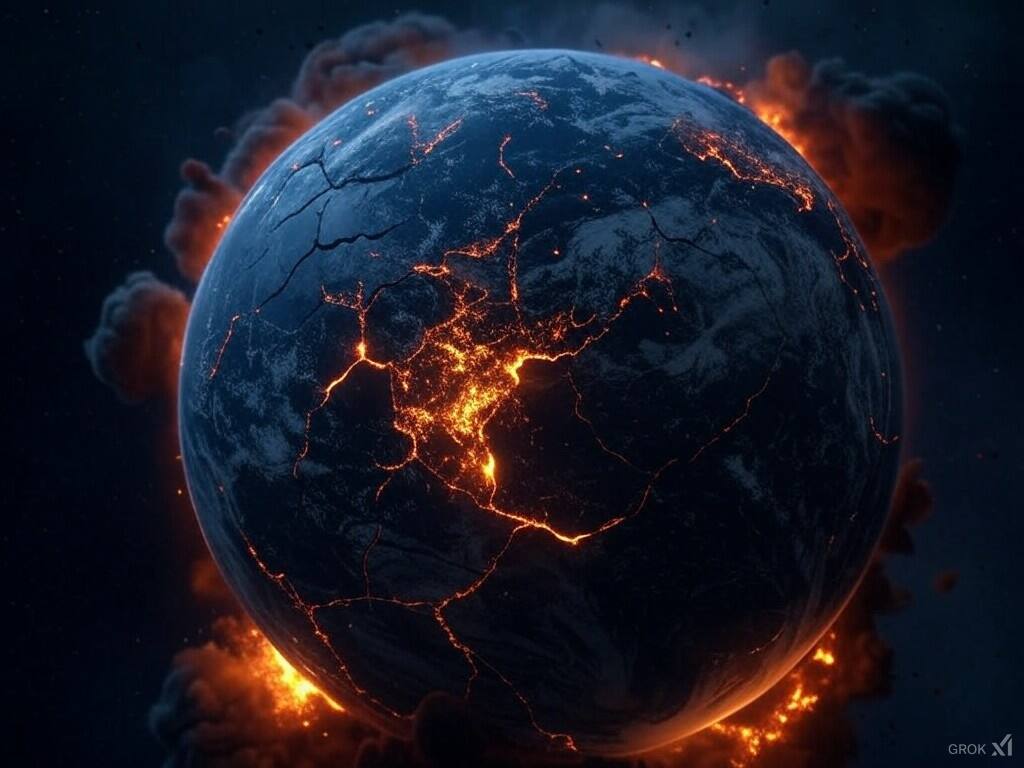
We have seen many movies in which they show how life on Earth will end and people recreate everything. Volcanic eruptions, gigantis tsunamis and many other things. all of this were a fantasy of a creative mind till now, but now the scientists and reseaechers have gave their verdictScientists are raising alarms about Earth's future, predicting a catastrophic end where no living creature will survive—on land or in the sea. This apocalyptic scenario, termed "the day of complete destruction," has been unveiled through advanced research. According to a Daily Mail report, a team of researchers from Bristol University has used computer simulations to foresee a devastating event that could wipe out all life on Earth approximately 250 million years from now.
A Scorched Planet
The study suggests that during this period, Earth's temperature will rise to an unbearable 70 degrees Celsius, rendering the planet uninhabitable. "No animal or human can survive in such an environment. Everything will be destroyed due to extreme heat," scientists caution. The researchers also warn that human activities accelerating carbon emissions could fast-track this extinction. A scenario reminiscent of the one that led to the extinction of dinosaurs 66 million years ago may unfold again.
Earth's Supercontinent Future
Scientists explained that the Earth's continents are expected to merge into a supercontinent, Pangaea Ultima, in about 250 million years. Historical evidence suggests that the last supercontinent, Pangaea, existed between 330 million and 170 million years ago. The formation of Pangaea Ultima will trigger an intense rise in temperatures, causing widespread drying and making the planet inhospitable. Volcanoes, unable to withstand the extreme heat, will erupt on a massive scale, releasing excessive carbon dioxide.
Dire Consequences for Life
"With twice the amount of carbon dioxide in the world now, people would die from heatstroke," explained Alexander Farnsworth, the head of the research team. His findings, published in Nature Geoscience in 2023, predict that more than 40 billion tons of carbon dioxide will be released, suffocating life on Earth. The researchers highlight the possibility of marginally habitable zones along the edges of the northern and southern parts of Pangaea Ultima, but most of the planet will be unfit for life. Scientists urge immediate global action to curb carbon emissions and mitigate further damage to the planet.
Top Headlines