‘Low-Quality, Not Free or Fair’: New Zealand Foreign Minister Slams India–NZ FTA, Flags Dairy Sector Loss
New Zealand FM Winston Peters calls the India–NZ FTA “neither free nor fair,” warning it sacrifices farmers while delivering little in return.


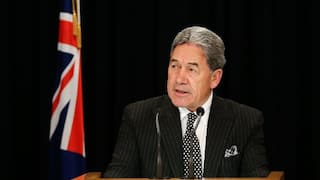
New Zealand’s Foreign Minister, Winston Peters, has delivered a scathing critique of the recently finalized India–New Zealand Free Trade Agreement (FTA), branding it as a deeply flawed arrangement that undermines the country’s key economic priorities. He argued that the pact is “neither free nor fair.” Peters cautioned that the deal represents a poor bargain for New Zealand, conceding too much while offering little in return.
In a strongly worded statement on X, Peters confirmed that his party, New Zealand First, is firmly against the agreement. He contended that while the FTA involves significant compromises on immigration and investment, it fails to secure meaningful gains for New Zealand’s most vital export industries, as per a report on India Today.
Dairy Left Out Sparks Farmer Backlash
At the heart of Peters’ criticism is the exclusion of New Zealand’s powerful dairy sector from the FTA. He pointed out that while New Zealand has opened its markets extensively to Indian goods, India has not reduced tariffs on key dairy exports such as milk, cheese, and butter.
Dairy remains the backbone of New Zealand’s export economy, valued at $24 billion as of November 2025 and accounting for nearly 30% of the country’s total goods exports. Peters underscored that this agreement marks the first time New Zealand has signed a trade pact that leaves dairy entirely outside its scope—a move he said farmers would find impossible to accept.
Coalition Fault Lines Come To Fore
Peters also revealed growing tensions within New Zealand’s coalition government over the handling of the negotiations. According to him, New Zealand First had urged its coalition partner to slow down and use the full three-year parliamentary term to pursue a more balanced and robust agreement.
“Unfortunately, our warnings were ignored. National preferred a quick, low-quality deal rather than doing the hard work necessary for a fair agreement,” he said, as quoted by Financial Express.
Despite his strong objections, Peters stressed that his criticism was not directed at India itself. He reiterated his respect for India’s External Affairs Minister S. Jaishankar and emphasised that New Zealand First remains committed to deepening bilateral ties with New Delhi.
Modi Celebrates Deal As Historic Breakthrough
In contrast, Indian Prime Minister Narendra Modi hailed the FTA as a major diplomatic and economic achievement. Calling it a “historic milestone,” Modi said the agreement was concluded in just nine months and would “set the stage for doubling bilateral trade in the coming five years.”
Modi also announced that the pact would unlock more than $20 billion in investment from New Zealand across multiple sectors. He highlighted expanded opportunities for entrepreneurs, farmers, MSMEs, students, and youth, while pointing to growing cooperation in sports, education, and cultural exchanges.
Top Headlines