Lunar Eclipse 2022: First Blood Moon In A Year This Weekend
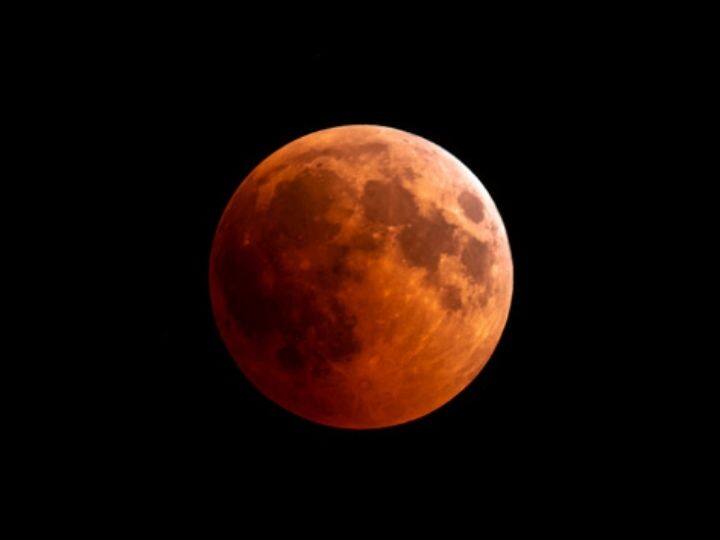
The action unfolds Sunday night into early Monday, with the moon bathed in reflected red & orange hues of Earth's sunsets & sunrises for about 1 1/2 hrs, one of the longest totalities of the decade.
Cape Canaveral (US), May 13 (AP): A total lunar eclipse will grace the night skies this weekend, providing longer than usual thrills for stargazers across North and South America.
The celestial action unfolds Sunday night into early Monday morning, with the moon bathed in the reflected red and orange hues of Earth's sunsets and sunrises for about 1 1/2 hours, one of the longest totalities of the decade. It will be the first so-called blood moon in a year.
Observers in the eastern half of North America and all of Central and South America will have prime seats for the whole show, weather permitting. Partial stages of the eclipse will be visible across Africa, Europe and the Middle East. Left out: Alaska, Asia and Australia.
“This is really an eclipse for the Americas,” said NASA's Noah Petro, a planetary geologist who specializes in the moon. “It's going to be a treat.” All you need, he noted, are “patience and eyeballs.” A total eclipse occurs when Earth passes directly between the moon and the sun, and casts a shadow on our constant, cosmic companion. The moon will be 225,000 miles (362,000 kilometers) away at the peak of the eclipse — around midnight on the U.S. East Coast.
“This is this gradual, slow, wonderful event that as long as it's clear where you are, you get to see it,” Petro said.
If not, NASA will provide a livestream of the eclipse from various locations; so will the Slooh network of observatories.
There'll be another lengthy total lunar eclipse in November, with Africa and Europe lucking out again, but not the Americas. Then the next one isn't until 2025.
Launched last fall, NASA's asteroid-seeking Lucy spacecraft will photograph this weekend's event from 64 million miles (103 million kilometers) away, as ground controllers continue their effort to fix a loose solar panel.
NASA astronaut Jessica Watkins, a geologist, plans to set her alarm clock early aboard the International Space Station.
“Hopefully, we can be up in time and be at the right place at the right time to catch a good glimpse,” she told The Associated Press earlier this week. (AP) IND IND
(This report has been published as part of an auto-generated syndicate wire feed. Apart from the headline, no editing has been done in the copy by ABP Live.)
Top Headlines