




The HX-2 is an AI-equipped combat drone manufactured by the German company Helsing. It is described as fast and agile, making it harder for the enemy to shoot down.
Explorer
German-Made AI Drones Deployed On Ukraine Front Line, Troops Flag Technical Issues
The German defense company Helsing is supplying combat drones to Ukraine and will soon provide them to the Bundeswehr. How effective are they on the front line? DW joined a Ukrainian combat mission to find out.
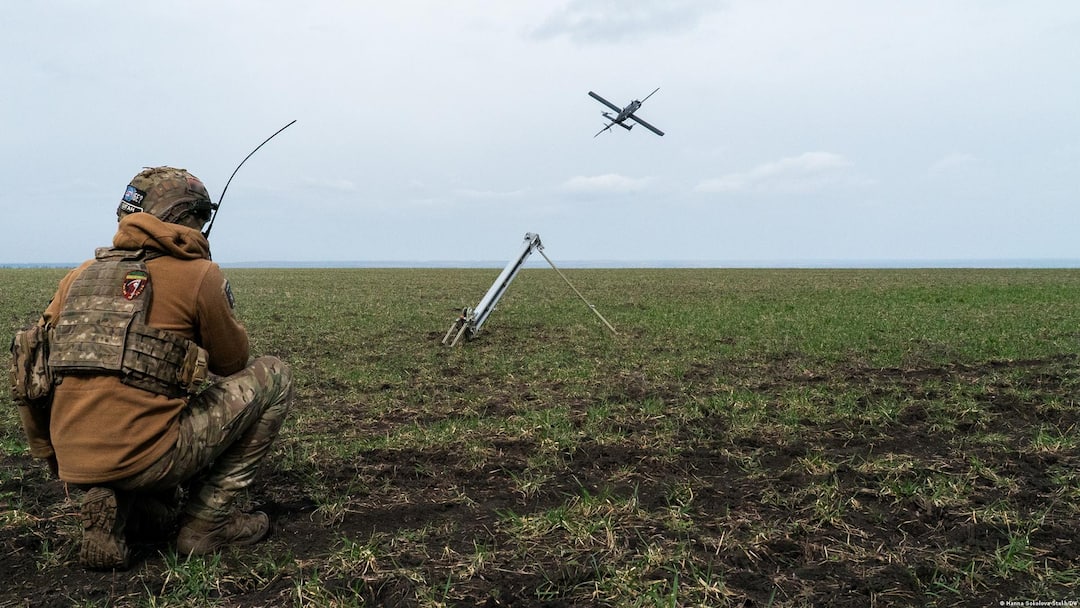
A Ukrainian soldier launches a German-made HX-2 combat drone during a frontline mission near Pokrovsk in eastern Ukraine.
Source : DW
- German Helsing AI-drones deployed in Ukraine faced early technical issues.
- Manufacturer refutes claims, adapting drones to evolving combat conditions.
- HX-2 achieved a strike after initial failure; improvements ongoing.
In a forested strip, two Ukrainian soldiers — a technician and an electrician — attach wings to a large black box. The kit is an HX-2 combat drone from the German manufacturer Helsing, equipped with artificial intelligence.
The billion-dollar startup from Bavaria is supplying thousands of these to the Ukrainian military, funded by the German government. Germany's armed forces have also recently awarded Helsing a multimillion-euro contract.
At the beginning of the year, critical reports about the drones appeared in Western media, including German outlets. They cited Ukrainian soldiers who reportedly identified technical issues during test deployments last year. According to a report by the newspaper Die Welt, many drones were not flight-ready or crashed shortly after takeoff. The hit rate was also said to be low. Its report quoted Ukrainian soldiers fighting at the front in eastern Ukraine.
The manufacturer, however, refuted these reports. "Members of the Ukrainian armed forces are testing the HX-2 drone together with Helsing staff at the front," a spokesperson told DW at the end of January. The first results of the tests, it said, were "encouraging."
Combat deployment near Pokrovsk
The soldiers repeatedly glance up at a detector mounted on a tree. It tracks Russian drones flying over their position.
Inside a shelter, two other soldiers — a pilot and a navigator — prepare to launch the German drone. They switch on their laptops and monitors, and also arrange a string of lights meant to create a bit of atmosphere. The crew is operating in the frontline section in Ukraine’s eastern Donbas coal region. The Russian army is advancing.
"Our task is to destroy their logistics routes," says the pilot and commander, who goes by the call sign Black.
Helsing initially delivered its earlier, simpler HF-1 model, developed with a Ukrainian manufacturer. At the time, the order covered 4,000 drones. In early 2025, the German company announced delivery of an additional 6,000 drones of the new HX-2 model. Black's crew, currently operating the HX-2, had first used Helsing’s first drone, the HF-1. The HX-2 is described as fast and agile. "It gives us a major advantage in the air — for the enemy it is harder to shoot down," says Ukrainian commander Black.
Target acquisition is carried out using artificial intelligence. "Normally we fly toward the target that reconnaissance drone pilots show us. However, the HX-2 system can independently identify targets. That said, it still can't tell if a target has already been destroyed or not," says Black.
Once the pilot confirms the target selected by the artificial intelligence, the drone continues its flight autonomously. According to commander Black, the HX-2 — like most drones — is vulnerable to electronic warfare.
The Ukrainian military personnel DW spoke with have identified several shortcomings with the drones that they do not want to make public. "Representatives of the manufacturer will come soon to look into it. We have a support chat with them," the commander says.
In response to a DW request, Helsing said the HX-2 drones have so far "not flown in sufficient numbers at the front to allow a fundamental assessment of performance under wartime conditions." The company added they are currently being adapted to frontline conditions, particularly to constantly changing electronic warfare measures used by the opposing side.
Helsing did not respond to DW’s request at the end of April regarding the current hit rate of the HX-2.
Problems arising during launch
The crew carefully selected the day for the HX-2 flight, taking into account wind speed, precipitation and cloud cover. The weather is clear. The drone is supposed to fly several dozen kilometers into the Russian-occupied part of the Donetsk region.
A few hours later, the HX-2 crew finally receives the launch order. The drone, however, doesn't launch from the catapult. The motor fails to start, the electrician reports over radio.
Together with the technician, he tries again and it finally takes off. It originally had a problem connecting with the ground station, something which occasionally occurs with this type of drone, explains Oleksandr Karpyuk, the senior sergeant of the unit.
A hit in better weather
Despite the favorable weather forecast, the sky is now overcast again and the drone pilot is having difficulties with navigation. The test has to be aborted.
On the next deployment, when the DW reporter was no longer present, the crew successfully struck a truck. The drone operation was recorded by a reconnaissance drone and the military personnel show the video. They attribute the success to better weather conditions than during the previous mission.
Karpyuk reports that the earlier HF-1 model also delivered poor results at first, but the manufacturer responded to feedback and improved the product. As a result, the HF-1 has hit more than 50% of targets in the Pokrovsk frontline area.
When asked whether he would continue working with this drone, Karpyuk answers yes. In his view, the Russians currently have no comparable model to the HX-2. He cites the Russian "kamikaze drone" Lancet as an example.
"In the Lancet, the motor is at the rear — it's a pusher motor. The wings, also mounted at the rear, control the drone. Only Helsing has equipped its drones with four forward-facing motors. Why? Because it gives them maneuverability and speed," Karpyuk says.
(Disclaimer: This report first appeared on Deutsche Welle, and has been republished on ABP Live as part of a special arrangement. Apart from the headline, no changes have been made in the report by ABP Live.)
Frequently Asked Questions
What is the HX-2 combat drone?
How many HX-2 drones is Helsing supplying to Ukraine?
Helsing announced it would deliver an additional 6,000 HX-2 drones to the Ukrainian military by early 2025. This follows an earlier order of 4,000 HF-1 models.
Have there been any reported issues with the HX-2 drones?
Early reports cited Ukrainian soldiers identifying technical issues, including drones not being flight-ready or crashing. Helsing refuted these, stating tests were 'encouraging' and that they are adapting the drones to frontline conditions.

Top Headlines
World

Saudi-Led Coalition Launches Airstrikes Near Yemen’s Capital Sanaa: Reports
World

Yunus Heckled By Awami League Supporters In New York, Bangladesh Warns Of Legal Action
World

Houthis And Saudis Show No Sign Of Ending Fighting As Attacks Threaten Oil Exports
World

Flydubai Mid-Air Attack: Two Maldivian Pilots Detained In UAE As Probe Widens











See Today's Weather 
powered by



