From Hasina To Yunus — How Islamic Fundamentalists Took Bangladesh Under Its Grip
The rise of Islamist radicalism in Bangladesh is not a new issue. Successive governments have exploited it for their own political purposes. In recent history, former PM Sheikh Hasina continued funding madrassas, while the caretaker government led by Mohammed Yunus allowed radicals to operate freely.

Nayanima Basu 21 December
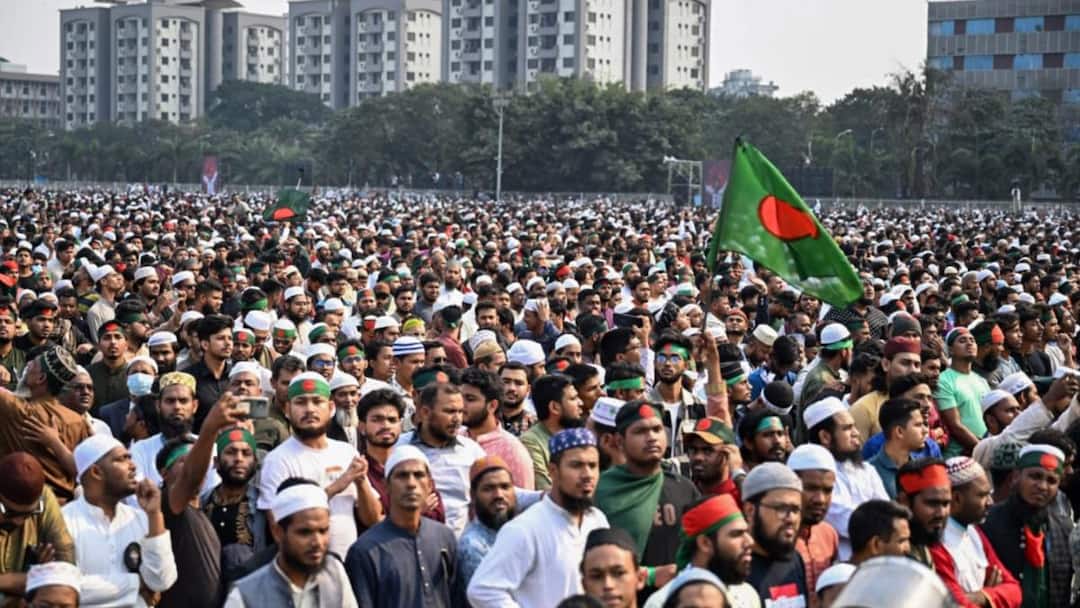
Sharif Osman Bin Hadi, a youth leader of Bangladesh’s 2024 student-led uprising that resulted in the overthrow of the former Awami League government led by Sheikh Hasina, was laid to rest on Saturday in Dhaka. This event occurred amid widespread violent protests across multiple cities in the country, many of which were anti-India rallies that even targeted Indian diplomatic missions.
Hadi was shot dead in the head in December in capital Dhaka while travelling in an auto-rickshaw in Paltan area. The attackers, still at large, were riding a motorcycle and shot him in close range. The vociferous youth leader was then taken to Dhaka Medical College Hospital for treatment. But due to the grave injuries that he suffered, he was then shifted to Singapore General Hospital (SGH) on December 15, where he was kept in the neurosurgical intensive care unit.
On December 18, the Singapore government declared, “Despite the best efforts of the doctors … Hadi succumbed to his injuries.”
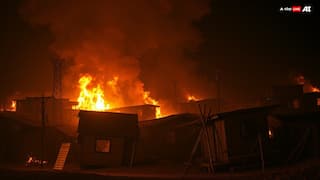
Within minutes of this announcement, brutal protests erupted across Bangladesh in which the protestors not only vandalised and torched public buildings and offices, they even attacked leading local newspaper outlets of ‘Prothom Alo’ and ‘Daily Star’, desecrated ‘Chhayanaut’ cultural organisation – a popular jaunt for intellectuals in Dhaka and damaged the already demolished premised of Dhanmondi 32, residence of Sheikh Mujibur Rahman, which operated as museum.
Meanwhile, the mob, which largely took an anti-India stance, kept chanting slogans of Hasina’s return even as they attacked Indian missions in Rajshahi, Chattogram and Khulna. The situation escalated dramatically when a Hindu man named Dipu Chandra Das was lynched by a mob, tied to a tree, and burned alive in front of his family.
Fringe Elements or Radical Islamic Fundamentalists?
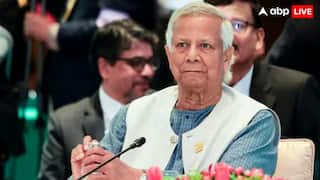
The interim government, led by Nobel Laureate Muhammad Yunus, has said that the violent protests was perpetrated by “a few fringe elements” while he also condemned the killing of Das.
However, a critical question remains unanswered for South Asia and the world: Who are these “fringe elements” that have acquired such influence in a country once regarded as secular before Hasina's ousting in 2024?
Several Bangladeshi observers and analysts have noted that the protests were driven by Islamic radical elements that have gained power since the Awami League government was overthrown in a student-led uprising in August 2024.
Apart from Bangladesh Jamaat-e-Islami (BJI), which is historically the largest and most organized Islamist political party in the country, several other Islamist political parties have gained prominence since Hasina's ousting, including Islami Andolan Bangladesh (IAB), Islami Oikya Jote (IOJ), and Hefazat-e-Islam. These parties receive open support and assistance from militant organizations such as Jamaatul Mujahideen Bangladesh (JMB), Harkat-ul-Jihad-al Islami Bangladesh (HuJI-B), Ansarullah Bangla Team (ABT), and Ansar al-Islam.
Among these various radical groups, notable figures have emerged, including Harun Izhar, Asif Adnan, and Zim Tanvir. Due to their increasing influence among the youth in Bangladesh, these individuals are able to mobilise youth at a mass scale.
Although the approaches of various Islamist groups toward governance may differ, their underlying ideology is consistent: they aim to transform Bangladesh into an Islamic state similar to Afghanistan or Iran. While New Delhi tends to believe that Pakistan's ISI is encouraging and promoting these fundamentalist groups, in reality these radicals are actually homegrown, top-level sources told ABP Live.
The sources also indicated that Prime Minister Hasina, during her over 20 years in power, initially allowed these radical elements to gain influence, using them to consolidate her power. Today, factions within the Yunus-led administration are now also engaging with these groups for their own political gain.
Asif Bin Ali, Doctoral Fellow at Georgia State University and Atlanta-based geopolitical analyst, told ABP Live, “Bangladesh is now facing pressure from several directions, and most of it is homegrown. We do ourselves no favor by explaining every tension through the Pakistan ISI frame that is so popular in parts of the Indian media. The crisis we are dealing with is largely our own, and its solution has to be local and political, not outsourced to someone else’s security imagination.”
The interim government maintains a zero-tolerance policy and continues to monitor individuals who have been released. However, law enforcement agencies in Bangladesh have been slow to respond effectively.
Key counter-terrorism units, such as the Counter Terrorism and Transnational Crime (CTTC) Unit of the Dhaka Metropolitan Police and the Anti-Terrorism Unit (ATU), have encountered challenges. The ATU, particularly, underwent resource constraints even as it was directed to put greater focus on petty crimes rather than on extremist threats.
“The interim government should not have allowed the Anti-Terrorism Unit (ATU) to be weakened and defunded … Now, with a diminished ATU, hardline fundamentalist groups are operating with far fewer constraints and can openly promote violence. Many of these actors have been pushing the same agenda since the Holey Artisan attack in 2016, today they are simply doing it in a space we have allowed to open up,” said Ali.
The Anti-Terrorism Unit (ATU) is a specialised wing of the Bangladesh Police established to lead nationwide efforts in countering terrorism and violent extremism. The unit was officially approved by the Hasina government in September 2017. Its creation was a direct response to rising militant threats, most notably the Holey Artisan Bakery attack on July 1, 2016, in which armed militants mainly targeted foreigners and killed them.
While the ATU became a highly effective body in cracking down on Islamic fundamentalists who promoted violence under Hasina, the former Prime Minister also face accusations of misusing the body.
“Under Sheikh Hasina it was misused in some cases, that is true, but it also kept many extremist networks in check through counter-intelligence work and tactical operations,” added Ali.
Communal violence has been a recurring issue in contemporary Bangladesh. The Hasina government has also struggled to address this problem. Despite being the longest-serving Prime Minister of the country, she has been unable to control radical Islamic fundamentalists. In seeking their support to keep her political opponents in check, she has inadvertently weakened her own position.
Hasina was also able to manage her critics well in this matter, both domestically and globally, by effectively steering the country towards an economic growth trajectory.
In October 2021, as Durga Puja celebrations reached their peak, a violent communal riot erupted in Bangladesh. A frenzied mob set fire to 29 homes belonging to Hindu families, allegedly in response to social media posts that were perceived as offensive to Islamic sentiments.
The incident triggered widespread calls for bringing back Bangladesh’s 1972 Constitution that established ‘secularism’ as one of the core principles, alongside fundamental human rights, free speech, and rule of law. But the Hasina government did not relent.
The Constitution of Bangladesh adopted in 1972 had ‘secularism’ as part of the Preamble and Article 8 as one of the four fundamental principles. However, in 1977, under General Ziaur Rahman’s military regime the Constitution underwent significant changes.
The most crucial change that occurred was the removal of the provision of ‘secularism’ as a state principle via the Fifth Amendment in 1977 and replacing it with “Absolute Trust and Faith in the Almighty Allah” effectively paving the way for Islam to become the state religion later in 1988, though secularism was eventually reinserted in 2011.
However, it was not until the regime of military dictator Hussain Muhammad Ershad that Islam was officially designated as the state religion of Bangladesh. This pivotal moment occurred with the enactment of the Eighth Amendment to the Constitution in 1988, which transformed the political landscape and enshrined Islam at the heart of the state’s identity.
Fast forward to 2011, the political atmosphere shifted again when the Awami League, spearheaded by Prime Minister Sheikh Hasina, undertook constitutional amendments. In a move intended to balance the government's approach to governance and society, "secularism" was reinserted into the preamble of the constitution. This reinstatement aimed to reaffirm the commitment to a secular state; however, the foundational declaration of Islam as the state religion remained unchanged.
This duality—where Islam is both a state religion and secular principles are constitutionally acknowledged—has spurred ongoing debates and societal tensions within Bangladesh. The coexistence of these contrasting ideologies continues to pose challenges, contributing to political instability and social discord in the nation.
In 2017, following months of protests by Hefazat, a statue depicting the goddess of justice, called the ‘Lady Justice’, was removed. Hasina kept mum while her government maintained that it was done due to a decision taken by the Supreme Court.
Joseph Allchin, journalist and author, noted in his book ‘Many Rivers One Sea: Bangladesh and The Challenge of Islamist Militancy’ that Hasina met Hefazat chief Shah Ahmad Shafi, an Islamic preacher, in 2017 and even gave him several concessions while criticising the installation of the controversial statue, also called ‘Themis’.
Under Hasina, the Awami League government continued to fund madrassas in exchange for their support during her consecutive term in office. In 2018, Hasina was honored with the title of ‘Mother of Qawmi’ by the Qawmi Madrassa Education Board.
This recognition came after she committed to allowing the Qawmi madrassas to maintain their deregulated status while ensuring that their degrees would be recognised as equivalent to those from formal schools and universities.
What Happens To February 2026 Elections?
Hadi’s killing has raised concerns about whether the scheduled elections in Bangladesh will proceed on 12 February even as reports of an rift between Bangladesh’s Army Chief Waker-Uz-Zaman and Yunus are also coming to the fore.
Meanwhile, the next big development in Bangladesh is going to be the return of former Prime Minister Khaleda Zia’s 60-year-old son Tarique Rahman, who is the acting chairperson of Bangladesh Nationalist Party, which is currently the largest political party there after Awami League was banned by the caretaker government.
“I think Tarique Rahman will make a reassessment if he can come back or not. The government’s ineptness in handling the situation there is unfathomable and concerning. Any sensible government should have taken some precautionary steps after Hadi was shifted to Singapore,” Riva Ganguly Das, former Indian High Commissioner to Dhaka, told ABP Live.
Das also said, “This is a result of incompetence on part of the Yunus government. They have always justified mob violence.”
According to Ali, “If the election actually takes place, BNP is likely to emerge as the clear winner, and that outcome will unsettle many other actors, particularly Jamaat, which is eager to re-enter mainstream politics in a major way. Even if the BNP manages to form a government, it will not be a comfortable one. It will face sustained pressure from Jamaat on one side and from Awami League on the other, as the latter will do everything possible to return to regular politics. In that scenario, BNP would govern under constant contestation rather than from a position of real strength.”

Top Headlines