Justice BR Gavai Takes Oath As CJI, First Buddhist On The Chair: Watch
Justice Gavai has become the first member of the Buddhist community in the country to serve as the Chief Justice of India.

Justice Bhushan Ramakrishna Gavai on Wednesday took oath as the 52nd Chief Justice of India, succeeding Justice Sanjiv Khanna. President Droupadi Murmu administered the oath of office to Justice Gavai at the Rashtrapati Bhavan.
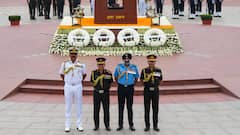
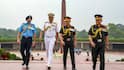
Prime Minister Narendra Modi, Vice President Jagdeep Dhankhar, former President Ram Nath Kovind and other dignitaries were also in attendance during the ceremony. After taking the oath, Justice Gavai paid tribute to BR Ambedkar at the Supreme Court premises.
With his new role, Justice Gavai has become the first member of the Buddhist community and second the second from the Scheduled Castes in the country to lead the Indian judiciary.
LIVE: Swearing-in-Ceremony of the Chief Justice of India Shri Justice Bhushan Ramkrishna Gavai at Rashtrapati Bhavan https://t.co/KSRP8wDqpz
— President of India (@rashtrapatibhvn) May 14, 2025
On April 29, the Centre cleared the appointment of Justice Gavai to the highest judicial office of the country after then CJI Sanjiv Khanna recommended him as his successor last month.
"In exercise of the powers conferred by Clause (2) of Article 124 of the Constitution of India, the President is pleased to appoint Shri Justice Bhushan Ramkrishna Gavai, Judge of the Supreme Court, to be the Chief Justice of India with effect from 14th May, 2025," stated the notification issued by the Union Ministry of Law and Justice.
Notable Rulings
He was appointed as Assistant Government Pleader and Additional Public Prosecutor in the Bombay High Court, Nagpur Bench in August 1992 and served till July 1993. On January 17, 2000, he was appointed as Government Pleader and Public Prosecutor for the Nagpur Bench.
He was appointed to the Supreme Court on May 24, 2019 and since has been part of nearly 700 benches. He has delivered around 300 judgments during his previuos stint at the apex court including upholding the abrogation of Articl 370.
He was also part of the Supreme Court bench that struck down the electoral bond scheme and validated the 2016 demonitisation move.
Related Video
Breaking: Elderly Couple Found Murdered at Home in Delhi’s Shahdara, Police Probe Underway

Top Headlines