Explorer
India's growth trajectory holds immense potential for global stakeholders: Ashish Sinha
India's growth trajectory holds immense potential for global stakeholders to establish energy, infrastructure and technology collaboration with the country, a UN forum here has been told.
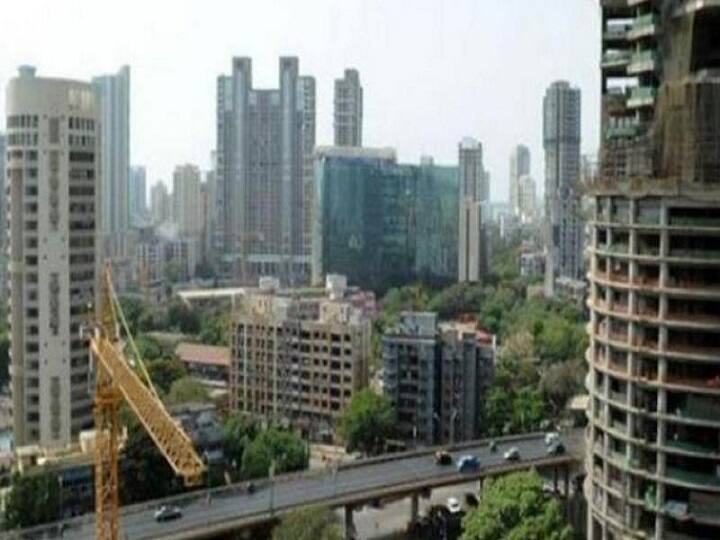
Indian economy
India's growth trajectory holds immense potential for global stakeholders to establish energy, infrastructure and technology collaboration with the country, a UN forum here has been told. Counsellor in India's Permanent Mission to the UN Ashish Sinha stressed on Wednesday at the ECOSOC Forum on Financing for Development Follow Up that India wanted to use growth as a mechanism to pull the maximum number of people out of poverty and improve quality of life in an inclusive manner. "India has retained its position as the world's fastest growing major economy. Indian economy has been growing over 7 per cent for several years and the forecast for the future is equally robust," he said. Sinha noted that India improved its ranking by 23 positions in the World Bank's Ease of Doing Business rankings last year. India improved its ranking on the World Bank's 'ease of doing business' report for the second straight year, jumping 23 places to the 77th position on the back of reforms related to insolvency, taxation and other areas. "India's growth trajectory holds immense potential for our global stakeholders to establish energy, natural resource, and infrastructure and technology collaboration with us," Sinha said. The current global economic outlook also reiterates the need for the promotion of policies for enhancing economic growth and growth inducing investments, he said. Earlier this month, the World Bank said India's GDP growth was expected to accelerate moderately to 7.5 per cent in fiscal year 19-20, driven by continued investment strengthening, particularly private-improved export performance and resilient consumption. "The objective is to bank the unbanked, secure the unsecured, fund the unfunded and service the un-serviced areas," Sinha said. Noting that India has taken strong initiatives for financial inclusion, he said in the the past three years, the government has opened over 320 million bank accounts for those who never had an account. "We have leveraged these bank accounts with the power of a biometric identity system and mobile phones, to deliver subsidies and services to the deserving poor," he said, adding that 1.6 million people have benefited from the recently launched cashless health insurance scheme called 'Ayushman Bharat' in the first four months of its launch. India is also the sixth largest producer of renewable energy in the world and Indian solar power capacity will grow robustly at an annual average rate of 15.3 per cent to reach 105.9 GW by 2028, up from 26 GW in 2018, he said. Sinha noted that research and innovation would be the driving force in the 4th industrial revolution era. The Indian government has introduced the flagship programme Start-up India with 1.4 billion dollars fund for four years to create a startup ecosystem in India. The effort of the government has also been to maximise resources with lowering of the tax rate by following the theory of lower taxation, higher compliance, he said. "However, we fully acknowledge the role of international cooperation on tax matters in a globalised and digital economy. In this regard, to further strengthen the work of the UN Tax Committee, India continued its contribution to its Voluntary Trust Fund for the Tax Committee for the second consecutive year in 2018," Sinha said. Stepping up our cooperation with the fellow developing countries here at the United Nations, India established the India-UN Development Partnership Fund that supports Southern-owned and led, demand-driven, and transformational sustainable development projects. A sum of USD 150 million has been committed for the next decade focusing on developmental projects in Least Developed Countries and Small Island Developing States. The Fund already has projects in 39 countries. Sinha said the world finds itself at a critical moment which calls for an action-oriented resolve in an increasingly complex inter-dependent world. "The 2030 Agenda, Paris Agreement and Addis Ababa Action Agenda have been remarkable acknowledgements of these interlinked challenges, and our collective responsibility to overcome these with collective action at the international level," he said.
Before You Go
STUDENT PROTEST: Nursing Students’ Agitation Intensifies in Bhopal, Schoolchildren Protest in Uttarakhand
Top Headlines
India

Bar Council's U-Turn: Withdraws Order Halting NALSAR Students’ Enrolment Over CJI Row
India

Suvendu Government Withdraws Honour From BJP MP Ananta Maharaj Over Remarks On Netaji
India

Parliament’s Monsoon Session Ends Amid Disruptions, Lok Sabha Productivity At 19%
India

Rahul Gandhi Moves Supreme Court Against Allahabad HC Order Over Disproportionate Assets Case






See Today's Weather 
powered by