Explorer
Independence Day 2020: Satyagraha, How Mahatma Gandhi Changed The Face Of Political Protest During India’s Freedom Struggle
Amid the struggle to attain Independence, Mahatma Gandhi used non-violence or Satyagraha as a form of political protest. While critics dismiss its effectiveness, many have been inspired by its power to bring change.
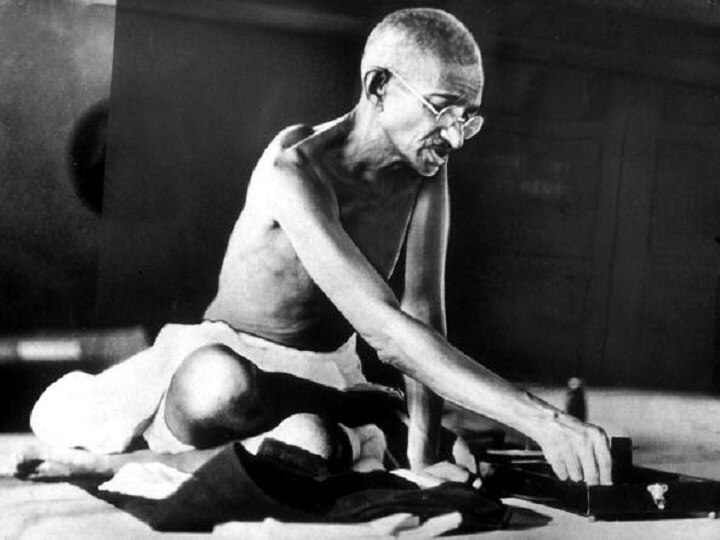
(File Photo/ Getty)
Independence Day 2020: During the struggle for Independence, Mahatma Gandhi a great proponent of ahimsa or non-violence changed the face of political protest in the country. His idea of Satyagraha which means holding onto truth or truth force, revolutionized protests across the country against British colonialists. His ideas of non-violence also inspired many leaders across the world such the American civil rights leader Martin Luther King. ALSO READ| Independence Day 2020: Know 8 Interesting Facts About India’s National Flag Activism in South Africa Mohandas Karamchand Gandhi was born on 2 October 1869, Porbandhar Gujarat. In 1888 he left for London to study law and after 3 years he came back to India and started making a living filing petition for litigants. He was then offered an opportunity in South Africa and left India 1893 at the age of 23. It is here that his foray into activism began as he faced harsh discrimination and ill-treatment in the hands of the British because of his heritage and colour. He was thrown out of a train, kicked and beaten for walking in spaces prohibited for coloured people. In 1906 the British passed the Asiatic Law Amendment Ordinance in South Africa. It required that Indians in the Transvaal(British colony) register with the ‘registrar of Asiatics.’ It also stated that they must submit to physical examinations, provide fingerprints, and carry a registration certificate at all times. It is during the protest against this act that Gandhi first employed the ‘passive resistance movement’ or Satyagraha urging Indians to defy the law and bear the consequences of the action as a sign of protest. These ideas he later took back to India in 1915. 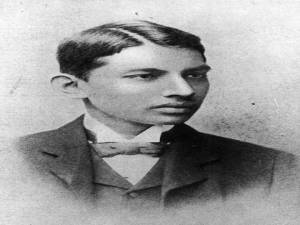 Indian thinker, statesman and nationalist leader Mahatma Gandhi (Mohandas Karamchand Gandhi, 1869 - 1948), as a law student. (File Photo/ Getty) Satyagraha philosophy According to Gandhi, by creating a mind free of violence, Satyagrahis are able to get an insight into the real nature of evil. By not submitting or cooperating with the wrong, the satyagrahis assert truth. He said that throughout the resistance or protest the Satyagrahi should observe non-violence, as violence corrupts the mind and may lead to losing their insight. Gandhi wrote ‘a satyagrahi obeys the laws of the society intelligently and of his own free will, because he considers it to be his sacred duty to do so. It is only when a person has thus obeyed the laws of society scrupulously that he is in a position to judge as to which particular rules are good and just and which are unjust and iniquitous and only then does the right accrue to him of the civil disobedience of certain laws in well-defined circumstances.’
 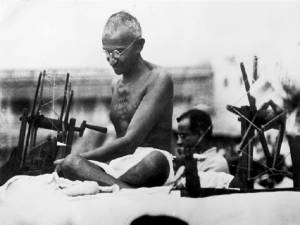 On 9th June 1925, Indian Nationalist leader Mahatma Gandhi spinning a wheel during a 'Charlea' demonstration in Mirzapur, Uttar Pradesh. (File Photo/ Getty) There are several methods of observing Satyagraha such as fasting, non- cooperation, and Civil disobedience which is the most extreme technique. Satyagraha also goes beyond the political sphere in fact it can be used by an individual to attain truth. For example, fasting can be used to control the base desires in a person and to cleanse the spirit. Struggle for Independence Starting from the first Satyagraha in Champaran, Bihar (1917), where he fought against forceful cultivation of indigo, a cash crop that requires a huge amount of water and makes the soil infertile to the massive Dandi March in 1930, where he defied the monopoly of the British on salt, he chose the non-violent, civil disobedience as a method to fight against injustice. During the freedom struggle, Gandhi uses various methods to pressurize the British and more importantly to leave India voluntarily. Of course, there were critics who felt that non-violent struggle does not yield results, yet he remained steadfast.
Indian thinker, statesman and nationalist leader Mahatma Gandhi (Mohandas Karamchand Gandhi, 1869 - 1948), as a law student. (File Photo/ Getty) Satyagraha philosophy According to Gandhi, by creating a mind free of violence, Satyagrahis are able to get an insight into the real nature of evil. By not submitting or cooperating with the wrong, the satyagrahis assert truth. He said that throughout the resistance or protest the Satyagrahi should observe non-violence, as violence corrupts the mind and may lead to losing their insight. Gandhi wrote ‘a satyagrahi obeys the laws of the society intelligently and of his own free will, because he considers it to be his sacred duty to do so. It is only when a person has thus obeyed the laws of society scrupulously that he is in a position to judge as to which particular rules are good and just and which are unjust and iniquitous and only then does the right accrue to him of the civil disobedience of certain laws in well-defined circumstances.’ On 9th June 1925, Indian Nationalist leader Mahatma Gandhi spinning a wheel during a 'Charlea' demonstration in Mirzapur, Uttar Pradesh. (File Photo/ Getty) There are several methods of observing Satyagraha such as fasting, non- cooperation, and Civil disobedience which is the most extreme technique. Satyagraha also goes beyond the political sphere in fact it can be used by an individual to attain truth. For example, fasting can be used to control the base desires in a person and to cleanse the spirit. Struggle for Independence Starting from the first Satyagraha in Champaran, Bihar (1917), where he fought against forceful cultivation of indigo, a cash crop that requires a huge amount of water and makes the soil infertile to the massive Dandi March in 1930, where he defied the monopoly of the British on salt, he chose the non-violent, civil disobedience as a method to fight against injustice. During the freedom struggle, Gandhi uses various methods to pressurize the British and more importantly to leave India voluntarily. Of course, there were critics who felt that non-violent struggle does not yield results, yet he remained steadfast. Related Video
Delhi News: Why Bulldozer Action Was Conducted at Night? DCP Nitin Valson Explains Key Reasons
Follow Breaking News on ABP Live for more latest stories and trending topics. Watch breaking news and top headlines online on ABP News LIVE TV
Top Headlines
India

Trump To Impose 500% Tariff On India, China? Here's What His Nod To A New Bill Means
Cities

Teenage National Shooter Accuses Coach Of Sexual Assault, Threatening To Ruin Career
World

US Seizes Russian-Flagged Oil Tanker Linked To Venezuela After Dramatic Pursuit: WATCH
World

Another BNP Leader Shot Dead As Bangladesh Remains On Edge Ahead Of Elections









See Today's Weather 
powered by

Capt Kaustubh Rana (Retd)
Opinion