Explorer
AI, Cloud Computing, Drones In Focus Of Modi Govt For Better E-Governance
As part of its vision of providing a One Government experience to citizens, the Modi government is moving forward rapidly to implement the India Enterprise Architecture (IndEA) -- a single window digitisation solution for cashless, paperless and faceless services.

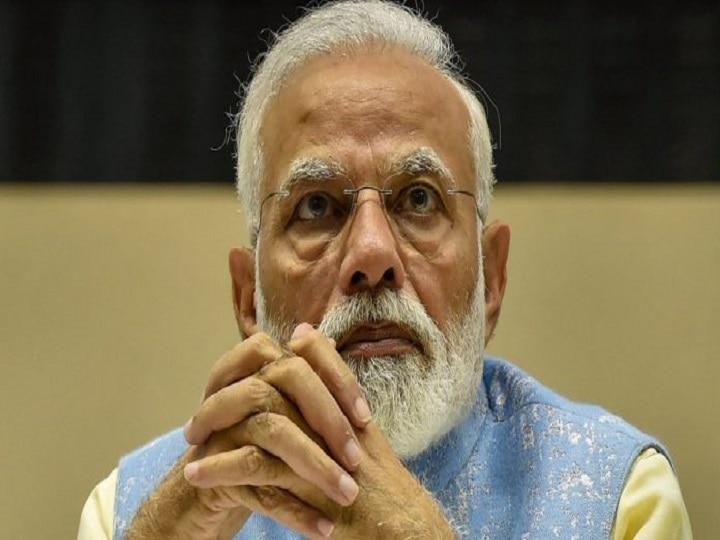
Emerging technology, like blockchain technology, Artificial Intelligence, virtual reality, drones, cloud computing -- are all on the table of the Narendra Modi government as it pushes ahead to realise the goal of better e-governance for citizens. (PTI)
New Delhi: Emerging technology, like blockchain technology, Artificial Intelligence, virtual reality, drones, cloud computing -- are all on the table of the Narendra Modi government as it pushes ahead to realise the goal of better e-governance for citizens. As part of its vision of providing a One Government experience to citizens, the Modi government is moving forward rapidly to implement the India Enterprise Architecture (IndEA) -- a single window digitisation solution for cashless, paperless and faceless services. At an e-Governance conference held in Shillong, Meghalaya, earlier this month, representatives of all the state governments and Union Territories, as well as business houses, brainstormed on the way ahead to provide better e-governance, and exchanged success stories of various states that could be adopted at the national level. A Shillong Declaration was adopted as a roadmap of the way forward, at the conclusion of the two-day 22nd National Conference on e-Governance (NCeG) 2019, with special focus on the Northeast, held on August 8-9, in Shillong. The conference, that saw over 500 delegates attending, with representation from states at the level of Additional Secretary and Principal Secretary, and top representatives of business houses like Wipro, HP and KPMG, was organised by the Department of Administrative Reforms & Public Grievances (DARPG), in association with the Ministry of Electronics & Information Technology (MeitY), and the Meghalaya government. One of the major issues discussed was having less paper secretariats through working in a global cloud hub. "How much cloud space would the government require to facilitate development of government applications," a source told IANS. Another important issue discussed was the integration of various e-governance platforms throughout the country. With each government department working on different software systems, a need was also felt to have them all working on a single online platform. In this context, the participants discussed what would be the cyber security norms required for such a platform and how to create data centres to handle the huge volume of data. Another issue discussed was the need to re-skill staff who are not very user friendly. With digital signature, digital certificate and 'no files offices' becoming the norm, sessions were also held on cyber security, on better file management. The government's 'One Nation One Platform' was also discussed to find out how the e-governance applications across states were going on. Emerging technologies were discussed in detail. Some of the states presented their success stories. Like the Haryana government presented the use of its drone technology in monitoring encroachments. Odisha presented its success with using OSWAS, (Odisha Secretariat Workflow Automation System) for correspondence management, file management, file processing, knowledge bank, internal messaging, dash board, audit management among other applications. Madhya Pradesh gave a presentation of its citizen-centric governance in improving the public grievance system, while Chhattisgarh gave a presentation of its successful e-auctions in mining. Rajasthan on its effective e-governance platform Raj-Kaj. The 10-point Shillong Declaration on providing better e-governance, sharing best practices, and having a common software system, would be shared with all the states and work would begin in earnest in implementing it. "The successful conduct and conclusion of the 22nd national e-governance conference presents a significant landmark for improving e-governance services not only in the Northeast region but also other parts of the country. A lot of focus was brought to improving end-to-end digital services and through exchange of interactions across states, but there was also focus on highly technical aspects like India Enterprise Architecture, Digital infrastructure, capacity building, One Nation One Platform, and emerging technology for practitioners. There was also focus on secretariat reforms and national e-services delivery assessment," V. Srinivas, Additional Secretary, DARPG, told IANS .
Follow Breaking News on ABP Live for more latest stories and trending topics. Watch breaking news and top headlines online on ABP News LIVE TV
Read more
Top Headlines
Cities

Air India Delhi-Mumbai Flight Returns After Technical Issue, Engine Shutdown Suspected
Business

India-New Zealand Trade Deal Explained: 95% Tariff-Free Access And Easier Student Visas
World

DOJ Restores Trump's Missing Photo In Epstein Files, Clarifies Reason Behind Partial Release
News

‘Violence A Norm, Yunus Powerless’: Hasina Flags Religious Extremism In Bangladesh Amid Unrest














See Today's Weather 
powered by