Irritation In Eyes, Throat While Commuting To Office in Delhi-NCR Today? Blame It On AQI
Delhi's air quality suddenly dipped to poor quality. The Air Quality Index (AQI) at 10 AM was 249, as per the System of Air Quality and Weather Forecasting And Research (SAFAR).
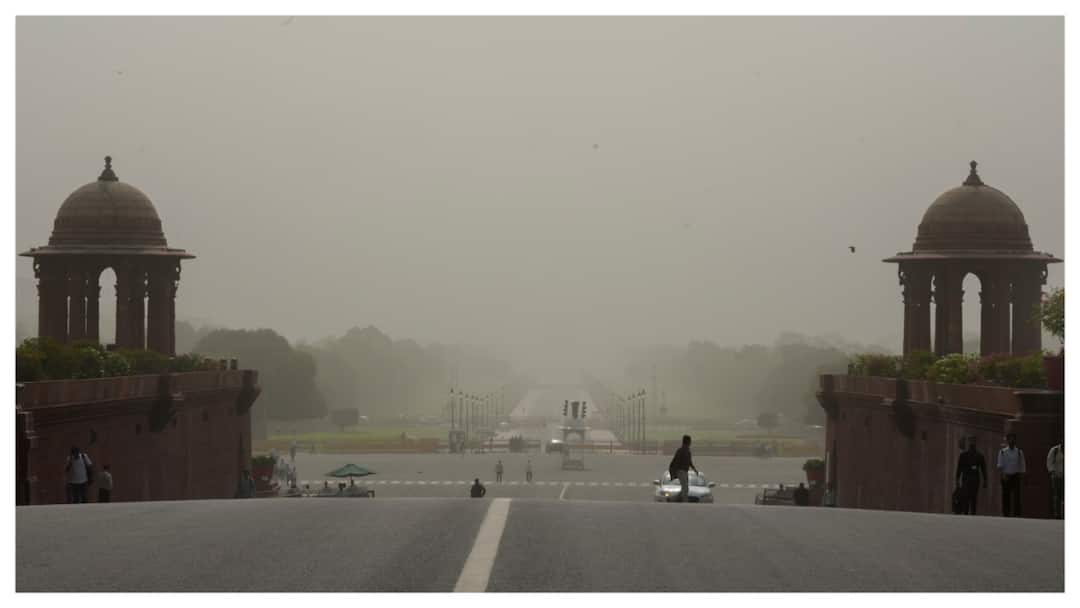
Delhi AQI Today: Did you feel a burning sensation in your eyes or a sore throat while commuting to the office in the Delhi-National Capital Region on Thursday? If yes, then the reason is the sudden dip in the air quality overnight.
The national capital's air quality suddenly dropped to poor quality on Thursday. The Air Quality Index (AQI) at 10 AM was 249, as per the System of Air Quality and Weather Forecasting And Research (SAFAR).
The India Meteorological Department attributed the sudden change in the air quality to dust-raising winds that were reported in the region around 10 pm on Wednesday.
IMD senior scientist RK Jenamani said the visibility dipped from 4,500 metres to 1,200 metres. "There were sudden gusty winds of 30-40 km/hr...This spell became almost calm with winds of 3-7 km/hr. The visibility remained poor between 1,200 metres and 1,500 metres at Safdarjung and Palam with dust in the air," he said.
The visibility dropped to 1,500 metres at 9 am, improving from around 1,300 metres an hour earlier. "Westerly winds of around 10 km/hr are blowing, with a gradual improvement expected," another IMD official said.
Delhi is likely to witness a partly cloudy sky on Thursday evening. The maximum temperature is likely to hover between 40 and 42°C, compared to 40.4°C on Wednesday. The city is likely to witness sustained winds of 15-25 km/hr during the day.
Light rain and gusty winds of up to 50 km/hr are expected on Friday.
An AQI between zero and 50 is considered good, 51 and 100 satisfactory, 101 and 200 moderate, 201 and 300 poor, 301 and 400 very poor, and 401 and 500 severe.
Poor Air Quality's Impact On Health
As per the World Health Organization, exposure to high levels of particulate matter can lead to reduced lung function, respiratory infections and aggravated asthma from short-term exposure.
Long-term or chronic exposure to fine particulate matter increases a person’s risk for diseases with a longer onset, like some noncommunicable diseases, including stroke, heart disease, chronic obstructive pulmonary disease and cancer.

Top Headlines