India Seen As Major Beneficiary As Supply Chains Migrate From China: Morgan Stanley
Morgan Stanley economists have written extensively on the economic and industrial benefits that are beginning to accrue in economies where supply chains are migrating
More global companies are taking supply chain diversification seriously. Companies are increasingly highlighting the benefits of 'friend-shoring' their supply chains in order to better insulate from geopolitical challenges. "We see India, Mexico and Southeast Asia as best positioned for this transition. India and Mexico are two economies that stand to benefit from increasingly local supply chains," Morgan Stanley said in a report.
Morgan Stanley economists have written extensively on the economic and industrial benefits that are beginning to accrue in economies where supply chains are migrating.
"In India we see a tripling of the manufacturing base by 2031 with its share of GDP rising from about 16 per cent to 21 per cent over the same time horizon. In Mexico, we estimate a potential net gain of approximately 30 per cent in exports to the US over a period of five years; this trend appears to be well underway as Mexico-US trade is now level with China-US trade. The associated rise in investment and manufacturing could help raise Mexico's potential GDP from 1.9 per cent to 2.4 per cent, over the next five years, according to our models," the report said.
Supply chain de-risking will be a necessary but difficult and expensive process, taking a decade or longer, featuring more protectionist policies.
Most expected companies to keep a large installed base and presence in China. At a country level, key net beneficiaries would be India and Mexico, the report said.
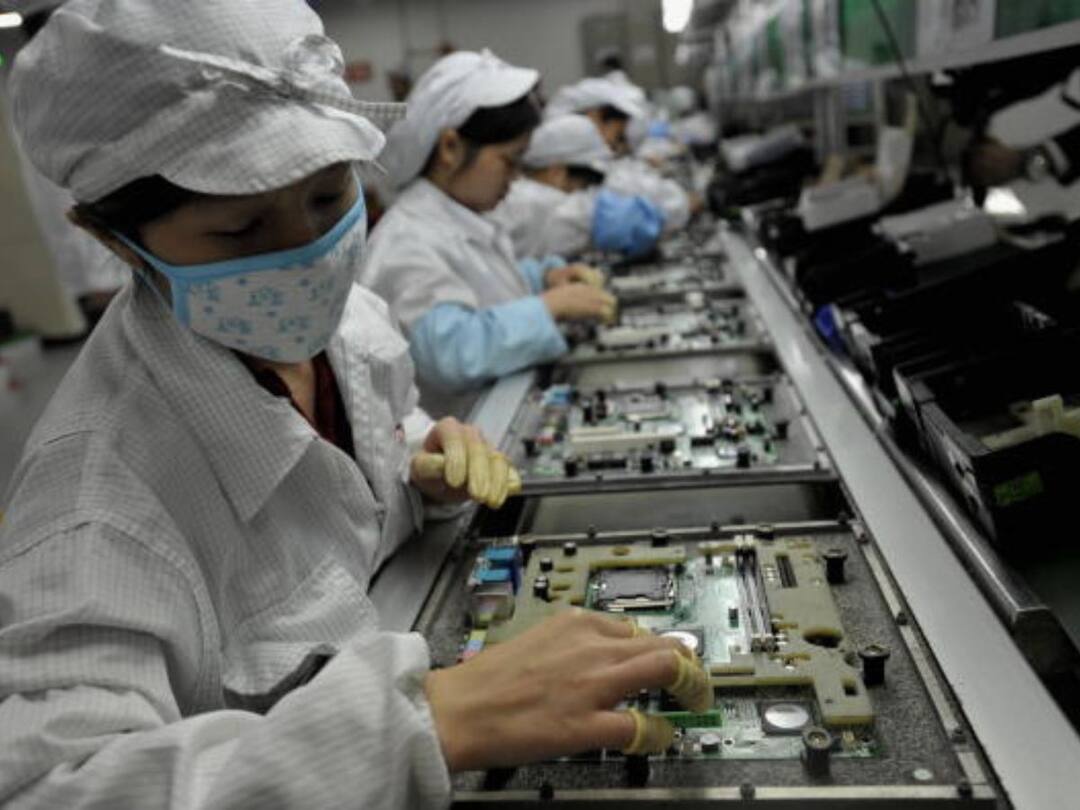
While corporates have largely avoided making any specific geopolitical distinctions, some of the giant companies have been strategically rewiring their supply chain investments. Apple's partner Foxconn has announced plans to invest $700 million in a new plant in India to diversify away some of the risks arising from US-China tensions. After completion, the production site is expected to bring in 100k new jobs compared with the current 200k in the Zhengzhou Plant, Morgan Stanley said.
More companies are adopting a 'China+1' or even 'China+N' strategy to expand their production footprints to Southeast Asia, Mexico and India, and to re-shore where production is particularly capital-intensive or can be automated, the report said.
Much of the structural shift in the level of global trade in the 1990s and 2000s is explicitly linked to the construction of modern China, an event in a long history that we would consider a one-off and exceptional rather than a normal trend.
"China entering the global economy is a historic event that cannot be replicated because neither India, Indonesia, the Philippines, nor any other emerging market economy has the same gap to close from a value or volume standpoint that China made up between 1990 and 2010," the report said.
The de-risking process from China will progress slowly, and most tech hardware production that leaves China will flow to Southeast Asia and India, not North America.
China presently accounts for $4.9 trillion manufacturing GDP out of a total of $14.2 trillion (34 per cent).
Based on a potential loss of international production and exports, an estimated $846 billion of manufacturing output could be seen to be at risk -- the equivalent of 6.0 per cent of the global total.
"Some countries would see significant growth gains: In principle, we believe that the countries making 'share gains' would be the US, India (doubling from 3.1 per cent to 6.2 per cent) and SE Asia -- while EMEA and Japan maintain their existing share of global manufacturing output. In simple terms, we have divided up the 'decoupled $846 billion' of China output and attributed it to different countries based on these shares (e.g., India now taking 6 per cent of the $846 billion," the report said.
On the potential uplift to other countries, in the event that these flows were to be resettled overnight, from a low base, India would see an 11.8 per cent expansion in its manufacturing base (in one year), it added.
Top Headlines