Deloitte Projects Indian Economy To Grow 6.5-6.8% In FY25
Even after facing global and domestic challenges, India is steadily advancing up the global value chains, as evidenced by the increasing share of high-value manufacturing exports
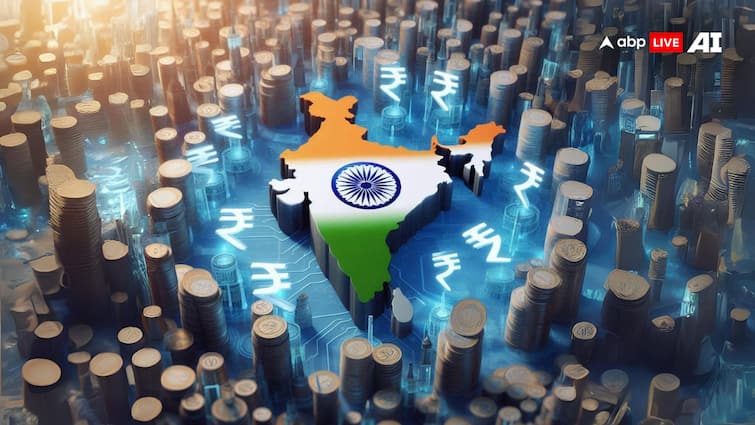
India’s GDP will grow at 6.5-6.8 per cent in the current fiscal year, Deloitte India forecasted on Tuesday. The report highlighted that India must adapt to the changing global landscape and leverage its domestic strengths to drive sustainable growth. Deloitte’s Economic Outlook report also stressed the need for India to decouple from global uncertainties and fully tap into its domestic potential.
Even after facing global and domestic challenges, India is steadily advancing up the global value chains, as evidenced by the increasing share of high-value manufacturing exports, particularly in electronics and machinery and equipment.
In its latest Economic Outlook, Deloitte India has revised its annual GDP growth forecast for FY2024-25 to 6.5-6.8 per cent, with an expected range of 6.7-7.3 per cent for the following year. This adjustment reflects a more cautious approach, as the economy contends with growing uncertainties in global trade and investment. In its previous Economic Outlook report from October, Deloitte India had projected a higher growth rate of 7-7.2 per cent for the current fiscal year.
"India will have to adapt to the evolving global landscape and harness its domestic strengths to drive sustainable growth. One way to do this would be through economic decoupling from global uncertainties and harnessing India's untapped potential. Several indicators that reveal resilience in certain pockets are worth noting," it said.
According to the first advance estimates released by the National Statistics Office (NSO) earlier this month, India’s growth is projected to slow to 6.4 per cent in the current fiscal year, marking a four-year low. Meanwhile, the Reserve Bank of India (RBI) has forecasted a growth rate of 6.6 per cent for the same period.
Deloitte India Economist Rumki Majumdar said, "Election uncertainties in the first quarter followed by a modest activity in construction and manufacturing in the subsequent quarter due to weather-related disruptions led to weaker-than-expected gross fixed capital formation. The government's capex stood at just 37.3 per cent of annual targets in the first half, a sharp decline from last year's 49 per cent, and there is a lag in the momentum it needs to gain."
Furthermore, a more subdued global growth outlook, potential changes in trade regulations among industrial nations, and tighter monetary policies in both India and the US than initially expected could impede the synchronised recovery in Western economies that was anticipated for this fiscal year, she Majumdar.
In its report, Deloitte highlighted that the government recognises the increasing significance of retail investors and is likely to focus on boosting their participation in the upcoming Union Budget for 2025-26. Potential measures could include streamlining investment processes, strengthening safeguards to protect household savings from market volatility, and promoting financial literacy through targeted campaigns and incentives.
Additionally, the budget is expected to prioritise capital expenditure, advance skilling initiatives, and accelerate digitisation efforts to enhance economic resilience and mitigate the effects of ongoing global uncertainties.
"India's demographic dividend and growing middle-class wealth are often celebrated for driving consumption demand and strengthening the labour market. But now we know they are also enhancing the stability of the country's financial markets," Deloitte said.
Related Video
Union Budget 2025: Arvind Kejriwal lists the shortcomings of the Modi government's budget | ABP News | AAP
Top Headlines