Why Is National Science Day Celebrated On February 28? All About CV Raman’s Groundbreaking Discovery & Its Impact
February 28 neither marks Nobel-winning physicist C.V. Raman’s birth anniversary, nor his death anniversary. But the day is all about celebrating his contribution to science.
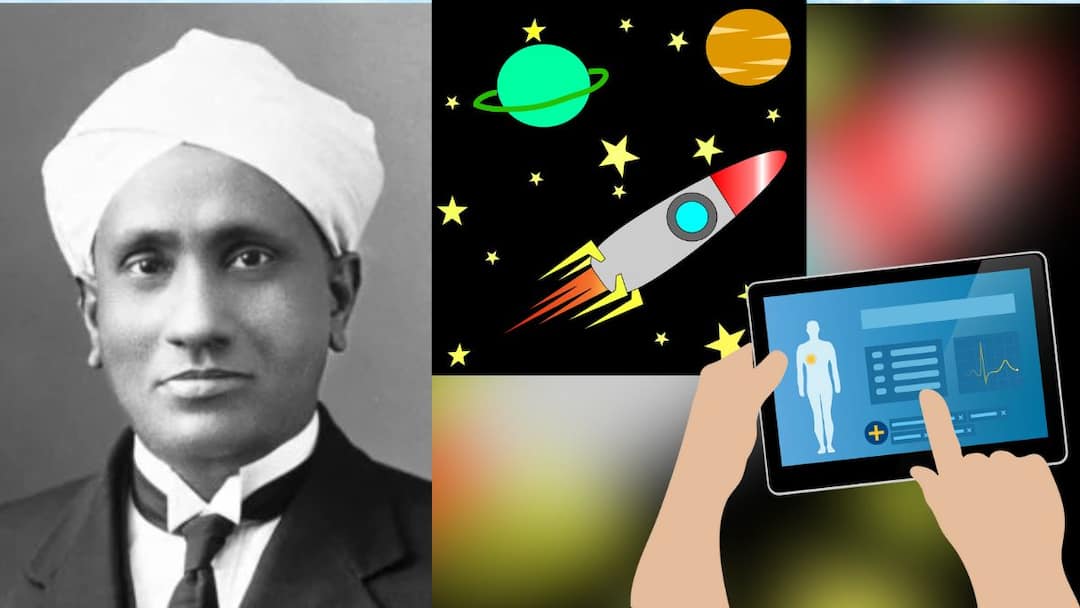
Have you ever wondered why February 28 is observed as ‘National Science Day’ in India in honour of renowned Indian physicist Chandrasekhara Venkata Raman, even though the date neither marks his birth anniversary (he was born on November 7, 1888) nor his death anniversary (he passed away on November 21, 1970)?
It’s because on February 28, 1928, Professor C.V. Raman discovered a phenomenon of the scattering of photons that eventually came to be known as the ‘Raman Effect’. In 1930, Raman got the Nobel Prize for this remarkable discovery, marking the first Nobel for an Indian in the field of science.
Educated entirely in India, C.V. Raman made his first trip to London in 1921, where he was given a warm reception by the English physicists J.J. Thomson and Lord Rutherford, who were familiar with his work in the study of optics and acoustics.
Raman’s Fascination With The Colour Of The Sea
During his return from London in 1921, aboard the SS Narkunda, C.V. Raman became intrigued by the deep blue colour of the Mediterranean Sea. Unconvinced by the explanation offered by the 19th-century British physicist Lord Raleigh or John William Strutt — that the sea merely reflected the sky’s colour — Raman formulated his own hypothesis. Upon reaching Bombay, he sent his observations to ‘Nature’ magazine.
Later, he demonstrated that the blue of the sea, like that of the sky, was due to the scattering of sunlight by molecules — a principle that laid the foundation for his ground-breaking Raman Effect discovery.
The Research Work That Led To The Iconic Discovery
In 1928, while working at the Indian Association for the Cultivation of Science (IACS) in Kolkata, C.V. Raman and his colleague Kariamanickam Srinivasa Krishnan (K.S. Krishnan) discovered that when light passes through a transparent material, some of it scatters in different directions. More importantly, a fraction of the scattered light changes in wavelength — a phenomenon now called the Raman Effect.
The significance of the Raman Effect was recognised quickly by other scientists. Professor R.W. Wood of Johns Hopkins cabled ‘Nature’ to report that he had verified Raman’s “brilliant and surprising discovery ... in every particular. It appears to me that this very beautiful discovery which resulted from Raman’s long and patient study of the phenomenon of light scattering is one of the most convincing proofs of the quantum theory”.
This discovery was crucial because it provided direct evidence for the quantum nature of light, supporting Albert Einstein’s theories. The Raman Effect is used today in chemical analysis, medical diagnostics, and even space exploration.
ALSO READ | Can NASA Deflect The 'City Destroyer' Asteroid 2024 YR4? Watch This ‘Space’!
Significance Of National Science Day
The Indian government designated February 28 as National Science Day in 1986, to honour Raman and to encourage scientific temper, research, and innovation in India. Schools, colleges, and research institutions celebrate this day with seminars, exhibitions, and science competitions.
According to the National Council of Science Museums under the Ministry of Culture, the basic objective of National Science Day is to emphasise the importance of science and its application among the people. National Science Day is celebrated as one of the main science festivals in India every year with the following purpose:
- To widely spread the message about the significance of scientific applications in daily life
- To display all the activities, efforts, and achievements in the field of science for the welfare of human beings
- To discuss all the issues and implement new technologies for the development of science
- To popularise science and technology.
Impact Of Raman’s Work On Modern Science
The Raman Effect became even more valuable with the advent of modern computers and lasers. Its current uses range from the non-destructive identification of minerals to the early detection of life-threatening diseases. The Raman Effect has found applications in several fields, including:
- Medical Science: Raman spectroscopy is used in cancer detection and pharmaceutical research.
- Forensic Science: It helps analyse materials in criminal investigations.
- Space Exploration: NASA uses Raman spectroscopy in Mars rovers to study the planet’s composition.
The writer is a senior independent journalist.
Top Headlines