Why Do Earthquakes Hit Delhi So Often?
Earthquake In Delhi: A strong 4.4 earthquake jolted Delhi on Thursday morning. What are the seismic risks in Delhi? What does Zone IV mean? And why does Delhi get so many earthquakes? Read below.

Earthquake in Delhi: A 4.4-magnitude earthquake struck Delhi on Thursday morning, sending tremors in the neighbouring regions in North India. Details on the earthquake are awaited. The epicentre was at a depth of 10 km in Jhajjar, Haryana.
Why Delhi Keeps Getting Earthquakes
Earthquakes are not new to Delhi. Owing to its location in Seismic Zone IV, the city lies in one of India's high-risk earthquake-prone regions. Historically, Delhi has seen multiple moderate quakes. In 2020 alone, the capital experienced at least three quakes above 3.0 magnitude, followed by several aftershocks.
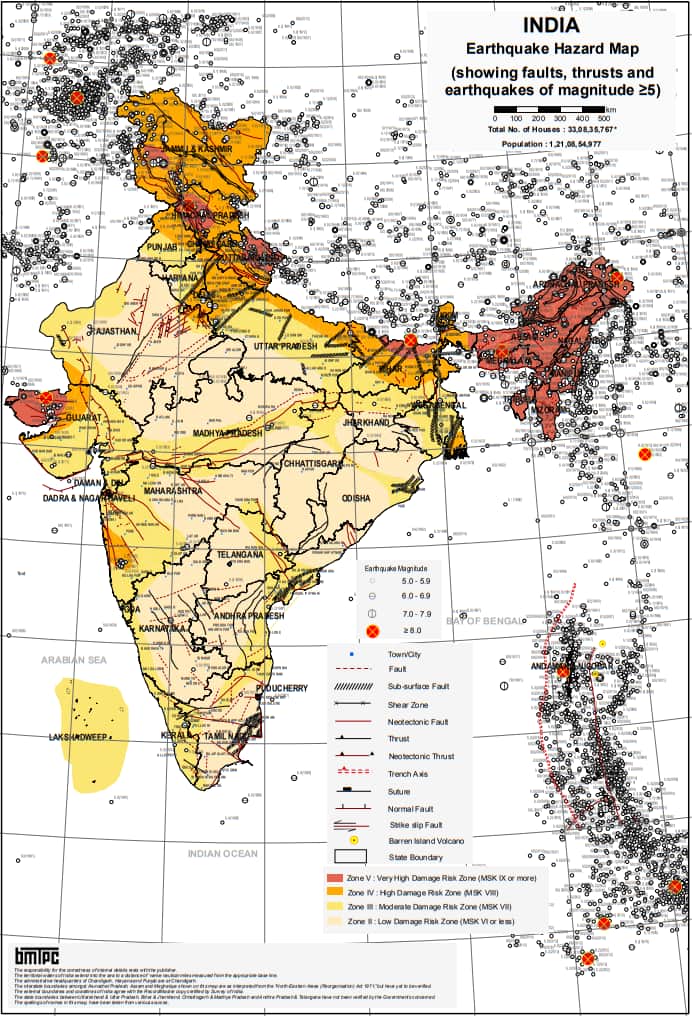
The Delhi Disaster Management Authority (DDMA) classifies Zone IV as an area of "fairly high seismicity", where quakes of magnitude 5-6 are relatively common. Earthquakes measuring 7-8 on the Richter Scale can also occur. Experts caution that seismic zoning is an ongoing process, subject to revision as geological understanding evolves.
Since 1720, Delhi has endured at least five major quakes measuring above 5.5 on the Richter scale.
Science Behind Earthquakes
The Earth's crust is made up of massive slabs of rock known as tectonic plates. These plates are constantly, albeit slowly, in motion. In northern India, especially near the Himalayas, the Indian plate collides with the Eurasian plate — a tectonic interaction that frequently leads to seismic activity.
In Delhi, experts believe seismicity is linked to the Delhi-Hardwar Ridge, a significant geological structure. This ridge is part of the Aravalli Mountain system and runs beneath the Ganga basin, extending northeast toward the Himalayas. It's believed to play a key role in the region's earthquake patterns.
Cracks In Delhi's Armour
The bigger concern lies not underground, but above it. A SWOT analysis by the National Disaster Management Authority (NDMA) earlier revealed serious vulnerabilities in Delhi's urban landscape. High population density, a large number of non-earthquake-resistant buildings, and congested, unplanned constructions have raised alarm among disaster preparedness experts.
According to the Vulnerability Atlas of India (1997), nearly 6.5% of houses in Delhi face a high damage risk and over 85% face a moderate risk if subjected to intensity VIII shaking. These figures are based on simplified models, and authorities admit more in-depth assessments are needed.
The DDMA has warned that an earthquake-induced disaster in Delhi could carry devastating economic and political consequences, far beyond just structural damage or loss of life. The capital's critical role as the country's political and commercial hub magnifies the potential impact of any major seismic event.
"Most buildings in Delhi do not conform to Indian standards for aseismic construction," a DDMA official was quoted as saying in an NDTV report from February 2025. "The risk is real, and the implications of a powerful earthquake would go well beyond casualties."

Top Headlines