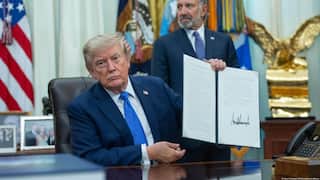
Saudi Arabia, Turkey, and Pakistan are set to sign a joint defense agreement. This pact aims to strengthen defense cooperation between these three nations in Jeddah.
Explorer
'Islamic NATO' Or Defence Cooperation? Saudi-Turkey-Pakistan Pact Explained | What It Means For India
Speculation about a possible strategic partnership between the three countries has been building for months.

Pakistan's Foreign Ministry said the visit would take place from August 6 to 8.
Source : ABP LIVE
- Saudi Arabia, Turkey, Pakistan to sign joint defense pact Friday.
- Regional tensions, maritime risks in Gulf spurred this agreement.
- Pakistan's inclusion in pact raises strategic concerns for India.
Saudi Arabia, Turkey and Pakistan are set to sign a joint defence agreement in Jeddah on Friday, according to sources cited by AFP. The proposed pact comes amid the ongoing war between the United States and Iran, which has heightened security concerns across the Gulf and increased pressure on maritime trade through the Strait of Hormuz and the Red Sea.
"This has been under discussion for a long time, but recent events in the region have accelerated the process," a source told AFP on condition of anonymity.
A second Saudi government source, also speaking anonymously, confirmed that the agreement would be signed on Friday. Saudi Crown Prince Mohammed bin Salman is scheduled to meet Turkish President Recep Tayyip Erdogan and Pakistani Prime Minister Shahbaz Sharif in the Red Sea port city of Jeddah.
Sharif, Asim Munir Arrive in Saudi Arabia
According to the Turkish presidential office, Pakistan Prime Minister Shahbaz Sharif and Army Chief General Asim Munir arrived in Saudi Arabia on Thursday and are expected to remain there until Saturday. Turkish President Recep Tayyip Erdogan is expected to arrive on Friday.
Pakistan's Foreign Ministry said the visit would take place from August 6 to 8.
"While this visit comes amid heightened tensions in the Gulf region, its significance transcends the immediate crisis and short-term circumstances," Foreign Ministry spokesman Tahir Andrabi said on Thursday.
Speculation about a possible strategic partnership between the three countries has been building for months.
Pakistan has sought to play a mediating role in efforts to end the US-Iran war, while Turkey has undertaken diplomatic initiatives aimed at ending the Gaza War. Saudi Arabia and Pakistan had already announced a joint defence agreement in 2025.
The proposed arrangement has also attracted attention because Pakistan is the only nuclear-armed country in the Muslim world.
Why Is the Meeting Happening Now?
The meeting comes amid heightened tensions across West Asia, with security concerns linked to Iran and maritime risks in the Strait of Hormuz and the Red Sea remaining major issues.
1. Rising Tensions in West Asia
West Asia has experienced significant military and political tensions in recent years, involving multiple countries.
The Israel-Iran conflict, the Gaza War and developments in Lebanon and Syria have made the region's security environment increasingly sensitive. Against this backdrop, countries are looking to strengthen defence cooperation.
2. Security Concerns Linked to Iran
As tensions with the United States and Israel have escalated, Iran has also intensified its military and strategic activities.
Iran's missile and drone capabilities, along with its expanding regional influence, have raised security concerns among Gulf countries and encouraged them to seek new strategic partnerships.
3. Maritime Security in Hormuz and the Red Sea
The Strait of Hormuz and the Red Sea are among the world's most important maritime trade routes, carrying substantial volumes of oil and other commercial goods.
Attacks on ships and growing security challenges in these areas in recent years have increased the need for maritime cooperation and joint surveillance.
4. Search for New Security Arrangements
Several countries in West Asia are looking beyond traditional security partnerships and seeking stronger regional security mechanisms.
Potential areas of cooperation include defence technology, joint military exercises, intelligence sharing and the defence industry.
ALSO READ: Houthi Attack Injures 11 In Saudi Arabia; Riyadh, Turkey And Pakistan Set For Defense Pact
Is This an 'Islamic NATO'?
The possibility of a defence agreement between Saudi Arabia, Turkey and Pakistan has generated international attention, with some media reports describing it as a potential "Islamic NATO".
However, none of the three governments has described the proposed arrangement as a collective security pact comparable to NATO.
For now, therefore, the agreement is being viewed as an initiative aimed at strengthening defence cooperation between the three countries.
What Does the Pact Mean for India?
India has strategic and economic relationships with both Saudi Arabia and Turkey, while Pakistan's participation makes the proposed agreement particularly significant for New Delhi.
1. West Asia's Strategic Importance for India
West Asia and the Gulf are strategically and economically important to India.
Millions of Indians work across the region and send significant foreign exchange back to India. India also sources a substantial share of its energy requirements from countries including Saudi Arabia, the United Arab Emirates, Iraq and Qatar.
Any new military agreement or escalation in regional tensions could therefore affect India's energy and economic interests.
2. India Has Different Ties With Saudi Arabia and Turkey
Saudi Arabia is an important energy partner for India and a key partner in investment, counter-terrorism cooperation and defence ties.
India's relationship with Turkey, meanwhile, has been volatile in recent years, particularly over Turkey's position on the Kashmir issue.
With Pakistan now part of the proposed defence arrangement, the future direction of Turkey's position towards India, particularly on issues such as Kashmir, will be closely watched.
3. Pakistan's Role Could Be India's Biggest Concern
Pakistan's inclusion in the agreement is likely to be India's primary concern.
If Pakistan eventually receives greater support from Turkey or Saudi Arabia in areas such as warships, drones, defence technology or military training under the proposed cooperation, India will assess the strategic implications.
However, the official provisions of the agreement have not yet been made public.
4. Implications for India's Foreign Policy
India has traditionally followed a "multi-alignment" approach, maintaining balanced relationships with different countries based on its national interests.
If new defence partnerships emerge in West Asia, India may need to manage its strategic relationships with Saudi Arabia, the United Arab Emirates, Israel, Iran and other partners with greater care.
ALSO READ: Africa CDC To Use Vaccine For Prior Zaire Ebola Strain As Stop-Gap Against DRC Outbreak
Before You Go
Patna: One Killed in Patna Road Accident, Violent Protest Erupts, Vehicles Set Ablaze
Frequently Asked Questions
Which countries are signing the joint defense agreement?
What is the primary reason for forming this defense agreement now?
The agreement is being formed due to heightened tensions in West Asia, increased security concerns linked to Iran, and the need for maritime security in the Strait of Hormuz and the Red Sea.
Is this new agreement being described as an 'Islamic NATO'?
While some media reports have speculated about an 'Islamic NATO,' none of the three governments have described the arrangement as a collective security pact. It is viewed as an initiative to strengthen defense cooperation.
What are India's concerns regarding this proposed defense pact?
India's primary concern is Pakistan's inclusion in the agreement. New Delhi will assess strategic implications if Pakistan receives greater support from Turkey or Saudi Arabia in defense technology or military training.

Advertisement
Top Headlines
World

'Islamic NATO' Or Defence Cooperation? Saudi-Turkey-Pakistan Pact Explained
World

Africa CDC To Use Vaccine For Prior Zaire Ebola Strain As Stop-Gap Against DRC Outbreak
World
Houthi Attack Injures 11 In Saudi Arabia; Riyadh, Turkey And Pakistan Set For Defense Pact
World

Trump Signs New Orders To Restrict Birthright Citizenship, Targets Birth Tourism



Advertisement









Advertisement