Explorer
India-Pakistan Nuclear War May Kill Up To 125 Million People: Study
The study, published in the journal Science Advances, looked at a war scenario that may occur between India and Pakistan in 2025.

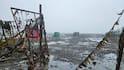
A nuclear war between India and Pakistan could, in less than a week, kill 50-125 million people -- more than the death toll during all six years of World War II, and lead to global climate catastrophe, according to researchers in the US. (AFP)
WASHINGTON: A nuclear war between India and Pakistan could, in less than a week, kill 50-125 million people -- more than the death toll during all six years of World War II, and lead to global climate catastrophe, according to researchers in the US. A study by researchers from the University of Colorado Boulder and Rutgers University examined how such a hypothetical future conflict would have consequences that could ripple across the globe. Today, India and Pakistan each have about 150 nuclear warheads at their disposal, and that number is expected to climb to more than 200 by 2025, the researchers said amid recent tensions between the nuclear-armed neighbours over Kashmir after India revoked J&K's special status. "An India-Pakistan war could double the normal death rate in the world," said Brian Toon, a professor at the University of Colorado Boulder. "This is a war that would have no precedent in human experience," Toon said. "Such a war would threaten not only the locations where bombs might be targeted but the entire world," said co-author Alan Robock of Rutgers University-New Brunswick. The study, published in the journal Science Advances, looked at a war scenario that may occur between India and Pakistan in 2025. While both the neighbouring countries have waged several wars over Kashmir, they could come to possess a combined count of 400 to 500 nuclear weapons by 2025, the study noted. "They're rapidly building up their arsenals. They have huge populations, so lots of people are threatened by these arsenals, and then there's the unresolved conflict over Kashmir," Toon said. The researchers found that the exploding nuclear weapons could release 16 to 36 million tonnes of soot -- tiny black carbon particles in smoke -- that could rise to the upper atmosphere and spread around the world within weeks. The soot, the researchers said, would absorb solar radiation, and heat up the air, boosting the smoke's swift rise. In the process, the study noted that the sunlight reaching the Earth would decline by 20 to 35 per cent, causing our planet's surface to cool by 2 to 5 degrees Celsius. Rainfall across the world may also reduce by 15 to 30 per cent, both of which could have larger regional impacts, the study noted. The researchers added that vegetation growth would decline globally by 15 to 30 per cent on land, and the oceans could see a productivity decline by 5 to 15 per cent. Overall, the study noted that recovery from all these impacts would take more than 10 years since the smoke would linger in the upper atmosphere. "Nine countries have nuclear weapons, but Pakistan and India are the only ones rapidly increasing their arsenals," Robock said. He added that the continuing unrest between the two nuclear-armed countries, particularly over Kashmir, made it important to understand the consequences of a nuclear war. According to the researchers, the nuclear weapons in the year 2025 could range from 15 kilotonnes in explosive power -- the same size as the bomb dropped on Hiroshima by the US in 1945 -- to a few hundred kilotonnes. In the scenario, the researchers estimated that 50 to 125 million people could die from the direct effects, with additional deaths from mass starvation also possible worldwide. "Nuclear weapons cannot be used in any rational scenario but could be used by accident or as a result of hacking, panic or deranged world leaders," Robock said. According to Robock, the only way to prevent accidental usage of nuclear weapons was to eliminate them.
Related Video
Breaking News: Trainer Aircraft Loses Balance Mid-Air, Crashes Near KP College in Prayagraj
Follow Breaking News on ABP Live for more latest stories and trending topics. Watch breaking news and top headlines online on ABP News LIVE TV
Top Headlines
Cities

Mumbai Mayor Race Heats Up: Big Setback For Uddhav Sena
News

India Infrastructure Conclave | 'I Feel Ashamed': Nitin Gadkari On Noida Techie's Death
Business

Deepinder Goyal Quit As Eternal CEO Because His Next Ideas Were 'Too Risky'
News

Exchange Of Fire Reported Along LoC In Keran Sector Of North Kashmir










See Today's Weather 
powered by

Tushar BanerjeeVice President and Digital Editor
Opinion