Interim Stay By Courts Will Not Expire Automatically After 6 Months, Says Supreme Court
The court said constitutional courts should refrain from laying down time bound schedule for cases pending before any other courts and such directions can only be issued in exceptional circumstances.
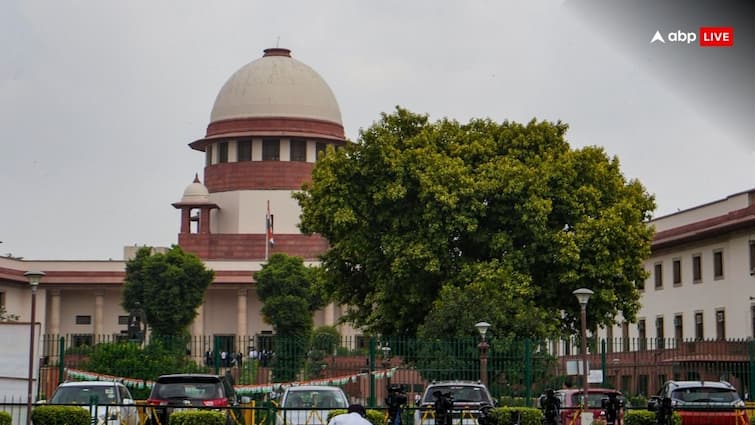
The Supreme Court on Thursday ruled that an interim stay granted by a lower court or high court in civil and criminal cases will not automatically expire after six months. The court said that the constitutional courts should refrain from laying down time bound schedule for cases pending before any other courts and such directions can only be issued in exceptional circumstances. The top court further said that only concerned courts can decide the urgency of the case.
The apex court ruled that it does not agree with its 2018 judment that held that the stay granted by a lower court or high court in civil and criminal cases will automatically expire after six months unless extended specifically.
The court found that the direction that 'interim stay by high courts automatically expires after six months unless extended' is something which cannot be issued under Article 142.
The top court delivered the verdict on a plea seeking reconsideration of its 2018 Asian Resurfacing Judgment.
A five-judge constitution bench comprising Chief Justice D Y Chandrachud, Justice A S Oka, Justice JB Pardiwala, Justice Pankaj Mithal and Justice Manoj Misra delivered the verdict.
Earlier on December 13, 2023 the apex court had reserved its verdict after hearing counsels appearing in case at length.
In 2018, the Supreme Court had ruled that stay granted by a lower court or high court in civil and criminal cases will automatically expire after six months unless extended specifically. The top court had clarified that the judgement will not be applicable if the stay order has been passed by it.
The challenge to this verdict is that the automatic vacation of stay prejudices the litigant irrespective of the conduct of that litigant. As each case is different and there may be unforseen circumstances over which a litigant has no control.
Also, it was argued that the vacation of stay order is also a judicial act and not an administrative one. So, by directing that the stay will stand vacated after six months, a judicial order is enforced as a result of which the stay is effected without application of mind.
It was also contended that mechanism of automatic vacation of stay could interfere with the power of the high courts under Article 226 of the Constitution and may be seen as judicial legislation.
Before You Go
Delhi Rain Crisis: Record Downpour Floods Neighbourhoods, Snarls Traffic and Pushes Yamuna Higher
Top Headlines