





Boys are leaving school due to shrinking livelihoods from climate change, suspension of MGNREGA, and perceived immediate financial benefits. Many migrate for work, prioritizing earning over education.
Explorer
EXCLUSIVE | Vanishing Classrooms Of Sundarbans: Climate Crisis, Poverty Push Schoolboys Into Migrant Labour
Climate change, repeated cyclones, poverty and shrinking livelihood opportunities are pushing boys in West Bengal’s Sundarbans out of school and into migrant labour, while families struggle to balance education with the need to earn.

Teenage boys in the Sundarbans are leaving school to find work in other states as cyclones, floods, poverty and shrinking local livelihoods are deepening the education crisis.
Source : Somrita Ghosh
- Sundarbans boys increasingly abandon school for work migration.
- Climate change and job scarcity fuel this trend significantly.
- Families prioritize immediate income over long-term education benefits.
- Girls' education improves, aided by state financial schemes.
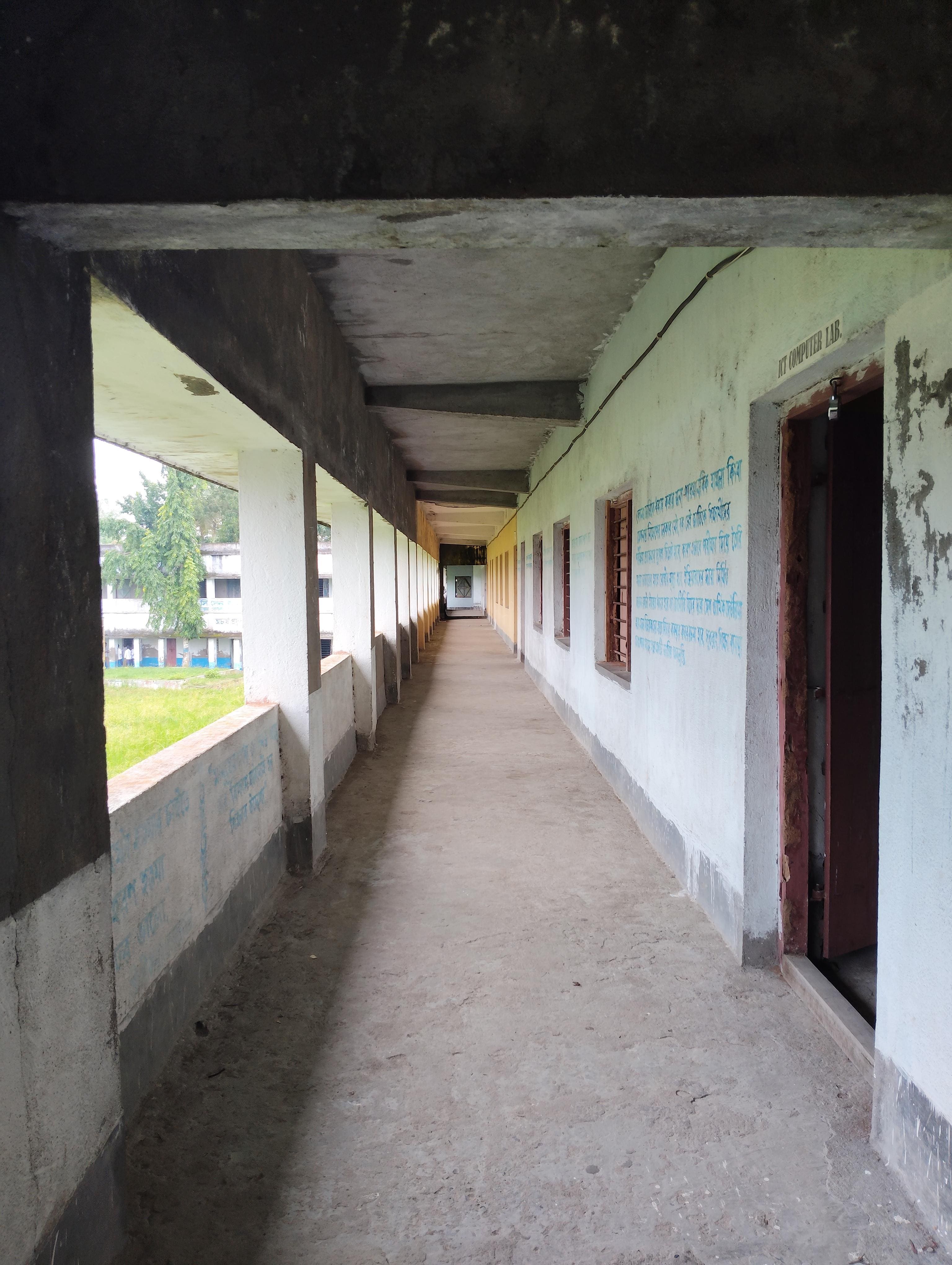
In a Class 12 classroom at Bijoynagar High School in West Bengal’s Sundarbans, Rakesh Mondal has already begun planning a future beyond school. The teenager says he attends classes mainly to meet friends and maintain basic attendance, while considering moving to Bengaluru to work as a businessman. Completing his board examinations is no longer a priority.
His classmate Seema Sardar has different plans. She wants to attend college, although she is unsure what lies beyond that. She has heard from teachers that girls receive financial assistance to continue their education, but does not know the name of the scheme. In a classroom where girls outnumber boys, their contrasting ambitions reflect a growing divide in the region’s education system.

The school’s teacher-in-charge, Apurva Manna, says 107 students had enrolled in Class 12 for the board examinations earlier this year, but only 78 appeared. Most of those who did not sit the exams were boys who had dropped out, with many choosing to migrate in search of work instead.

Climate Change And Altered Livelihoods
The problem extends beyond one school. Across the Sundarbans, which has around 200 higher secondary schools, teachers say the number of boys abandoning their studies has increased. The region’s communities are already dealing with the effects of climate change, repeated natural disasters and shrinking livelihood opportunities.
Cyclone Aila in 2009 marked a major turning point, followed by cyclones Bulbul, Amphan, Yaas, Remal and Dana. Repeated cyclones and floods have damaged embankments and increased soil salinity, putting pressure on farming and fishing, two important sources of local income. The Indian part of the Sundarbans covers around 4,262 square kilometres, with roughly half its area under mangrove forest. Its 19 administrative blocks are home to about 4.5 million people.

The suspension of the Mahatma Gandhi National Rural Employment Guarantee Act (MGNREGA) scheme in West Bengal for four years has added to the financial strain. With fewer local employment opportunities, many breadwinners have migrated to states such as Tamil Nadu and Karnataka, as well as the Andaman and Nicobar Islands, to earn a living.
The newly elected BJP-led West Bengal government has announced plans to introduce the Viksit Bharat–Guarantee for Rozgar and Ajeevika Mission (Gramin), which provides for 125 days of employment for eligible rural households in a financial year.
“It is getting tougher day by day,” said Prabir Mandal, vice-president of the Lahiripur gram panchayat. He cited the absence of MGNREGA work, tighter forest regulations and limited livelihood options as reasons families are struggling to make ends meet.
As adult men leave in search of work, teenage boys are increasingly following them. Some move to cities such as Bengaluru and Chennai before turning 18, joining informal labour networks rather than completing their schooling. For families facing financial insecurity, immediate earnings can appear more useful than education whose benefits may take years to materialise.

Sukesh Chandra Patra, teacher-in-charge at Dayapur PC Sen Higher Secondary School, said boys from economically weaker households were particularly vulnerable. Teachers sometimes send documents to parents through WhatsApp for signatures, but students do not return to class. Some attend only once a fortnight when their work schedules allow.

From Pen To Payment
Bubai Das, 20, left school after Class 11 and moved to Chennai in search of work. His father, Shyamapada Das, was bitten by a poisonous snake years ago and has since been bedridden. His mother, who had earlier worked under MGNREGA, now looks for other sources of income, including crab catching. His sister, Barnali, is studying in Class 9 at Bijoynagar High School and also helps with household responsibilities.
Bubai had passed his Class 10 board examinations and enrolled in Class 11, but he had already begun thinking about earning. A neighbour working in Chennai sent him photographs and videos of his life there, inspiring Bubai to seek a similar experience. He also felt pressure to contribute to his family’s finances.
“I haven't seen any state topper from Sundarbans, nor anyone achieving anything major in academics after passing out from school here. Rather, migrating has helped many families to overcome financial instability. My aim was the same,” he said.

In Chennai, Bubai worked at a mobile electronics and repair shop, where he learnt technical skills. He returned home a few months ago and now works at a local mobile shop, but considers the job temporary. He plans to return to Chennai or move to the Andaman and Nicobar Islands when an opportunity arises.
Asked how he felt when people questioned his educational qualifications, Bubai fell silent before saying that people in the Sundarbans did not seem to have the luck of obtaining strong academic qualifications. His sister, meanwhile, hopes to complete Class 12, saying she wants at least one person in the family to earn a higher secondary certificate.
Empty Benches And Vacant Chairs
Teachers say the education system is also grappling with a shortage of government school staff. According to the teachers interviewed for the report, only 11 of around 200 state-run schools in the region have a principal. Some parents, they said, believe teaching boys to earn is more practical than keeping them in school when the quality of education and future employment prospects remain uncertain.
Girls’ school attendance and retention have improved, which teachers and local observers attribute in part to the Kanyashree scheme introduced by the previous Trinamool Congress government. The scheme provides annual financial assistance of Rs 1,000 to girls from Classes 8 to 12 and Rs 25,000 to eligible unmarried girls at the age of 18, subject to conditions including continued education. It was introduced to help reduce school dropouts and child marriage.
A report by the West Bengal Commission for Protection of Child Rights said climate-related disruptions had contributed to irregular school attendance and dropouts in the affected areas of Gosaba and Pathar Pratima blocks. It recorded a 70 per cent rate of irregular attendance and a 27 per cent dropout rate in those areas.
For some boys, the decision to leave school begins with seasonal work. Teachers said students from Classes 9 and 10 often take jobs in the tourism sector during the peak season, from late November to early March. They can earn around Rs 500 a day working with hotels and tour operators.
“Once a young boy starts earning, even if that is around Rs 10,000 something, why would he return back to school?” asked Chinmoy Ray, a teacher at Rajat Jubilee High School. He said students see their families’ financial struggles and often prioritise survival over education.
The 'Greater' Challenge Of Climate Change
Floods and cyclones also interrupt classes, making it harder for students to maintain a consistent academic routine. Teachers said the greater challenge often comes after a disaster, when damaged homes and farmland leave families struggling to recover.
Mihir Roy, a teacher at Rajat Jubilee High School, said teenagers were increasingly concerned about the financial aftermath of natural disasters. When families lose homes or land to floods, boys may feel compelled to help rebuild their livelihoods. Once they start missing classes, teachers find it difficult to bring them back.
Teachers also said they sometimes stop pressing students to return because they, too, understand the immediate need for income. The lack of visible examples of academic success and stable careers adds to the problem. Some boys follow family traditions in fishing or honey collection, occupations that do not formally require higher educational qualifications.
The disruption affects younger children as well. Some leave school temporarily or permanently when they move with their parents to other states. Teachers said families sometimes return to the Sundarbans after struggling to secure admission for their children in government schools elsewhere. Differences in teaching languages and the cost of private education can make relocation difficult for students.

Women Left Behind As Families Migrate
As men and teenage boys leave the Sundarbans for work, women are often left to manage households, children and daily expenses on their own. The prolonged separation can also bring emotional strain, particularly when mothers do not know when they will see their children again.
Kalpana Mandal is waiting for her eldest son, Dinesh, who left for Bengaluru after dropping out in Class 11. Her husband has been working away from home for more than a decade and is currently employed in the Andaman and Nicobar Islands. He returns for a month or two at a time before leaving again.
“At times, while cooking, I sit and think what my son might be doing now, did he get enough good food, is his health all right,” she said. Kalpana was 16 when Dinesh was born and now lives with her 12-year-old daughter, Shruti.
The family’s financial circumstances, she said, leave her with little choice. Despite Dinesh having performed reasonably well in his Class 10 examinations, he had decided against sitting for his Class 12 boards. He wanted to follow his father and cousin and move away from the village.
Kalpana believes social media helped shape his ambitions. Seeing other young men from the area earning money and living in cities made Dinesh eager to experience urban life. As his academic performance declined, the family began to believe that working and acquiring practical skills might offer him a more immediate path forward.
Her daughter, meanwhile, is still in school. Shruti hopes her brother will return with a pink dress he has promised to bring her.

Kalpana manages everything from buying groceries and arranging cooking gas to paying bills and looking after livestock and her daughter. She said her husband sends money but has refused to take her and Shruti to live with him, fearing they would become accustomed to city life and move away from their roots.
The prospect of her son having to work at such a young age troubles her. She said she would have preferred him to leave home at 20 or 21, but the family cannot afford to insist that he continue studying when he wants to earn.
The family’s concrete house, built after her husband began working elsewhere, offers greater security during the monsoon and floods than their earlier mud house. Kalpana hopes Dinesh will eventually earn enough to give her and Shruti a better life outside the Sundarbans.
Jhumpa Ghosh, director of Change Initiatives, which works in the region, said poverty and financial constraints were the main reasons families gave for children leaving school. Some parents believe earning and contributing to household expenses is more important than continuing education. Even when boys return home for festivals, family emergencies or the end of seasonal work, they do not necessarily resume their studies.
Arup Debnath, chief functionary of the Social Assistance Institute, an NGO that provides tuition and books to children in need, said girls had become more regular in classrooms while boys increasingly preferred learning practical skills and earning money over pursuing higher education.
The West Bengal school education minister, Dipak Barman, was approached for comment, but no response had been received by the time the report was published. An official email was also sent to the additional chief secretary of the state school education department. The story will be updated if a response is received.
(Somrita Ghosh is an independent journalist. This story is supported by the Earth Journalism Network for the NELD Fellowship.)
Frequently Asked Questions
Why are boys increasingly dropping out of school in the Sundarbans?
How does climate change contribute to the education challenges in the Sundarbans?
Climate change, through cyclones and floods, damages livelihoods like farming and fishing, creating financial strain. This compels men and teenage boys to migrate for work, disrupting their education.
Are girls facing similar dropout rates in Sundarbans schools?
No, girls' school attendance and retention have improved, partly due to the Kanyashree scheme. Teachers observe girls becoming more regular in classrooms compared to boys.
What financial schemes are mentioned that affect employment in the Sundarbans?
The MGNREGA scheme's suspension added financial strain. The new government announced the Viksit Bharat–Guarantee for Rozgar and Ajeevika Mission (Gramin) for 125 days employment for eligible households.

Advertisement
Top Headlines
India

NHRC notice to education ministry over complaint related to 'Veer Baal Diwas' events in schools
India

Rahul a liar, attempting to weaken democracy: Shivraj Singh Chouhan
India

6 Indian Seafarers Stuck In Pak For 6 Months, MEA Explains Why They Cannot Disembark
India

Bharat Summit Visa Row: MEA Says Visa Decisions Are Sovereign, Defends India's Stand


Advertisement






Advertisement




