Petitioner Group Asks SC Nod To Travel To Yemen And Stop Kerala Nurse's Execution
The court advised the petitioner to seek government assistance for negotiating a settlement with the victim's family. Nimisha's lawyers claim she acted in self-defense after abuse, hoping for diplomatic intervention.

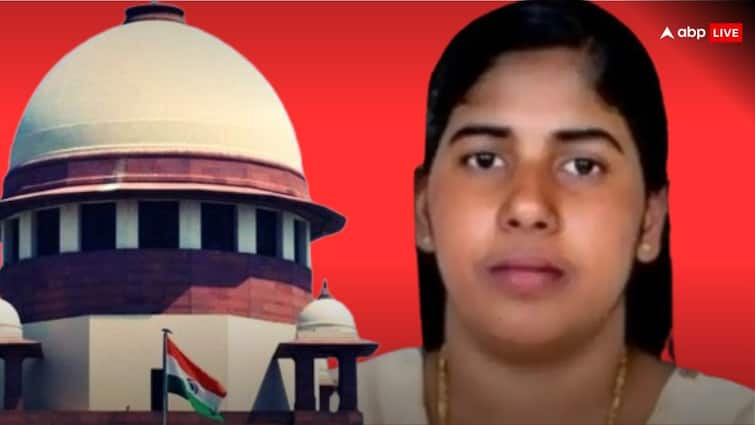
The Supreme Court on Friday heard a petition seeking to save Indian nurse Nimisha Priya from execution in Yemen, where she has been sentenced to death. The petitioner informed the court that her execution has been temporarily deferred.
During the hearing, the petitioner expressed willingness to travel to Yemen to meet the victim’s family and attempt a settlement. In response, the court advised them to formally submit a representation to the Indian government for assistance in this regard.
Nimisha Priya, a Kerala native, was convicted of murdering a Yemeni citizen, Talal Abdo Mahdi, in 2017. She was sentenced to death in 2020, and her execution was initially scheduled for 16 July. However, intervention by the Indian government and a senior mufti from Kerala has postponed the hanging for now. The Supreme Court has scheduled the next hearing for 14 August.
Representing the Centre, Attorney General R Venkataramani told the bench comprising Justices Vikram Nath and Sandeep Mehta that while everyone hopes for Nimisha’s safe return, excessive interference could have adverse consequences. The Ministry of External Affairs, he added, has made both formal and informal appeals to defer the execution.
The petitioner organisation, Save Nimisha Priya Action Council, argued that Yemeni law allows for capital punishment to be waived if the victim’s family agrees to a settlement and financial compensation. They emphasised that diplomatic involvement from the Indian government could help facilitate such a resolution.
According to the petition, Nimisha, 37 is a victim. She was reportedly held against her will by Mahdi, who had allegedly confiscated her passport and subjected her to prolonged abuse. The petitioner claimed that in an attempt to retrieve her passport, Nimisha administered a sedative injection to Mahdi, which led to his death — an outcome she had not intended.
The council further stated that during the period her passport was unlawfully withheld, Nimisha had tried to seek legal help but was unsuccessful. They maintain that her actions were not premeditated and urge a reconsideration of her sentence through diplomatic and legal channels.
Top Headlines