India Hits Back At Pak Army Chief Over Kashmir Remark: 'How Can Anything Foreign Be In Jugular Vein?'
Randhir Jaiswal was reacting to Pakistan Army Chief General Asim Munir who called Kashmir as the "jugular vein" of Islamabad and said that Pakistan "won't forget it".


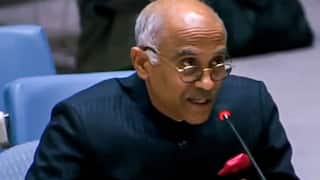
The Ministry of External Affairs (MEA) on Thursday reacted to the Pakistan Army Chief's statement on Kashmir, saying "how can anything foreign be in a jugular vein."
"How can anything foreign be in a jugular vein? This is a union territory of India. Its only relationship with Pakistan is the vacation of illegally occupied territories by that country," MEA official spokesperson Randhir Jaiswal said during a weekly briefing on Thursday.
Taking a strong note of the Pakistan Army Chief General Asim Munir statement on Kashmir, the MEA said that Pakistan's "only relationship with Kashmir" is to vacate the illegally occupied territory.
Jaiswal was reacting to Asim Munir's statements who called Kashmir as the "jugular vein" of Islamabad and said that Pakistan won't forget the issue of Kashmir and will stand by the Kashmiri people in the struggle against the Indian occupation. In his address at an event in Islamabad this week, Gen Munir described Kashmir as the jugular vein of Pakistan and asserted that no one would be able to separate Kashmir from his country.
#WATCH | On the comments by Pakistan Army chief terming Kashmir as a jugular vein, MEA Spokesperson Randhir Jaiswal says, "How can anything foreign be in a jugular vein? This is a union territory of India. Its only relationship with Pakistan is the vacation of illegally occupied… pic.twitter.com/zV9S0OnXhQ
— ANI (@ANI) April 17, 2025
The Pakistan Army chief made the remarks while addressing the Overseas Pakistanis Convention in Islamabad on Wednesday. The army chief also said that "we are different from Hindus" and defended the two-nation theory.
"Our forefathers thought we are different from Hindus in every possible aspect of life. Our religions are different, our customs are different, our traditions are different, our thoughts are different, our ambitions are different. That was the foundation of the two-nation theory that was laid there. We are two nations, we are not one nation," Munir said.
Top Headlines