Explorer
'If Serious About Better Ties With India, Hand Over Wanted Indians To Us': S Jaishankar To Pakistan
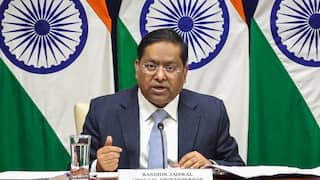
S Jaishankar said the relationship with Pakistan remains "difficult" because it openly practices terrorism against India, and if Islamabad is serious to cooperate with New Delhi, it should hand over the Indians wanted for terrorist activities living in Pakistan.

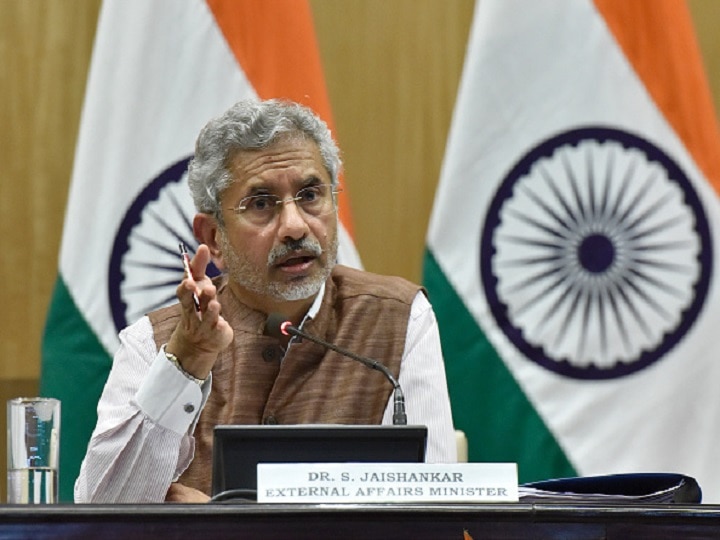
Pakistan does not deny sending terrorists to India, said S Jaishankar. (File Photo/ Getty)
London: External Affairs Minister S Jaishankar said the relationship with Pakistan remains "difficult" because it openly practices terrorism against India, and if Islamabad is serious to cooperate with New Delhi, it should hand over the Indians wanted for terrorist activities living in Pakistan. In a wide-ranging interview with French daily Le Monde, the minister said Pakistan does not deny sending terrorists to India. "The relationship is difficult since many years, mainly because Pakistan has developed an important terrorist industry and sends terrorists to India to carry out attacks. Pakistan itself does not deny this situation," he said, in response to a question about Pakistan Foreign Minister Shah Mahmood Qureshi's recent statement that relations with India are "close to zero". "Now, tell me: which country would be willing to talk and negotiate with a neighbour who openly practices terrorism against it... We need actions that demonstrate a real willingness to cooperate. "For example, there are Indians wanted for terrorist activities living in Pakistan. We are telling Pakistan: hand them over to us," he said, in a clear reference to criminals like underworld don Dawood Ibrahim, who is believed to be hiding in Pakistan. Dawood, originally from Dongri in Mumbai, is wanted for murder, extortion, targeted killing, drug trafficking, terrorism and various other cases. His name figured in the United Nations Security Council's updated list of terrorists and militant groups in 2018. On the situation in Kashmir, Jaishankar said the "reforms" in August, when India revoked Article 370 to withdraw the special status of the region, led to some precautionary measures to avert the danger of violent reactions from radical and separatist elements but that the situation was now returning to normal. "These restrictions have been gradually reduced, and as the situation normalises, telephone and mobile lines have been restored, shops are open and apple harvest is under way. The situation is back to normal," he said, adding that foreign journalists would be welcome to the region as soon as things are safe. Asked about the tide of "nationalism" in India, Jaishankar reiterated that India's nationalism should not be viewed through western lens. "Each country has a different understanding of nationalism, a different history. In the United States, it has an isolationist connotation. In Asia, at least in India, nationalism is a positive word," he said. On a question related to tensions arising out of nationalism for minorities, he reiterated: "It is my country that defines my nationality, not my religion, nor my caste, nor my language. "The concept of nation is different. In India, we are in a sense a civilization state, with natural, linguistic, ethnic and religious diversity. We have never considered uniformity as a necessity or an aspiration. There are few places in the world where you will see so many people with so many beliefs co-existing." In the interview which covered a wide spectrum of topics, from India-China relations to the India-US dynamic, the external affairs minister was categorical about India's growing importance in a world where power will be more dispersed across a range of actors. "We are in a completely different world. We tend to consider the post-1945 bipolar world and the post-1992 American world as the norm. But look at the history of the world. Things change, nothing is engraved in stone. This world will be different, power will be more dispersed, there will be more actors," he said. Asked if Europe would be one such actor, he noted that India would be in favour of that. "We are a deeply democratic country in a democratic world, Europe must have a greater role," he said. On India and China, the minister said that both countries shared a common interest in making the world more inclusive and a re-balancing of the world requires re-balancing with Asia, and in Asia, which covers primarily with India and China. "We are two great countries and it is in our common interest to have good relationships," he said.
Follow Breaking News on ABP Live for more latest stories and trending topics. Watch breaking news and top headlines online on ABP News LIVE TV
Read more
Top Headlines
Cities

Air India Delhi-Mumbai Flight Returns After Technical Issue, Engine Shutdown Suspected
Business

India-New Zealand Trade Deal Explained: 95% Tariff-Free Access And Easier Student Visas
World

DOJ Restores Trump's Missing Photo In Epstein Files, Clarifies Reason Behind Partial Release
News
‘Violence A Norm, Yunus Powerless’: Hasina Flags Religious Extremism In Bangladesh Amid Unrest





See Today's Weather 
powered by