Delhi’s Air Quality Remains 'Very Poor' As Fog Blankets City; IMD Warns Of Cold Wave From Today`
Delhi’s air quality worsened on Friday with AQI hitting 324, while the IMD warned of a cold wave, shallow fog and falling temperatures across the capital.

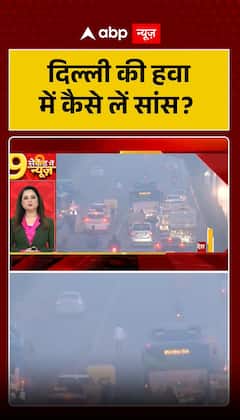
Delhi residents woke up on Friday to yet another morning shrouded in smog, as the city’s already grim air quality slipped further overnight. The national capital’s struggle with pollution intensified, pushing its Air Quality Index (AQI) deeper into the “very poor” category.
AQI Dips Further, With Most Monitoring Stations in ‘Very Poor’ Zone
Data from the Central Pollution Control Board’s (CPCB) Sameer app showed that Delhi’s average AQI stood at 324 at 7:05 am on Friday, a sharp rise from 304 recorded on Thursday evening. With this 20-point jump, pollution levels remain firmly entrenched in the “very poor” bracket.
Out of Delhi’s 40 monitoring stations, 31 reported “very poor” air quality. RK Puram emerged as the most polluted spot with an AQI of 374, closely followed by Bawana at 373 and Nehru Nagar at 366.
At the lower end of the spectrum, Mandir Marg recorded an AQI of 222, while NSIT in Dwarka logged 266 — both still categorised as “poor”.
Cold Wave Warning as Fog and Low Temperatures Grip the Capital
Alongside deteriorating air quality, the city is also bracing for cold wave conditions. According to the Air Quality Early Warning System for Delhi, a mainly cloudy sky with shallow morning fog is expected to persist through the day.
The India Meteorological Department (IMD) stated that the minimum temperature is likely to dip to 5°C. The maximum temperature, which was 23.1°C on Thursday, is expected to settle around 23°C.
Northwesterly surface winds, blowing at speeds of up to 10 kmph in the morning, may offer slight relief. Wind speeds are forecast to rise to less than 12 kmph in the afternoon, only to fall again during the evening and night.
New Report Warns of Escalating Toxicity in Delhi’s Air
Amid rising pollution levels, a fresh assessment by the Centre for Science and Environment (CSE) paints a worrying picture. The study, which covers early winter trends (October–November) and annual air quality patterns, highlights not only the increasing toxicity of Delhi’s air but also the deteriorating conditions in smaller towns across the National Capital Region (NCR).
The report shows that despite a noticeably reduced contribution from farm fires this season, Delhi’s air quality has still plunged into the “very poor” to “severe” range. This underscores the growing influence of local pollution sources — particularly vehicle emissions and combustion-based activities.
Anumita Roychowdhury, executive director at CSE, noted in the report:
“Delhi and NCR cannot hide behind the smokescreen of farm fires any more… The daily rise of PM2.5 and other toxic gases such as NO2 and CO — mainly from vehicles and combustion sources — is creating a toxic cocktail that has gone largely unnoticed.”
She added that long-term air quality improvements have stalled, signalling the need for urgent, systemic changes across sectors including transport, industry, energy, waste, construction, and household emissions.
Sharanjeet Kaur, deputy programme manager at CSE’s Urban Lab, echoed the concerns. “What stands out is the stubborn spread of pollution across the NCR… Tinier towns are seeing more intense and longer-lasting smog build-up. Even with lower peaks this winter due to fewer farm fires, the entire airshed is becoming increasingly saturated,” she said.
A Crisis That Demands Urgent Action
As pollution levels soar and winter conditions tighten their grip, Delhi finds itself confronting yet another season of hazardous air. While the absence of significant farm fires might have offered hope, the latest data shows how deeply entrenched local pollution sources are.
The question now is whether the capital, and the wider NCR, can push for the structural changes needed to ensure cleaner, healthier air. For millions waking up to a haze-filled skyline, the urgency has never felt more real.
Related Video
Punjab News: AAP Leader Shot Dead During Wedding in Amritsar

Top Headlines