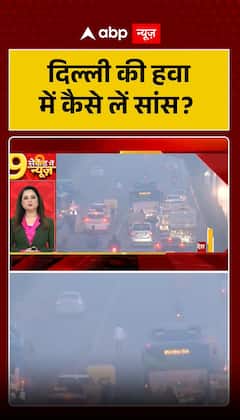
Delhi-NCR's Toxic Air Triggers Chest Pain, Throat Issues; Patients Show Slow Recovery
Doctors across NCR have urged residents to limit outdoor exposure, wear N95 masks, and use air purifiers at home and workplaces.

Delhi-NCR’s deteriorating air quality has once again spiralled into a public health emergency, with hospitals across the region witnessing a sharp surge in patients suffering from respiratory distress and pollution-related ailments.
Doctors in Delhi, Noida, Gurugram, Faridabad, and Ghaziabad have reported a flood of cases involving breathlessness, chest tightness, persistent cough, and throat irritation across all age groups. Physicians warn that the current pollution levels are exacerbating chronic respiratory and cardiac conditions, while even healthy individuals are showing symptoms linked to prolonged exposure to toxic air.
A worrying trend, doctors say, is that patients recovering from respiratory infections are taking longer to heal, with even healthy adults complaining of prolonged cough, fatigue, and chest heaviness.
Pollution-Linked Respiratory Spike
Dr Aamir Nadeem, consultant in pulmonology at Regency Hospital, Gorakhpur, said there has been a marked increase in patients complaining of breathlessness, persistent cough, and throat irritation, including those already diagnosed with asthma or COPD.
“The high amount of fine particulate matter is polluting the airways and aggravating allergies, leading to more hospital visits,” Dr Nadeem said. “Many young professionals are developing a condition called urban bronchitis, a pollution-linked inflammation, and recovery periods post-infection have become longer as poor air quality is compromising lung resilience, even in healthy adults.”
Similarly, Dr Ravi Shekhar Jha, director and head of pulmonology and sleep medicine at Fortis Escorts, Faridabad, said outpatient departments across NCR are crowded with patients suffering from cough, wheezing, and persistent breathlessness.
“There’s been a striking reappearance of symptoms in individuals whose childhood asthma had remained dormant for years,” Dr Jha told News18. “Some are even experiencing haemoptysis (bleeding during cough). The combination of high particulate matter, temperature inversion, and seasonal allergens has re-triggered airway hyper-reactivity.”
He added that even those without prior respiratory conditions are showing symptoms such as allergic rhinitis, sore throat, and unexplained fatigue. “PM2.5, the fine particulate matter that penetrates deep into the lungs, is the main culprit, causing inflammation and worsening existing diseases. This year, symptom onset has been quicker and recovery slower, likely due to sustained exposure and cumulative effects,” he said.
‘A Continuous Health Threat’
Dr Arjun Khanna, head of pulmonology at Amrita Hospital, Faridabad, called air pollution no longer an environmental issue but a “continuous health threat.”
“Over the past few weeks, we have observed a sharp increase in patients coming in with respiratory complaints. What is worrying is that these symptoms are no longer limited to those with pre-existing conditions like asthma or COPD; even young, otherwise healthy individuals are now developing breathing difficulties after minimal exposure,” Dr Khanna said.
He added that fatigue, recurring headaches, and eye irritation are now increasingly common, “signs that air pollution is affecting multiple systems of the body, not just the lungs.”
Eye Problems On The Rise In Delhi
Dr Mandeep Singh Basu, director of Dr Basu Eye Care Centre, New Delhi, confirmed a noticeable rise in people experiencing redness, dryness, and irritation in the eyes.
“The fine dust and smoke particles in the air can disturb the natural tear film, making the eyes feel gritty and uncomfortable. Those who already have dry eyes, wear contact lenses, or spend long hours on screens are usually affected more severely,” Dr Basu said.
Doctors across NCR have urged residents to limit outdoor exposure, wear N95 masks, and use air purifiers at home and workplaces. They also recommend maintaining hydration and using lubricating eye drops to ease discomfort.
With pollution levels remaining in the “severe” category, public health experts warn that sustained exposure could have long-term consequences, from reduced lung function to increased cardiovascular risks, if immediate mitigation measures are not taken.
Related Video
Punjab News: AAP Leader Shot Dead During Wedding in Amritsar

Top Headlines