Rupee May Slide To 88.5 Per Dollar As US Tariff Heat Builds: Report
The report also pointed out that, from a Real Effective Exchange Rate (REER) standpoint, the rupee remains competitively positioned, currently estimated at a REER value of around 100
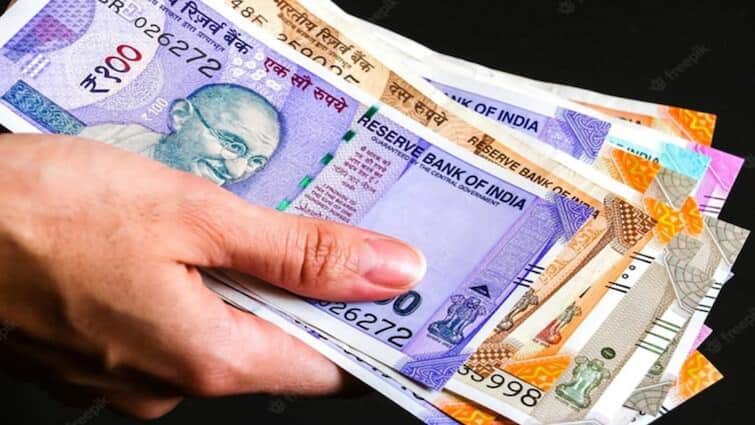
The Indian Rupee may weaken further to 88.5 per US dollar in the coming months, driven by renewed trade tensions and fresh tariffs imposed by the United States, according to a recent report by ICICI Bank. The forecast comes as the rupee has already declined 2.4 per cent since the start of the calendar year, currently hovering around 87.55 per US dollar, as per Reserve Bank of India (RBI) data.
Despite an 8 per cent drop in the US Dollar Index earlier this year, the dollar has regained strength in recent weeks, aided by a flurry of new trade agreements. This reversal has led to broader depreciation trends across most major global currencies, including the Indian rupee. “Till such time we have further clarity, we expect INR to trade with a depreciation bias around 87–88.5 levels,” the ICICI Bank report stated.
The report also pointed out that, from a Real Effective Exchange Rate (REER) standpoint, the rupee remains competitively positioned, currently estimated at a REER value of around 100.
Impact Of Tariffs And Export Slowdown
The imposition of 25 per cent tariffs on Indian goods by the U.S.—a significant increase from the earlier 10 per cent baseline—is likely to put additional pressure on India’s export sector. These new duties are steeper than the 15–20 per cent rates applied to most other Asian exporters, excluding China.
ICICI Bank’s analysis highlighted that, even before the new tariffs, Indian exports to non-U.S. destinations had already fallen by 2.9 per cent year-on-year in the first quarter of FY2026. With the higher tariffs now in place, this trend could worsen, potentially dampening overall trade and economic momentum.
The report suggests that if US imports continue to slow down, Indian exports may contract further, weighing on GDP growth.
GDP May See Marginal Impact From Tariffs
Assuming a demand elasticity of 1.0, a 20 per cent increase in tariffs could result in a proportional decline in demand for Indian goods. According to ICICI Bank’s estimate, this could shave off 0.3–0.4 per cent from India’s GDP. However, if exports to other regions recover, the overall drag may be limited to between 0.1 and 0.2 per cent.
Oil Prices Remain A Wild Card
The report further noted that global oil prices could play a critical role in shaping the rupee's trajectory. While a slowdown in global growth may lead to easing crude prices, this may be offset by ongoing geopolitical risks, including potential sanctions on Russian oil.
As India grapples with external shocks from trade and currency movements, policymakers and exporters alike will be closely monitoring the evolving global economic landscape.

Top Headlines