This Rare Flower Smells Like Rotten Carcass, And Thousands In Sydney Are Queuing Up To Sniff It
Trending News: Sydney's Royal Botanic Gardens welcomes a rare Amorphophallus titanum bloom, dubbed "Putricia" due to its foul, corpse-like odour, attracting thousands of visitors and online viewers.
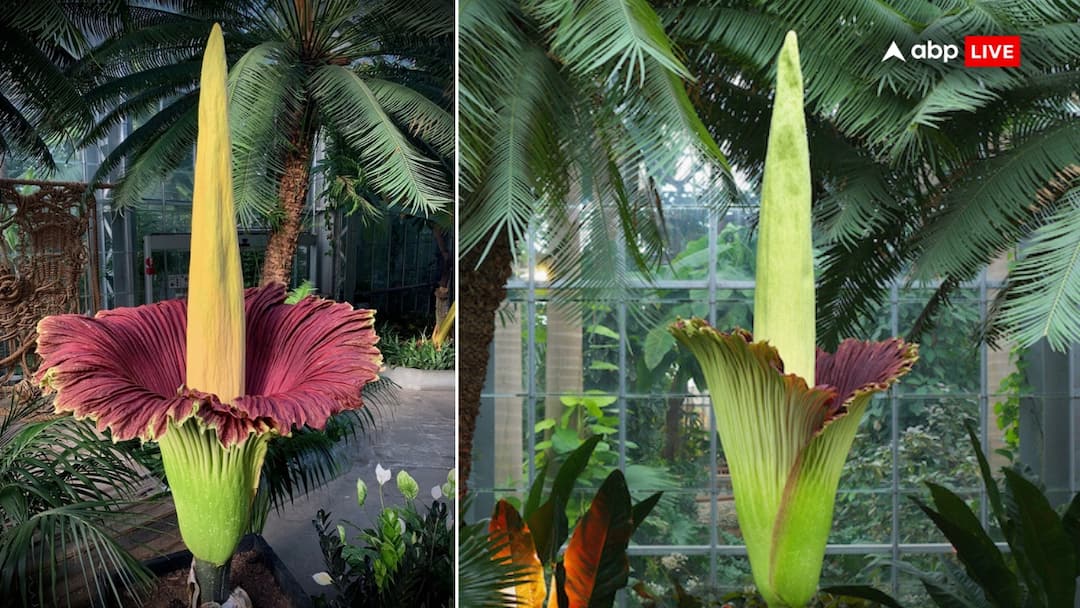
The Royal Botanic Gardens in Sydney is experiencing a rush like never before. After all, it’s the first time in 15 years that this special flower has bloomed there. The rare Amorphophallus titanum, also called the corpse flower, is also special because of its unique smell — like that of a rotten carcass.
You read that right!
According to reports, almost 20,000 people have visited the Sydney park to see the endangered plant dubbed 'Putricia' — combining “putrid” and “Patricia”. The name was chosen by a staff vote at the Royal Botanic Gardens acknowledging the smell, The Guardian reported.
The flower is native to Sumatra in Indonesia, and it blooms every 7-10 years in the wild. It was only in 1878 that the flower first came in threader of scientists. Globally, there may not be more than 1,000 plants, including those in cultivation, a BBC report said.
Why Putricia Smells Like Rotten Corpse
Amorphophallus titanum translates to "large, deformed penis". However, it's the smell that makes the rare flower more unique.
A chemical production happening in the plant to attract pollinators causes the smell, according to the BBC report cited above.
While this rare blossom usually lasts three to four days, it emits the smell mostly during the initial 12-24 hours, coinciding with the period when the female flowers are receptive to pollination, says the United States Botanic Garden, which claims to have "a sizeable number of mature corpse flower plants" in its collection.
The inflorescence, a cluster of flowers functioning as a single unit, produces heat that helps spread its odour over greater distances. This combination of heat and smell effectively attracts pollinators like carrion beetles and flies, which are drawn to the scent of decay from far away.
The corpse flower is classified as endangered by the International Union for Conservation of Nature (IUCN), which says it population has decreased by over 50% in the last 150 years, primarily due to habitat loss caused by logging and the conversion of its native forests into oil palm plantations.
Popularity Of The Corpse Flower
While thousands have made it to the Royal Botanic Gardens in Sydney in person to catch a glimpse of the flower, an equal number is watching a livestream online, away from the smell, waiting for the Patricia to blossom in front of a pale purple curtain.
“People have become quite obsessed with her,” Daniella Pasqualini, the horticultural development supervisor at the botanic gardens, was quoted as saying in the Guardian report. “She’s taken on a life of her own.”
Viewers could be seen shared their feelings for the corpse flower during the livestream chat, the report said.
Besides its potent odour and brief blooming period, the corpse flower's appeal lies in its immense size — it holds the title of the largest unbranched inflorescence in the plant kingdom. In cultivation, the plant often reaches heights of up to 8 feet, while in its natural habitat, it can grow as tall as 12 feet, according to an article on the US Botanic Garden's website.
Unlike most plants, the corpse flower does not follow an annual blooming cycle. Its bloom develops from a large underground stem called a "corm", where energy is stored. Flowering occurs only when enough energy has been accumulated, making the interval between blooms highly unpredictable, ranging from a few years to over a decade. This plant requires very specific conditions, such as consistently warm temperatures and high humidity, which is why botanical gardens are ideal for cultivating it outside its native environment.
Top Headlines