Will Pakistan Risk Its China Alliance For Better US Relations? Experts Say No
They see Trump's outreach as a strategy to contain China, but argue Pakistan won't jeopardise its relationship with Beijing for US gains.

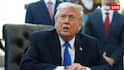
Beijing, Aug 6 (PTI) As US President Donald Trump has ramped up his country's ties with Pakistan, China's all-weather ally, Chinese strategic experts say Islamabad understands the limits given his strategy to contain Beijing's global influence.
Last month, Pakistan's army chief, General Asim Munir, made his first official visit to China since assuming office as field marshal. His visit came shortly after a rare five-day trip to Washington, where he attended a private luncheon with Trump. That meeting culminated in Trump's announcement of enhanced US-Pakistan cooperation in various fields, including an oil deal.
According to a recent "Economist" article, the outcome of General Munir's US visit marks a shift in American foreign policy, with implications not only for India but also China and the Middle East.
During his time in Beijing, General Munir met with Vice President Han Zheng, Foreign Minister Wang Yi and senior members of the People's Liberation Army (PLA), though not with President Xi Jinping. This contrasts with his predecessor, General Qamar Javed Bajwa, who met Xi during his 2018 trip to China.
While official readouts from Munir's meetings emphasised diplomatic niceties and reiterated strong bilateral ties, Beijing's perception of the Trump-Munir rapport remains unclear -- especially given Trump's overt strategy to curb China's rise as a global power.
Beijing has its concerns considering the decades-long investment fostering an all-weather relationship with Pakistan.
Two Chinese senior strategic experts PTI spoke to outlined for the first time China's view on the emerging new Washington-Islamabad strategic paradigm in the broader context of Trump's geopolitical strategy.
"Pakistan will not develop its relations with the US at the cost of its relation with China," Hu Shisheng, Director of the Institute for South Asian Studies at the China Institutes of Contemporary International Relations, said.
"Pakistan will not be that easily hooked by Trump," Hu, regarded as an expert on South Asian politics, said.
Jesse Wang, a research fellow at Huaxia South Asia Economic and Cultural Exchange Centre of China, said "on the surface, Trump's candy to Pakistan looks like a disturbance to China, but actually, cannot affect the structural stability of the Sino-Pak relationship".
"The US intervention has created short-term geopolitical noise but is unlikely to shake the foundation of China-Pakistan dependence," he said.
"For Pakistan, 'make profits both ways' economically is a rational choice, but its security and infrastructure lifelines are tied to China closely, and the strategic balance has not tilted," Wang said.
Both argue that China-Pakistan ties are structurally far deeper for Islamabad to breakaway to forge another similar relationship.
Historically, Pakistan's ties with the US and China have largely unfolded in parallel over long periods without cancelling each other out, Hu said, in an apparent reference to Pakistan joining the American war against the then Soviet Union's occupation of Afghanistan in 1979 and the Afghan war thereafter.
"The China-Pakistan relationship is a unique bilateral bond that has withstood the test of time," he said.
"Of course, the Trump team expects to see Pakistan getting away from China but Pakistan will not buy the story," he said. "Pakistan's strategic value or bargaining position with the US depends on Pakistan's close relations with China," Hu said.
Wang said Trump's advances to Pakistan bared Washington's policy towards South Asia.
"For China, the US-Pakistan cooperation has exposed the US' intentions in South Asia, and has also forced China to accelerate regional mechanism building," he said.
"The Sino-Pak relationship is like an 'alloy steel' -- external pressure has instead prompted it to evolve into a higher strength and the US' wedge strategy will ultimately be constrained by Pakistan's balancing wisdom and the complex geopolitical reality in South Asia," he said.
On Trump’s new harsh policy towards India, both the scholars said the US policy is still evolving.
On Trump's rhetoric with threat to impose high tariffs on India, Hu said it does not signify that the Trump team denies India's geostrategic importance.
Rather, it stems from the Trump administration's urgent desire for India to play a substantive role in bolstering the US supremacy and countering China's rise," he said.
Essentially, it reflects Trump's extreme frustration with India's insistence on "strategic autonomy", he said.
"Furthermore, this aligns with Trump's art-of-the-deal approach: applying maximum pressure to secure desired concessions," Wang said.
If India holds firm with strategic resolve, Trump may well revert to a more conciliatory stance towards the country, he said.
"After all, regarding constraining China's rise, the US harbours higher expectations for India than for its formal allies, recognising India's superior comprehensive strength for this role," he said.
Alternatively, India could pressure the Trump team by accelerating rapprochement with China, he said.
Wang said since the Clinton administration, as India's position in the US national security strategy has continuously risen, successive US presidents have shown increasingly refined strategic sensitivity in handling bilateral relations with India, but this trend is currently rapidly weakening.
Trump has completely abandoned the logic of "strategic altruism", marking a fracture in the "structural expectations" and a sharp turn in the "strategic dependence" in India-US bilateral interactions, which may prompt India to reassess the substantive value of its friendship with the US, he said.
(Disclaimer: This report has been published as part of the auto-generated syndicate wire feed. Apart from the headline, no editing has been done in the copy by ABP Live.)
Before You Go
FLOOD ALERT: Cloudburst, Heavy Rains Trigger Widespread Flood Fury Across 3 States
Top Headlines