'Cannot Ignore Pahalgam', Says SC While Weighing J&K Statehood
Appearing on behalf of the central government, Solicitor General Tushar Mehta noted that the administration had previously assured statehood after the conduct of elections.

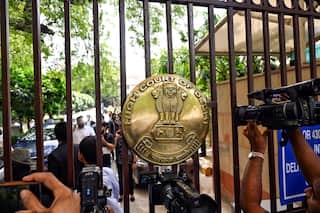
The Supreme Court, while hearing petitions urging the restoration of statehood to the Union Territory of Jammu and Kashmir, emphasised that any such decision must take into account the prevailing circumstances in the region.
“You cannot ignore what happened in Pahalgam,” observed Chief Justice of India (CJI) B R Gavai during Thursday's proceedings. The remark came as the bench considered multiple pleas related to the political status of Jammu and Kashmir.
Supreme Court, while hearing pleas seeking direction to restore the statehood of the Union Territory of Jammu and Kashmir, observes that in granting statehood, the ground situation has to be taken into consideration.
— ANI (@ANI) August 14, 2025
“You cannot ignore what happened in Pahalgam," says CJI BR… pic.twitter.com/qIYliZOsVU
Appearing on behalf of the central government, Solicitor General Tushar Mehta noted that the administration had previously assured statehood after the conduct of elections. However, he described the situation in the Union Territory as “peculiar” and requested an eight-week period to seek formal instructions from the government on the matter.
Questioning the timing of the petitions, Mr Mehta asked why the matter was being raised “at this stage”, suggesting that some may be attempting to “muddy the waters” in the region. He further noted, “Several considerations have to be seen into for the restoration of Statehood.”
The court has sought the Centre’s formal response and adjourned the matter for hearing after eight weeks.
Supreme Court's 2023 Judgement
The case follows the Supreme Court’s unanimous ruling on 11 December 2023, which upheld the abrogation of Article 370 — a constitutional provision granting special status to Jammu and Kashmir. While endorsing the move, the court had directed that assembly elections be held by September 2024 and that statehood be reinstated “at the earliest”.
The five-judge Constitution Bench, then headed by Chief Justice D.Y. Chandrachud, affirmed the President’s authority to unilaterally declare Article 370 void. The judgment maintained that the abrogation in August 2019, which reorganised Jammu and Kashmir into two Union Territories, was the culmination of a “gradual and collaborative exercise” spanning seven decades between the Centre and the State.
The court’s 2023 decision emphasised that the integration of Jammu and Kashmir with the Indian Union aimed to extend the full spectrum of constitutional rights and obligations to its people. According to the Bench, the abrogation represented a “special solution” warranted by “special circumstances”.
Before You Go
BIG UPDATE: Jharkhand Students Face Water Cannon, Refuse to Back Down

Top Headlines