




Explorer
Good news for private employees! Now you may get more money after retirement; here's how
In a massive cheer for salaried individuals in the private sector, the Supreme Court on Friday paved way for a higher pension by scrapping a special leave petition.

We find no merit in the special leave petition, SC said. (Image: PTI)
Now, all employees will get a pension on their full salary instead of the Rs 15,000 cap
The pensions will increase but the PF corpus will be reduced
EPS was introduced by the government in 1995 for the organised sector employees
New Delhi: In a massive cheer for salaried individuals in the private sector, the Supreme Court on Friday paved way for a higher pension by scrapping a special leave petition filed by the Employees Provident Fund Organisation (EPFO) against the Kerala High Court judgment. The HC had asked EPFO to give pension to all the retiring employees on the basis of their full salary instead of capping maximum pensionable salary to Rs 15,000 per month. Now, here’s what the Supreme Court in its judgment said – “We find no merit in the special leave petition. The same is, accordingly, dismissed.” After this decision, all employees will get a pension on their full salary instead of the Rs 15,000 cap after their retirement! However, the ruling also highlights that the pensions will increase but the PF corpus will be reduced as more contribution will go to Employees Pension Scheme and not PF. EPS was introduced by the government in 1995 for the organised sector employees. The scheme applies on all employees under the EPF scheme and people who are covered under EPS receive a pension on a permanent basis. All employees with monthly income along with DA of Rs 15,000 or lesser must enroll in this scheme. In 2014, the government had issued a notification bringing out some major changes in the way Employees’ Pension Scheme 1995 works. Under this, the monthly pensionable wage ceiling for the Employees’ Pension Scheme 1995 was enhanced from Rs 6500 to Rs 15000. The mode of calculating the average pensionable wage was also changed. The amendment added that the pension on full salary will be calculated not just on past one year's salary, but as an average of last five years' monthly income. This amendment, therefore, lowered the pension of several salaried individuals. Later in 2016, SC had already made it clear that there need not be any cut-off date and employees are eligible for pension on a higher salary. Here’s how EPS works A salaried individual contributes 12 per cent of his/ her basic salary towards the PF and the same amount is contributed by the employer. However, out of the employer’s 12 per cent share, 8.33 per cent goes towards the EPS. The amount which goes into EPS is, however, capped at 8.33 per cent of Rs 15,000 and not the actual salary. This means a maximum of Rs 1,250 (earlier Rs 541) can go into EPS every month, while 3.67 per cent of employer’s contributions stays in the PF of the employee.
Education Loan Information:
Calculate Education Loan EMI
Related Video
Delhi Election Results 2025: Counting Begins; BJP Poised for Historic Comeback in Delhi, Exit Polls Suggest | ABP News
Follow Education News on ABP Live for more latest stories and trending topics. Watch breaking news and top headlines online on ABP News LIVE TV
Top Headlines
World

Venezuela To Send Up To 50 Million Barrels Of Oil To US After Maduro's Capture, Announces Trump
India

Amartya Sen Served SIR Notice? Abhishek Banerjee Claims EC Action, Row Erupts
Jammu and Kashmir

Medical Body Cancels MBBS Course At Shri Mata Vaishno Devi Medical College
News

'Labs Of Hate Will Not Be Tolerated': JNU To Take Action After Slogans Targeting PM Modi











See Today's Weather 
powered by

Justin M Bharucha
Opinion
Personal Corner
Top Articles
Top Reels
World

Venezuela To Send Up To 50 Million Barrels Of Oil To US After Maduro's Capture, Announces Trump
India

Amartya Sen Served SIR Notice? Abhishek Banerjee Claims EC Action, Row Erupts
Jammu and Kashmir

Medical Body Cancels MBBS Course At Shri Mata Vaishno Devi Medical College
News

'Labs Of Hate Will Not Be Tolerated': JNU To Take Action After Slogans Targeting PM Modi
Cities

UP Draft Voter List Controversy: Senior Congress Leader Claims Family Wiped Out Despite All Documents
States

'Tumko Mirchi Lagi Toh....': CM Fadnavis Jabs Opposition Over BJP’s Unopposed Wins
World

'Come Get Me, Coward': Colombian President Dares Trump After US Warning
States

IMD Warns Of Cold Wave & Dense Fog Across Northern, Central States
ABP LIVE
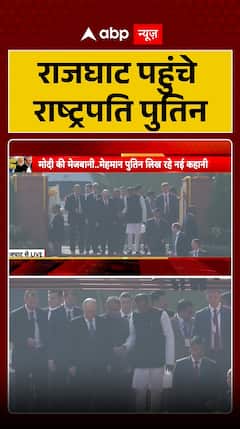
Breaking: Putin Visits Rajghat, Offers Floral Tributes
ABP LIVE
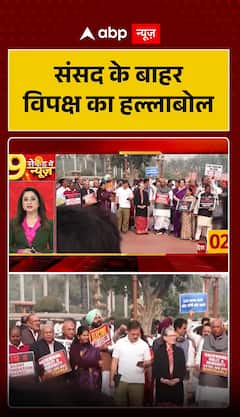
Breaking: Left-Backed Citizen's Group to Demonstrate At Jantar Mantar Against Escalating Air Pollution
ABP LIVE
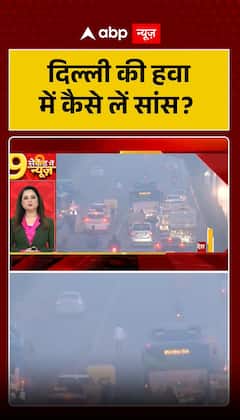
Breaking: Delhi High Court Urges Government to Take Urgent Steps to Curb Rising Air Pollution
ABP LIVE

Breaking: President Murmu To Witness Navy Day Celebration in Thiruvananthapuram
ABP LIVE

Delhi Car Blast: 3 Terror Suspects Arrested, Police Alleged links with Pakistani ISI