After SC Ruling, Complaint Filed Against Harvard Alleging Preferential Policy Favours White Students
Civil rights groups file complaint against Harvard alleging preferential policy benefiting white students with family ties to the school.
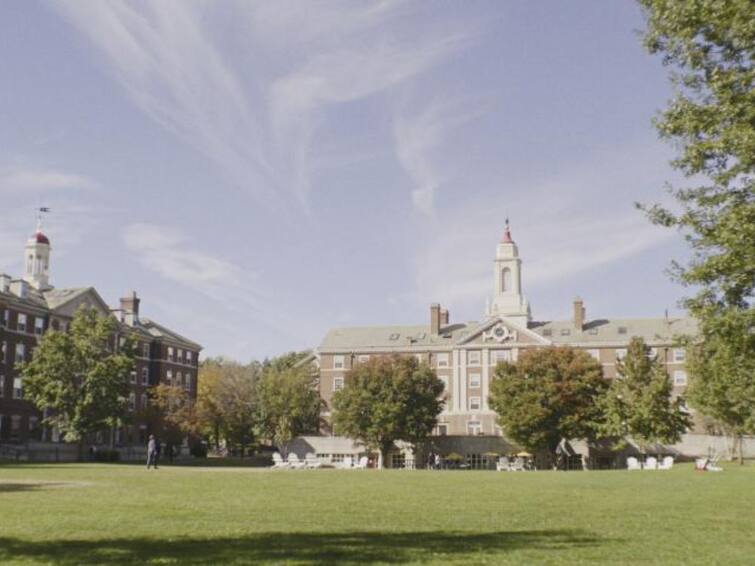
Harvard College on Monday faced a complaint asserting that its practice of granting preferences to undergraduate applicants with family connections disproportionately favours white students. This occurrence follows closely after the US Supreme Court invalidated Harvard's admissions policies that took race into consideration, as reported by Reuters. The US Department of Education has received a complaint from three civil rights groups, alleging that Harvard's preference for "legacy" applicants violates federal laws that forbid racial discrimination in federally funded programs. These laws encompass nearly all colleges and universities in the United States.
The Supreme Court recently declared that the race-conscious admission policies implemented by Harvard University and the University of North Carolina, aimed at increasing the enrollment of non-white students, are unconstitutional. This decision has dealt a significant blow to efforts in fostering diverse student bodies and is expected to trigger new challenges to admission policies.
It is important to note that Harvard College is the undergraduate school of Harvard University. In response to the Supreme Court ruling, the groups filing the complaint on Monday emphasized the urgency of eliminating policies that put non-white applicants at a disadvantage.
At the time of this request, Harvard had not yet provided a comment in response to the complaint. The groups involved in the complaint are represented by Lawyers for Civil Rights, a Boston-based nonprofit organization dedicated to combating discrimination and working with communities of color and immigrants, as described on its website.
Ivan Espinoza-Madrigal, the executive director of the group representing the complaint said that the recent Supreme Court ruling emphasized the unlawfulness of policies that place racial groups at a disadvantage. The court's message was clear in stating that "eliminating racial discrimination means eliminating all of it."
"Your family's last name and the size of your bank account are not a measure of merit, and should have no bearing on the college admissions process,” he said in a statement.
Legacy policies, which are widespread among colleges and universities in the United States, have become a subject of growing controversy.
President Joe Biden expressed his view on legacy policies in response to the recent Supreme Court ruling. He suggested that schools should contemplate eliminating such policies as they tend to "expand privilege instead of opportunity."
Many notable lawmakers from both major political parties have made similar remarks regarding legacy policies. Representative Barbara Lee, a Democrat from California, referred to these policies as "affirmative action for white people" in a tweet.
According to the complaint filed on Monday, approximately 70% of Harvard applicants with family ties to donors or alumni are white, and they are about six times more likely to be admitted compared to other applicants.
The groups assert in the complaint that around 28% of Harvard's class of 2019 consisted of legacies. This means that fewer admission slots were available for non-white applicants who are significantly less likely to have family connections to the school.
The groups are urging the Department of Education to investigate Harvard's admission practices and compel the school to abandon legacy preferences if it wishes to continue receiving federal funding. Michael Kippins, one of the lawyers involved in the complaint, stated that Lawyers for Civil Rights has not ruled out the possibility of filing a lawsuit against Harvard in the future.
During the Supreme Court hearings for the Harvard and UNC cases in October, a lawyer representing the group that sued the schools argued that eliminating legacy preferences would result in Harvard becoming less white, wealthy, and privileged.
Conservative Justices Neil Gorsuch and Clarence Thomas seemed to agree with this perspective, questioning Harvard's lawyer about why the school could not eliminate the legacy policy and instead provide separate preferences to non-white students.
Harvard's lawyer, Seth Waxman, argued before the court that there was no evidence suggesting that ending legacy preferences would lead to a more diverse student body.
Education Loan Information:
Calculate Education Loan EMI
Top Headlines