Book Review: Anand Teltumbde’s ‘Iconoclast’ Reimagines Ambedkar’s Life & Legacy
Anand Teltumbde’s biography of B.R. Ambedkar presents a nuanced and critical look at his life, shedding light on the contradictions and personal struggles that defined his journey

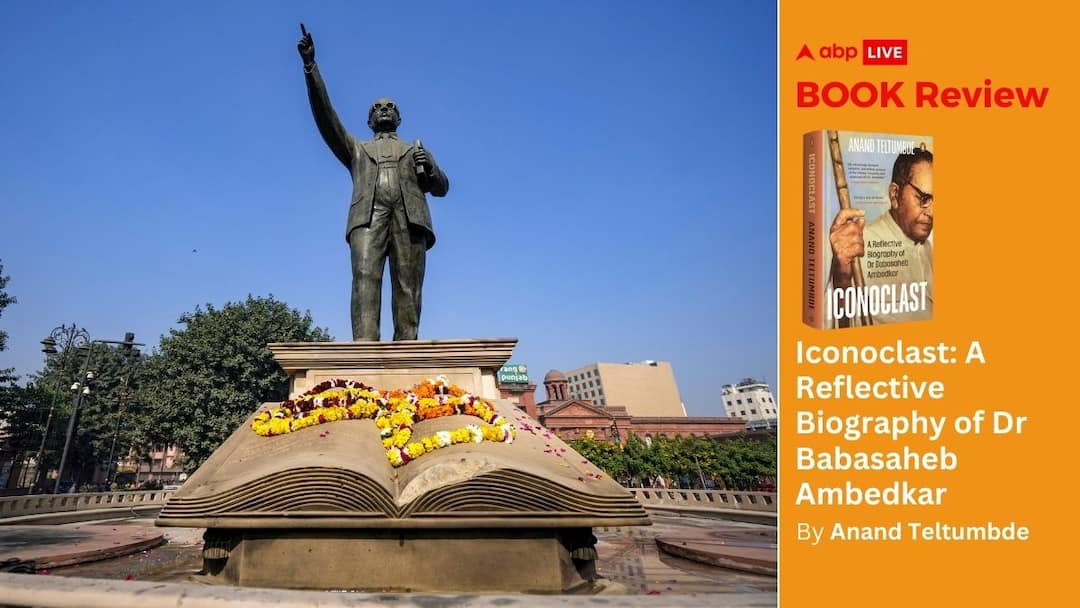
Anand Teltumbde’s 'Iconoclast: The Life and Legacy of Dr B.R. Ambedkar' is an insightful biography that goes beyond the conventional portrayals of Dr Bhimrao Ambedkar, one of India’s most celebrated figures. Known for his pivotal role in the drafting of the Indian Constitution and his relentless fight for the rights of Dalits, Ambedkar has often been revered as a messianic figure.
However, Teltumbde’s biography presents a far more nuanced and critical look at Ambedkar’s life, shedding light on the contradictions and personal struggles that defined his journey from a disenfranchised Mahar (Dalit) caste member to one of the foremost intellectuals and social reformers of the 20th century.
Author Anand Teltumbde does not reduce Ambedkar’s life to a singular narrative of triumph. Instead, he has written about a man constantly grappling with the oppressive caste system, colonial rule, and his own ideals. Ambedkar’s orientation, from an impoverished background to his educational journey abroad and ultimately his transformative role in India’s sociopolitical sphere, is examined through a critical lens, revealing the strain between his aspirations and the harsh realities of the caste system.
The biography delves into the early years of Ambedkar’s life, his struggles with poverty, social ostracism, and the hurdles he faced as a Dalit in a deeply discriminatory society. These formative experiences shaped his resolve to fight against the entrenched inequalities of his time. However, Anand Teltumbde makes it clear that Ambedkar’s life was not merely about overcoming adversity; it was about reimagining the very foundations of Indian society and its treatment of marginalised communities.
Author Teltumbde emphasises how Ambedkar was constantly at odds with both the caste-ridden Hindu society and the political establishment, and how his radical ideals often put him at odds with contemporaries, including Gandhi.
The Political And Philosophical Evolution Of Ambedkar
This biography analyses the political and philosophical evolution of Ambedkar, tracing the trajectory of his transformation from a student of Western philosophy to a social and political icon. Throughout his life, Ambedkar was influenced by a range of intellectual traditions, including the Enlightenment thought of the West, Marxism, and Buddhist philosophy. This diverse intellectual background enabled Ambedkar to critique the Indian social order from multiple angles, resulting in his unique brand of social reform and political activism.
The book speaks about Ambedkar’s early academic life in Bombay and his subsequent study in the US and Europe, where he earned doctorates in economics and law. These years were crucial for Ambedkar’s intellectual foundation, providing him with tools to challenge the social and political structures in India. Ambedkar’s encounters with the ideas of liberty, equality, and fraternity, especially as expressed in Western liberal thought, provided a framework for his later work in advocating for Dalit rights and social justice.
A significant part of the biography is the analysis of Ambedkar’s famous critique of Gandhi and the Congress party. Ambedkar’s relationship with Gandhi, particularly during the Poona Pact negotiations in 1932, is one of the most pivotal episodes of his political life. The author does not shy away from discussing the ideological rift between the two leaders. While Gandhi believed in reforming the caste system through gradual and non-confrontational means, Ambedkar was far more radical, advocating for the abolition of the caste system and the empowerment of Dalits through education, political rights, and conversion to Buddhism. Ambedkar’s frustrations with Gandhi and his criticism of the Congress party’s inability to address the question of untouchability are depicted as central to his political evolution.
The biography also explores Ambedkar’s shift towards Buddhism, culminating in his decision to convert to Buddhism in 1956, along with hundreds of thousands of Dalits. The biographer argues that this move was not merely a religious decision, but a political act aimed at rejecting the Hindu social order, which Ambedkar saw as inherently discriminatory and oppressive. This philosophical shift highlights Ambedkar’s commitment to individual dignity and his quest to offer Dalits a path towards liberation through a new form of spiritual and social practice.
BOOK REVIEW | ‘The Patient In Bed Number 12’ Is A Chronicle of Fractured Lives
Ambedkar’s Ideals In Contemporary Society
Ambedkar’s ideas about caste, democracy, and social justice continue to hold immense significance, particularly in today’s India, where caste-based discrimination remains pervasive. The book challenges the tendency to idealise Ambedkar in a manner that strips away his radicalism. As he writes in the book, “According to him, democracy is quite different from a republic as well as from a parliamentary government. The roots of democracy lie not in the form of government, parliamentary or otherwise. A democracy is more than a form of government. It is primarily a mode of associated living. The roots of democracy are to be searched in the social relationship, in terms of associated life between the people who form a society. By this criterion, since Indian society consists of innumerable collections of castes who are exclusive in their life and have no common experience to share and have the bond of sympathy, Indian society becomes a standing denial of democracy. He described that not only every conduct is ordained by caste but even the elections are governed by castes and accused the Congress of exploiting the caste system more than any other political party.”
Ambedkar’s vision was never about incremental reform but about a radical transformation of society. It is imperative for the current Dalit movement and broader society to revisit Ambedkar’s ideas and apply them to present struggles. Far from being merely a biography, 'Iconoclast' serves as a serious reminder of the ongoing struggles for equality, justice, and human dignity, both in India and the world.
Book: Iconoclast: A Reflective Biography of Dr Babasaheb Ambedkar by Anand Teltumbde
Price: Rs 1,499
Publisher: Penguin
The writer is a Bengaluru-based management professional, curator, and literary critic
[Disclaimer: The opinions, beliefs, and views expressed by the various authors and forum participants on this website are personal and do not reflect the opinions, beliefs, and views of ABP News Network Pvt Ltd.]
Top Headlines