Indian Plate Is Moving 5 cm Annually, Increasing Possibility Of Major Seismic Events: Report
The accumulation of stress along the Himalayas due to the movement of the Indian Plate is increasing the possibility of major seismic events, or earthquakes, in the near future.
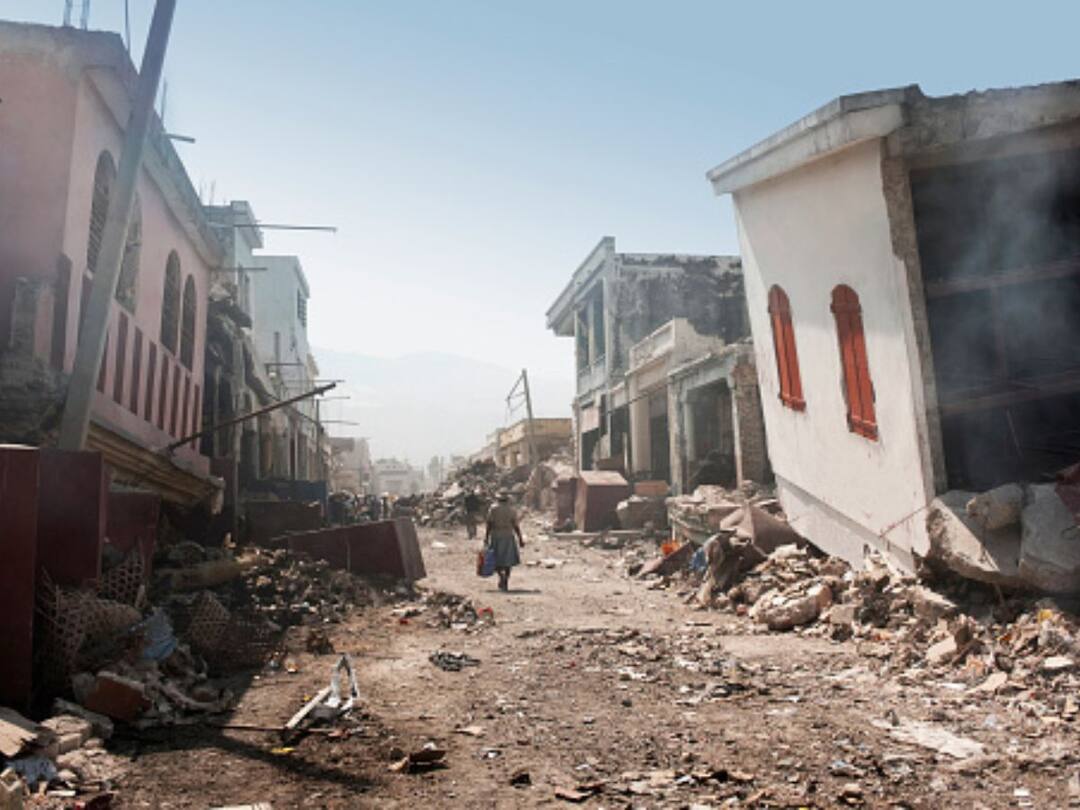
The Indian Plate, a minor tectonic plate extending over the equator in the Eastern Hemisphere, is moving about five centimetres annually, leading to the accumulation of stress along the Himalayas, a leading weather scientist and geological expert has warned, news agency ANI reported. The accumulation of stress along the Himalayas is increasing the possibility of major seismic events, or earthquakes, in the near future.
Quoting Dr N Purnachandra Rao, chief scientist and seismologist at the Hyderabad-based National Geophysical Research Institute (NGRI), an ANI report said the Earth's surface comprises various plates that are constantly in motion. Since the Indian Plate is moving about five centimetres every year, it has resulted in the accumulation of stress along the Himalayas, and is increasing the possibility of major earthquakes.
Rao also said that there is a strong network of 18 seismograph stations in Uttarakhand. He explained that a region known as the seismic gap between Himachal and the western part of Nepal, and also Uttarakhand, is prone to earthquakes. These might occur any time, he said.
ALSO READ | Why Is Turkiye So Prone To Earthquakes? What Made The Recent One So Devastating? Here's What An Expert Says
The National Centre for Seismology, the nodal agency of the Indian government responsible for monitoring earthquake activity in the country, stated that an earthquake of magnitude 3.6 occurred 56 kilometres north of Dharamshala, Himachal Pradesh, at 10:38 pm IST on Monday, February 21, 2023.
It said in a statement that the epicentre was at a depth of 10 kilometres beneath the Earth's surface.
An earthquake struck the town of Nandigama in Andhra Pradesh on February 19, 2023. No casualties were reported following the earthquake.
ALSO READ | Antarctic Sea Ice Falls To New Record Low Level, Expected To Drop Further. Know The Science Behind It
The national capital, Delhi, is prone to earthquakes because it is sitting on three major fault lines, Professor Subhadeep Banerjee, Geotechnical Engineering Division, Department of Civil Engineering, Indian Institute of Technology Madras, told ABP Live.
He explained that Delhi has an interesting terrain. On one side, Delhi has the offshoot of the Aravalli region, and on the other side, it has the Yamuna floodplains. The terrain and certain geological factors make Delhi prone to major earthquakes.
ALSO READ | How Prone Is Delhi To Earthquakes? Three Major Fault Lines Make It Seismically Active, Expert Says
Top Headlines