A Hidden Spiral? Scientists Suggest the Oort Cloud May Mimic a Mini Galaxy at the Solar System’s Edge
New research suggests the Oort Cloud may have a spiral structure like a mini galaxy. Supercomputer models reveal its mysterious shape, offering new insights into the edge of our solar system.

For space lovers, movies like Interstellar always stay on top, capturing the essence of human curiosity and exploration. The iconic dialogues— “We used to look up at the sky and wonder at our place in the stars. Now we just look down and worry about our place in the dirt.” and “Mankind was born on Earth. It was never meant to die here.”— beautifully defines the soul of human life and our unyielding desire to reach beyond our limits.
This relentless drive pushes us to uncover the mysteries of the universe, constantly asking the profound question: Are we really alone? Scientists, too, share this curiosity, searching for answers in the vastness of space.
One such mystery lies at the edge of our solar system—the Oort Cloud. Recent studies suggest that this distant shell of icy bodies may have spiral arms, resembling a miniature galaxy. Using supercomputer models, researchers are now exploring its enigmatic shape, bringing us one step closer to understanding the universe and our place within it.
The Mysterious Oort Cloud
The Oort Cloud, named after Dutch astronomer Jan Oort in 1950, is a vast and distant spherical shell of icy bodies. Its exact shape and behavior have remained a mystery since its discovery. However, a new model suggests that its inner structure "may look like a spiral disk."
What The New Study Showcase
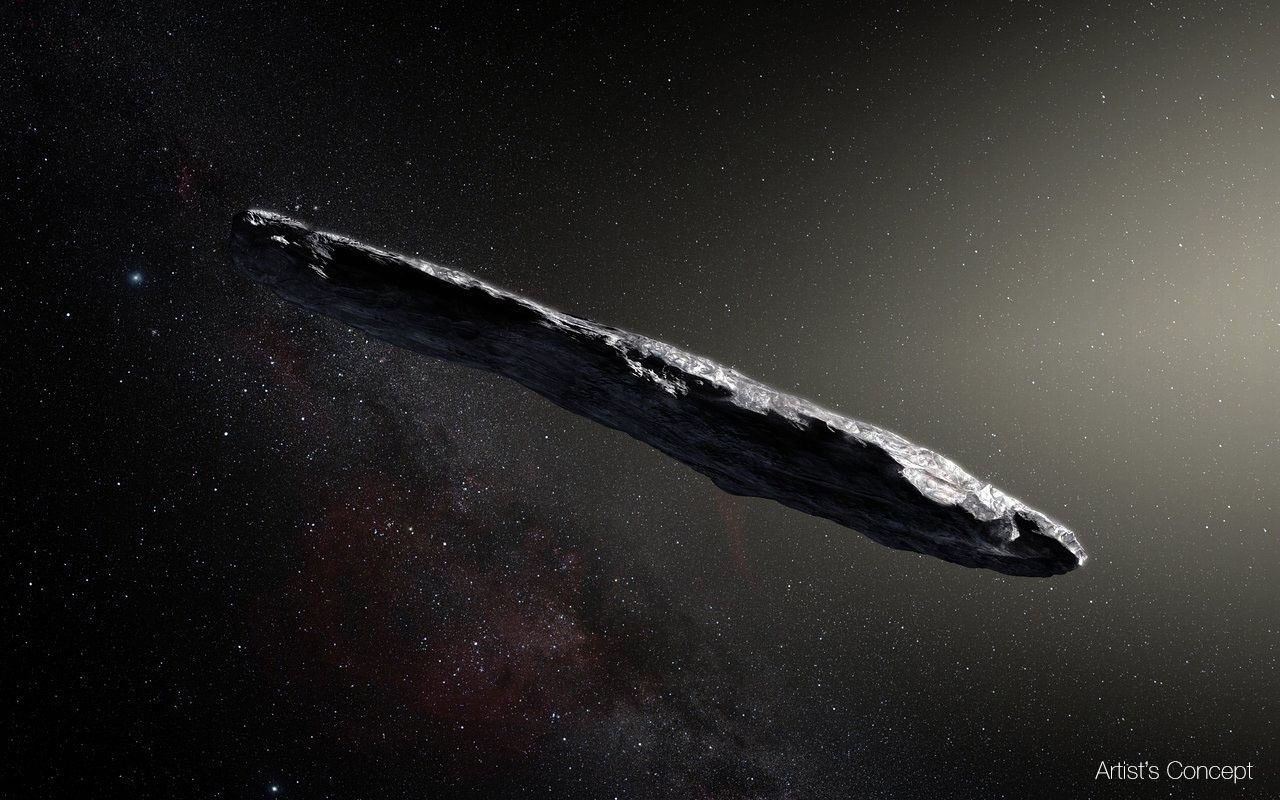
A new study suggests that the Oort cloud, a huge collection of space rocks and ice at the solar system's edge, may have a surprising shape. It could look like a small galaxy with spiral arms. The Oort cloud is very far from the Sun, between 2,000 and 5,000 times the distance between Earth and the Sun. Scientists believe it is the home of long-period comets and mysterious objects like Oumuamua, which passed through the solar system in 2017.
"Previous research has suggested that the Oort cloud contains remnants of the solar system's planets, which were formed over 4 billion years ago, but its exact shape and structure have been a mystery."
Supercomputer Models Reveal a Spiral Structure
In this new study, which other scientists have not yet reviewed, researchers used a powerful computer to model the Oort cloud. They looked at how the gravity from stars and the giant black hole at the center of the Milky Way pulls on the Oort cloud. This pull is called the "galactic tide." The planets in our solar system are pulled more by the Sun, so they are not affected the same way.

"When researchers used NASA's Pleiades supercomputer to simulate these forces, it modelled the Oort cloud as containing an inner structure similar to the spiral arms of the Milky Way galaxy." The study found that the Oort cloud’s spiral arms could be about 15,000 times the distance from Earth to the Sun.
"As the Galactic tide acts to decouple bodies from the scattered disk it creates a spiral structure in physical space that is roughly 15,000 AU in length," the study says. Which is approximately 2243968060.5 Kilometers. (1AU = 150 million kilometers, the distance between the Sun and the earth. "The spiral is long-lived and persists in the inner Oort cloud to the present time," it adds while noting that "direct observational detection of the Oort spiral is difficult."
It is hard to see the Oort cloud directly, but this study gives new ideas about what it might look like. If confirmed, this discovery could change what we know about the edge of our solar system.
Top Headlines