Dino-era 'rat-like creatures' could be our oldest living ancestors
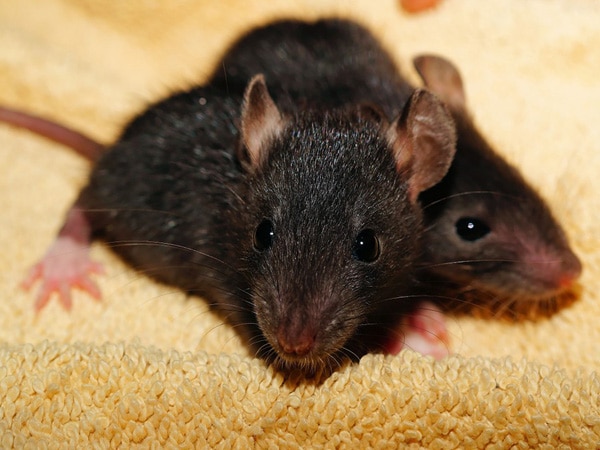
Washington D.C. [USA], Nov 9 (ANI): Seems like, before we were apes, we were rats.
Fossils of the oldest mammals related to mankind were discovered on the Jurassic Coast of Dorset. The two teeth are from small, rat-like creatures that lived 145 million years ago in the shadow of the dinosaurs. They are the earliest undisputed fossils of mammals belonging to the line that led to human beings.
They are also the ancestors to most mammals alive today, including creatures as diverse as the Blue Whale and the Pigmy Shrew.
The University of Portsmouth undergraduate student, Grant Smith, made the discovery.
Lead author Steve Sweetman said that Grant was sifting through small samples of earliest Cretaceous rocks collected on the coast of Dorset as part of his undergraduate dissertation project when he found two quite remarkable teeth of a type never before seen from rocks of this age. "I was asked to look at them and give an opinion and even at first glance my jaw dropped!"
"The teeth are of a type so highly evolved that I realised straight away I was looking at remains of Early Cretaceous mammals that more closely resembled those that lived during the latest Cretaceous - some 60 million years later in geological history. In the world of palaeontology there has been a lot of debate around a specimen found in China, which is approximately 160 million years old. This was originally said to be of the same type as ours but recent studies have ruled this out. That being the case, our 145 million year old teeth are undoubtedly the earliest yet known from the line of mammals that lead to our own species."
Sweetman believes that the mammals were small, furry creatures, and most likely nocturnal. One, a possible burrower, probably ate insects and the larger may have eaten plants as well.
He said that the teeth are of a highly advanced type that can pierce, cut and crush food. They are also very worn, which suggests the animals to which they belonged lived to a good age for their species.
The teeth were recovered from rocks exposed in cliffs near Swanage which has given up thousands of iconic fossils.
One of the new species has been named Durlstotherium newmani, christened after Charlie Newman, the landlord of the Square and Compass pub in Worth Matravers, close to where the fossils were discovered.
The study appears in journal Acta Palaeontologica Polonica. (ANI)
This story has not been edited. It has been published as provided by ANI
Related Video
Breaking News: Trainer Aircraft Loses Balance Mid-Air, Crashes Near KP College in Prayagraj
Top Headlines