The Wagner Group Rebellion: Unravelling The Rift Between Putin And Prigozhin
Months of cold war, accusations of stealing credits for victories, allegations of resource-strapping — here's what led to the Wagner group's rebellion against Vladimir Putin's military might.
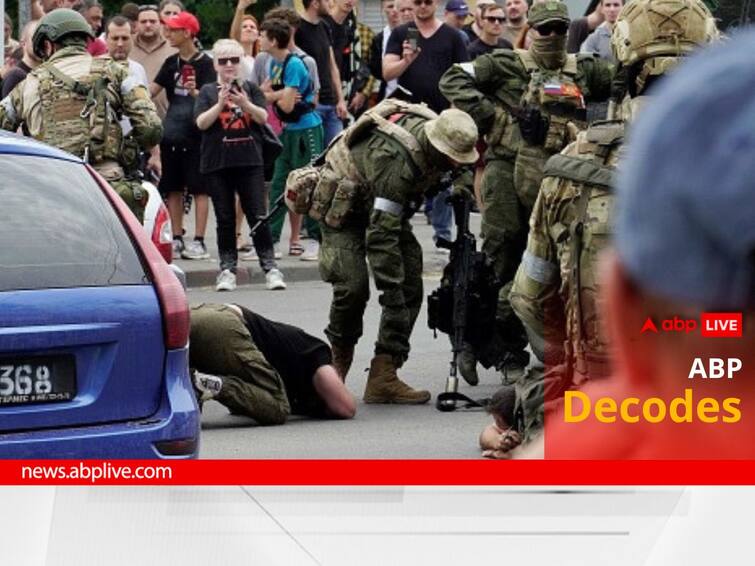
In a stunning turn of events, the Wagner Group, led by Yevgeny Prigozhin, rebelled against Russian President Vladimir Putin and his military leadership on Saturday. The roots of this mutiny can be traced back to a toxic mix of jealousy, rivalry, and ambition that had been simmering for months. What could be the reasons behind the Wagner Group's rebellion against Putin and Russia? What are the intricate dynamics between Prigozhin, Putin, and the military leadership?
The Rise of Yevgeny Prigozhin
Yevgeny Prigozhin, a former criminal associated with the organized crime syndicate in the 1980s, owes his enormous wealth to President Putin. Since founding the Wagner mercenary group in 2014, Prigozhin has become a key instrument in Putin's ambition to restore Russian influence globally, reported British media website BBC. The deniability of Wagner's operations has made Prigozhin popular with Putin, allowing him to amass significant power that rivals that of the military and security elites in Russia.
Rivalries And Resentment
Prigozhin has always been an outsider among Putin's inner circle of advisers. He has openly criticized officials in Moscow whom he deems corrupt or lazy. His animosity extends particularly towards Russia's Defence Minister Sergei Shoigu and the head of the military, Valery Gerasimov. Prigozhin's growing influence, especially his ability to attract top special forces operators from the military with higher wages, has strained relations between the state and the group for years. Prigozhin has also accused the Defence Ministry of starving his troops and leaving them to die, reported The Guardian.
Battle Of Bakhmut And Escalating Tensions
The rebellion within the Wagner Group gained momentum following the Russian invasion of Ukraine, specifically after the bloody fighting in Bakhmut. Prigozhin accused Shoigu and Gerasimov of trying to steal credit for Wagner's victories and blamed them for "failures in the military campaigns", stated BBC. The invasion of Ukraine's Bakhmut in August 2022 became a point of contention between Prigozhin and the military leadership after thousands of Wagner mercenaries died and despite this, the Russian government tried to "steal credit" for the victory there. This triggered Prigozhin rebellion.
Shoigu's Plan and Prigozhin's Fury
Defence Minister Sergei Shoigu devised a plan to diminish Prigozhin's influence by integrating volunteer formations, including Wagner, into the military through direct contracts. This move was widely seen as an attempt to curb Prigozhin's power and provoked his anger. Prigozhin declared that Wagner would not sign any contracts with Shoigu, claiming that the defence minister was unfit to manage military formations.
The Unravelling Of Prigozhin's Rebellion
As tensions escalated, Prigozhin's troops kidnapped a Russian field commander, accusing him of targeting Wagner forces. US intelligence officials warned of Prigozhin's impending action, and the rebellion seemed to be gaining momentum. However, after negotiations, Prigozhin abruptly announced that his forces would return to their bases to avoid further bloodshed. Speculations arose regarding potential concessions made by Putin to placate Prigozhin.
The Aftermath And Lingering Tensions
While the rebellion was short-lived, the underlying factors that fuelled the mutiny remain. Russia currently has numerous private military companies (PMCs) with affiliations to security officials, oil giants, and oligarchs. The loyalty of these groups to the regime may be in question, weakening the assumption that Russia can withstand a prolonged conflict in Ukraine, stated The Guardian.
The fallout from the rebellion may have unintended consequences that benefit Ukraine in its counter-offensive efforts. Russian troops will now be on their toes as they may have to fight a war at home soon. Moreover, Putin's clout beyond Ukraine will also have weakened now that the Wagner group has openly rebelled. Putin will find it difficult now to immediately replace Wagner.
The Wagner Group rebellion against Putin and Russia sheds light on the complex dynamics within Russia's power structure. Prigozhin's rise, his growing power, and his rivalry with the military leadership ultimately led to the mutiny.
Top Headlines