6 Years After Article 370 Abrogation: Understanding Articles 370, 35A And J&K’s Former Special Status
Six years after Article 370's abrogation, we revisit its impact and the special provisions it once granted Jammu & Kashmir, including exclusive rights under Article 35A and its constitutional autonomy
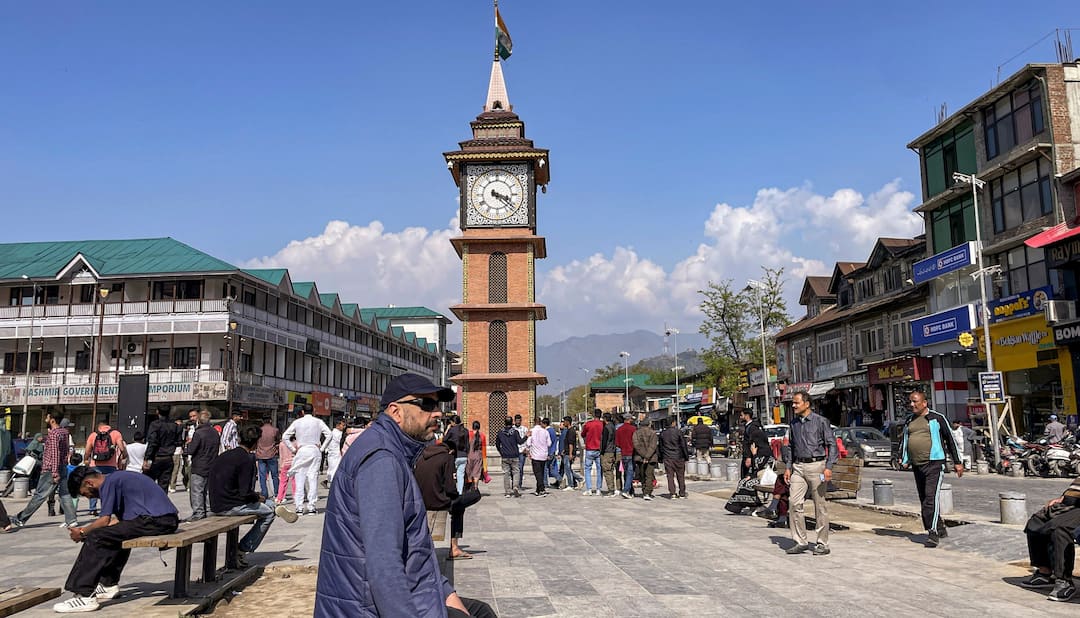
August 5, 2019, marked a watershed moment in India’s constitutional history. On this day, the BJP-led central government, under Prime Minister Narendra Modi, took the bold step of abrogating Article 370. This move brought sweeping changes to the governance and identity of Jammu and Kashmir.
The government hailed the decision as a step toward unity and progress of India. The special status that had long distinguished Jammu and Kashmir from other Indian states was officially revoked. Alongside this step, the state was also bifurcated into two separate Union Territories: Jammu and Kashmir, and Ladakh.
Now, six years later, the decision continues to spark discussions, debates, and reflections. What exactly did Article 370 and Article 35A entail, and why was their removal considered so significant?
What Was Article 370?
Enacted in 1952, Article 370 granted Jammu and Kashmir a unique degree of autonomy. The provision allowed the state to operate with its own constitution and flag, and it retained the authority to make laws on all matters except defence, foreign affairs, communications, and finance.
In practice, Indian laws could not be applied to Jammu and Kashmir without the consent of its state government. The Indian Parliament’s legislative reach was therefore significantly limited, requiring state concurrence for most matters.
Article 370 was placed under Part XXI of the Constitution, which deals with temporary and special provisions. It also allowed the state’s Constituent Assembly to decide how much of the Indian Constitution would apply. Notably, it included a clause permitting the Assembly to recommend the article’s own repeal.
During its early years, Jammu and Kashmir even had its own Prime Minister and Sadar-e-Riyasat (head of state) instead of a Chief Minister and Governor. This further underscored its distinct status within the Indian Union.
What Was Article 35A?
Article 35A was introduced into the Constitution in 1954 through a Presidential Order issued under the provisions of Article 370. Its roots lay in the 1952 Delhi Agreement between then-Prime Minister Jawaharlal Nehru and Jammu and Kashmir’s leader Sheikh Abdullah.
This article granted the state legislature the power to define “permanent residents” and to extend them exclusive rights and privileges. A permanent resident was someone who was a state subject as of May 14, 1954, or had lived in the state for at least 10 years and lawfully acquired property.
These exclusive rights included:
- Ownership and purchase of land
- Eligibility for state government jobs
- Access to education scholarships and welfare schemes
One of the most contentious aspects of Article 35A was its gender bias. Women from the state who married outsiders risked losing their property rights — an implication that extended to their children as well. Men, however, faced no such penalty.
Additionally, laws made under Article 35A were shielded from judicial scrutiny. No legislation passed by the state legislature in accordance with this article could be challenged for being in violation of the Indian Constitution.
Home Minister's Statement On Article 370 And Terrorism In Valley
Union Home Minister Amit Shah on Thursday (January 2, 2025) said that Article 370 was responsible for planting the seeds of separatism among the youth in Kashmir by reinforcing the notion that the region's association with India was temporary. He also said that, despite the presence of other Muslim-majority areas across the country, terrorism did not take make it to those regions.
“I am often asked what is Article 370’s relation with terrorism. It sowed the seeds of separatism among youth in Kashmir,” Mr. Shah said, speaking at a book launch. “Why did terrorism not spread in other Muslim areas of the country? There is an argument that Kashmir shares a border with Pakistan. Even Gujarat and Rajasthan share borders with Pakistan, but terrorism did not reach there. Article 370 promoted the misconception that the relationship between India and Kashmir is temporary. Gradually, separatism transformed into terrorism. It is unfortunate that 40,000 people lost their lives,” Mr. Shah said.
Why It Mattered
At the time of abrogation, the government described the decision as a turning point. It was seen as a move that would pave the way for peace, development, and better integration of Jammu and Kashmir with the rest of the country. Since then, the region has undergone several administrative and political shifts, though the broader impact remains the subject of ongoing analysis.

Top Headlines