Recent market conditions show that fixed deposits offer low returns compared to inflation, and gold, while held, isn't typically sold for profit. The reliable returns that previously justified these approaches are no longer consistent.
Explorer
OPINION | Bitcoin Is No Longer Just A Trade. Some Indians Are Treating It Like Savings
As FDs, gold and SIP returns face fresh challenges, some Indian investors are exploring Bitcoin not as a trade, but as a long-term savings habit built through steady accumulation.
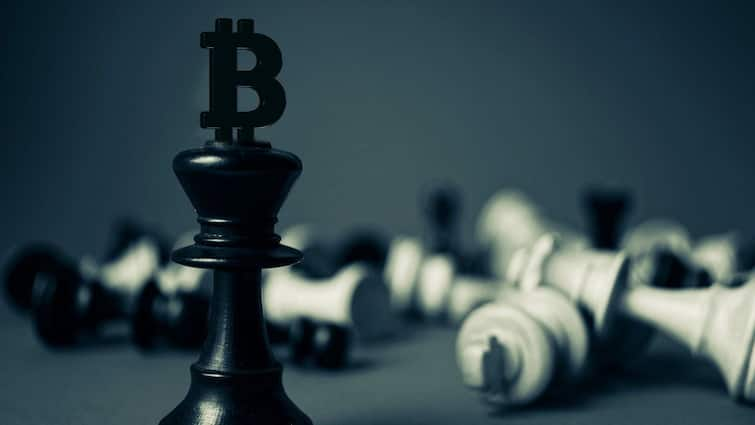
Bitcoin touched an all-time high of nearly Rs 1.19 crore in October 2025.
Source : Gerd Altmann/Pixabay
- Indian savings habits face challenges as traditional investments yield less.
- Bitcoin offers an alternative, integrated into spending, not as a bet.
- Tightening Bitcoin supply aligns with consistent, long-term accumulation strategies.
- India leads global adoption, driven by risk-averse retail accumulation.
Indian households have always known how to save. The fixed deposit is renewed every few years. The gold is bought at every wedding, not for the ceremony but for safety. The SIP started quietly, with no grand ambition, just the conviction that putting something away each month beats trying to pick the right moment. These are not conservative choices. They are hard-won ones, shaped by people who learned that protecting what you have built matters as much as building it.
That discipline is now running into something it was not built for. In 2025, most equity portfolios ended the year in the red. Fixed deposits, even at their most competitive, offered 8.5% while inflation quietly did more damage than the interest repaired. Gold surged in price, but the gold in most Indian lockers has always been there, because no one actually intends to sell it. The returns that once justified this approach are no longer arriving reliably.
ALSO READ: Viksit Bharat Needs 9% Growth, Not 6%: Surjit Bhalla At ABP's India@2047 Conclave
Habit Vs Bet
Bitcoin is not an instinctive answer for this person. The volatility alone closes the conversation before it begins. But there is a version of participation that looks nothing like what makes the news. You do not need a trading account, a price view, or a moment of conviction about market timing. You can simply earn it, as a by-product of spending you were going to do anyway. One is a habit. The other is a bet. For someone whose financial life has been built around avoiding bets, that is not a small distinction. It is the only one that matters.
There is also a structural case that rarely gets made. Since the April 2024 halving, the Bitcoin network creates 450 new BTC each day. Fidelity Digital Assets put a number to this in June 2025. For the first time in Bitcoin's history, coins sitting untouched for ten years or more are being added to the network at a rate of 566 BTC per day, outpacing what the network itself is creating. Long-term holders are locking away more Bitcoin than the network produces. The person who earns steadily over months and years, at different price points, is accumulating into that tightening supply. It is, in practice, a SIP into an asset whose total supply is fixed and whose available supply keeps shrinking.
ALSO READ: India Services PMI Climbs To 59.8 In May As Demand For IT, E-Commerce, And Freight Surges
Not New For India
India is not new to this logic. For the second year running, India topped the Chainalysis 2025 Global Adoption Index across retail, institutional, and DeFi activity. The exchange market here stood at $2 billion in 2025; IMARC Group puts it at $16.8 billion by 2034. That growth is retail-led, driven by people accumulating during corrections and holding through uncertainty, which is exactly how the SIP generation has always operated. Springer Nature research in 2026 found that Indian millennial investors are tech-savvy but deeply risk-averse, and looking not for a more aggressive product but a lower-friction way in.
Bitcoin hit an all-time high of approximately Rs 1.19 crore in October 2025 and is trading around $80,000 at the time of writing this article. Anyone who bought at the peak carries that gap. Someone who earned Bitcoin through everyday purchases across that same period built a position at dozens of price points, without a single decision to defend. When there is no purchase price to anchor to, there is no panic to manage. For a risk-averse investor, removing that anchor is often the difference between participating and walking away.
The fixed deposit was not a bold idea. Neither was the SIP. Both worked for the same reason: not because they were clever, but because they were consistent. Bitcoin as a savings layer is asking for nothing more. Not a bet. Not a trade. Just a habit, placed in the right direction, and left alone to compound.
(The author is an entrepreneur, Bitcoin evangelist, and the Co-founder and CEO of GoSats)
Disclaimer: The opinions, beliefs, and views expressed by the various authors and forum participants on this website are personal and do not reflect the opinions, beliefs, and views of ABP Network Pvt. Ltd. Crypto products and NFTs are unregulated and can be highly risky. There may be no regulatory recourse for any loss from such transactions. Cryptocurrency is not a legal tender and is subject to market risks. Readers are advised to seek expert advice and read offer document(s) along with related important literature on the subject carefully before making any kind of investment whatsoever. Cryptocurrency market predictions are speculative and any investment made shall be at the sole cost and risk of the readers.
Frequently Asked Questions
Why are traditional Indian savings methods like fixed deposits and gold less effective now?
How can Bitcoin be acquired without traditional trading or market timing?
Bitcoin can be earned as a by-product of everyday spending, similar to a habit rather than a speculative bet. This method avoids the need for a trading account or making decisions about market timing.
What is the 'structural case' for Bitcoin accumulation mentioned in the article?
Since the April 2024 halving, long-term holders are locking away more Bitcoin than the network produces daily. This tightening supply, combined with steady accumulation over time, functions like a SIP into a fixed and shrinking asset.
Is Bitcoin adoption new to India?
No, India has consistently ranked high in global Bitcoin adoption for retail, institutional, and DeFi activity. This growth is retail-led, mirroring the consistent accumulation strategies seen in SIP generation.
How does earning Bitcoin through everyday purchases differ from buying at a peak price?
Earning Bitcoin across various price points over time builds a position without needing to defend a single purchase price. This approach removes the anchor of a specific buy-in cost, reducing panic for risk-averse individuals.

Top Headlines
India

NEET Paper Leak Case: CBI Files Final Chargesheet, Finds No Role Of Govt, NTA Officials
India

Rahul Gandhi Vows To 'Reclaim' Jantar Mantar, Slams Das, Ranka's Arrest: 'Act Of Cowardice'
India

CJP Leaders Saurav Das, Ashutosh Ranka Sent To Tihar Jail In 5-Day Judicial Custody
India

Is Foreign Role Behind CJP Protest? 4,000 Social Media Posts Under Security Agencies’ Scanner











See Today's Weather 
powered by