






A plug-in hybrid has a larger battery and electric motor, allowing more driving in electric mode. Unlike regular hybrids, it also requires external charging in addition to petrol.
Explorer
BYD DM-i Review: Is This An EV That Never Runs Out Of Battery?
The Blade Battery used here is different and runs on battery power, while the 1.5-litre petrol engine acts as a generator. Hence, the engine powers the battery, which, in turn, powers the wheels.

As a piece of technology, it is impressive, if complex. But for the buyer, it is basically like an EV that will not run out of juice or cause any range anxiety.
Source : Somnath Chaterjee
- BYD DM-i powertrain acts as an electric-first hybrid system.
- Features 126km electric range and 1080km total range.
- Driving feels electric, providing smooth, fast performance.
- PHEVs overcome range anxiety, making long distances viable.
Typically, hybrid cars consist of a petrol engine, a small battery and an electric motor. However, the electric mode is available only for shorter periods, and most of the time, the car runs on its engine. The same principle applies to a plug-in hybrid, but the recipe is different. Here, the battery size and electric motor dominate, meaning you drive more in electric mode. However, you also have to charge the car and fill it with petrol. So, does a plug-in hybrid mean double the work of charging and refuelling, or does it make sense?

Our first taste of this technology came in the form of the BYD DM-i powertrain. BYD is known for its EVs, and in India, it will be bringing its first plug-in hybrid. However, its approach here is electric-first. The Blade Battery used here is different and runs on battery power, while the 1.5-litre petrol engine acts as a generator. Hence, the engine powers the battery, which, in turn, powers the wheels.
ALSO READ: Tata Motors, Mahindra Most Popular Among Indian EV Buyers: Here's Why
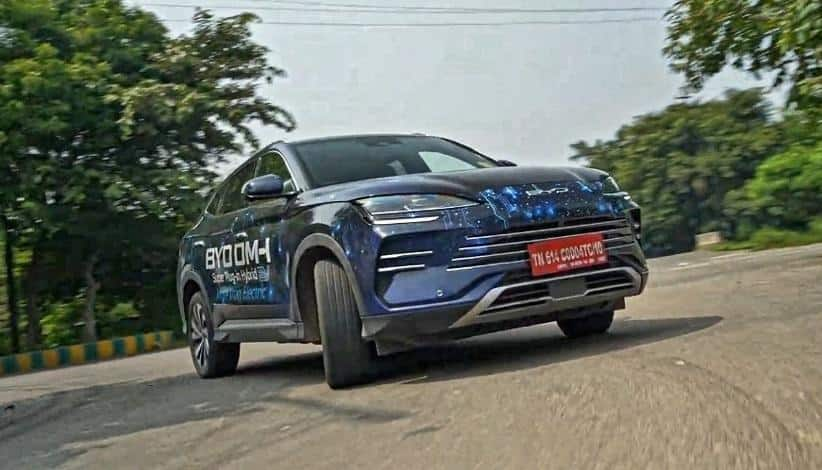
BYD says the car has an electric-only range of up to 126 km, which is much higher than that of strong hybrids. It has an 18.3 kWh battery pack, which can be charged from 30 to 80 per cent in 35 minutes using an 18 kW DC charger. The range on offer is 1,080 km, while the claimed efficiency is 4.8 litres per 100 km.

There are dual motors, and the car is quick, with a 0–100 km/h acceleration time of 5.5 seconds.
Driving Experience: An EV With A Petrol Backup
We drove the car in traffic and on the highway, while also testing its acceleration. We realised that this car is an EV, but the petrol engine helps it keep going even when the battery charge is depleted. You drive it like an EV, which means it is fast and smooth. Even when the battery range goes down, the EV power remains, and only under hard acceleration does the engine become somewhat audible, although the sound is faint.
We got 5 litres per 100 km. After driving it for two days, the battery range went down slightly, while consumption went up to 6 litres per 100 km. However, that is still very low consumption overall. The car is very fast, and the acceleration is smooth. The appeal of a plug-in hybrid is essentially that of an EV, but without any range anxiety. We ran the car on E20 petrol and did not charge it during the two days we had it.
Does A Plug-In Hybrid Make Sense?
As a piece of technology, it is impressive, if complex. But for the buyer, it is basically like an EV that will not run out of juice or cause any range anxiety. That said, you will have to charge the car for this powertrain to operate efficiently.
Plug-in hybrids make sense for those who want to avoid range anxiety and travel long distances easily. Plus, unlike strong hybrids, the performance feels like that of an EV all the time. That said, the big talking point is the cost, as plug-in hybrid technology is expensive, but it can work in India.
ALSO READ: Next-Gen Hyundai Creta To Get 17-Inch Laptop-Sized Screen With New Pleos Infotainment System
Frequently Asked Questions
How does a plug-in hybrid differ from a regular hybrid car?
What is unique about BYD's DM-i plug-in hybrid powertrain?
BYD's DM-i powertrain is electric-first, using a Blade Battery to power the wheels. The 1.5-litre petrol engine primarily acts as a generator to charge the battery.
What kind of range and efficiency can one expect from the BYD DM-i plug-in hybrid?
It offers an electric-only range of up to 126 km and a total range of 1,080 km. Claimed efficiency is 4.8 litres per 100 km.
What are the main advantages of choosing a plug-in hybrid vehicle?
Plug-in hybrids offer the smooth, fast performance of an EV without range anxiety. They are suitable for long distances, providing a petrol backup when needed.
Is it necessary to charge a plug-in hybrid vehicle?
Yes, you need to charge a plug-in hybrid for its powertrain to operate efficiently and to maximize its electric driving range and benefits.

Advertisement
Top Headlines
Auto

Next-Gen Hyundai Creta To Get 17-Inch Laptop-Sized Screen With New Pleos Infotainment System
Auto

Tata Motors, Mahindra Most Popular Among Indian EV Buyers: Here's Why
Auto

BYD Office Raided In Netherlands As JLR Alleges Defender Copying In Ti7 SUV
Auto

Mercedes-AMG GT 63 Pro Review: The Ultimate Diwali Firecracker


Advertisement








Advertisement




