'Devastating': As This Orca Mom Loses Second Calf, Scientists Call It Tremendous Blow
Scientists have called Tahlequah's loss devastating, more so because the calf was a female, who could have one day potentially contributed to increasing the population of endangered killer whales.
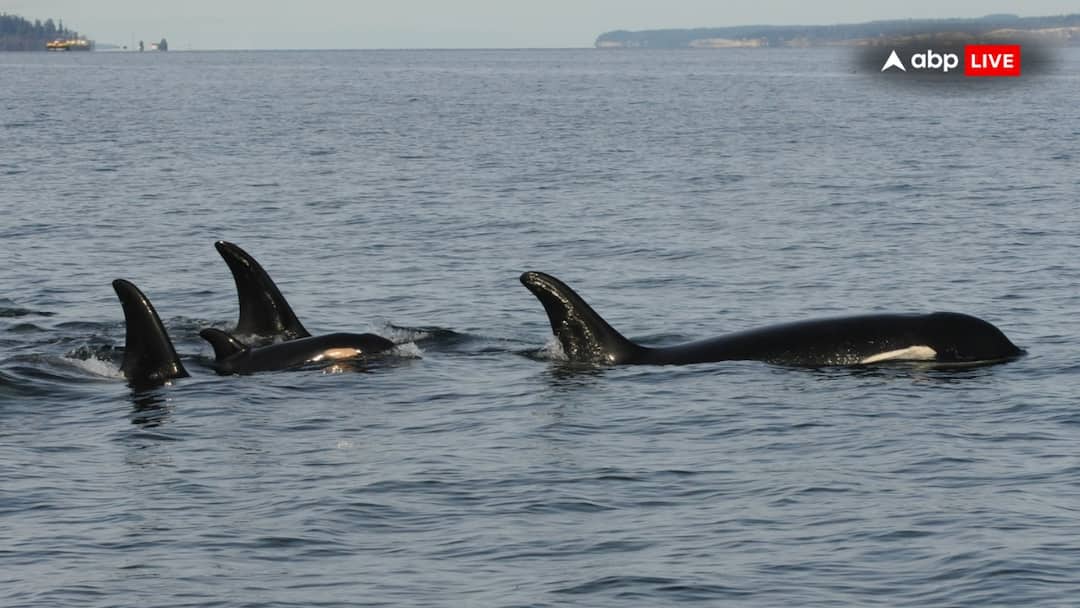
A killer whale known as Tahlequah, who gained global attention in 2018 after carrying the body of her deceased newborn calf for 17 days, appears to be mourning another loss. According to the Center for Whale Research, Tahlequah has once again been seen pushing the body of a dead calf.
This time, she was spotted off the coast of Washington state, USA. While killer whales are known to carry their deceased calves for up to a week, scientists noted in 2018 that Tahlequah’s prolonged grieving set a "record".
The Center for Whale Research (CWR) described the death of any calf as a "tremendous loss", but emphasised that Tahlequah’s recent loss is "particularly devastating" due to her past experiences.
"The death of any calf in the SRKW (southern resident killer whales) population is a tremendous loss, but the death of J61 (the new calf) is particularly devastating, not just because she was a female, who could have one day potentially led her own matriline but also given the history of her mother J35 (Tahlequah) who has now lost two out of four documented calves – both of which were female," the organisation posted on Facebook.
Southern Resident Killer Whales Listed As Endangered In Canada And US
The CWR, which focuses on studying and conserving the endangered Southern Resident killer whales, noted that Tahlequah has now lost two of her four documented offspring, both of which were female.
Southern Resident killer whales, listed as endangered in both Canada and the United States, face significant challenges. Their primary food source, Chinook salmon, has sharply declined in recent years, and research from the University of Washington links reproductive failures to poor nutrition and limited access to these fish, according to a BBC report.
The CWR post said its researchers along with those from the National Oceanic and Atmospheric Administration, and other research groups would conduct follow-up observations of Tahlequah, and also the new calf "when conditions and the movements of the whales allow".
Tahlequah’s famous 2018 journey with her deceased calf occurred near Victoria, British Columbia. Southern Resident killer whales are highly mobile, travelling an average of 120 km (75 miles) per day, but their survival remains deeply tied to the health of their habitat and food supply.
Top Headlines