‘Canada Will Be Treated Like A State No Longer’: Trump Threatens 50% Tariffs From 2027
Trump threatens 50% tariffs on Canadian cars, trucks, parts and steel from January 2027 after US-Canada trade talks collapse.

US President Donald Trump has threatened to raise tariffs on Canadian cars, trucks, automotive parts and steel to 50% from January 1, 2027, after Washington and Ottawa failed to reach a trade agreement. Trump accused Canada of imposing unfair tariffs on American farmers and said the US had been running a $60 billion trade deficit with its neighbour.
Trump Escalates
In a post, Trump accused Canada of “ripping off” the US for years and said its tariffs on American farm products had made life difficult for US farmers.
He said tariffs on Canadian cars, trucks, automotive parts and steel would rise to 50% from January 1, while goods manufactured in the US would face zero tariffs.
Trump also argued that the US did not need Canada, while claiming Canada remained heavily dependent on the American market.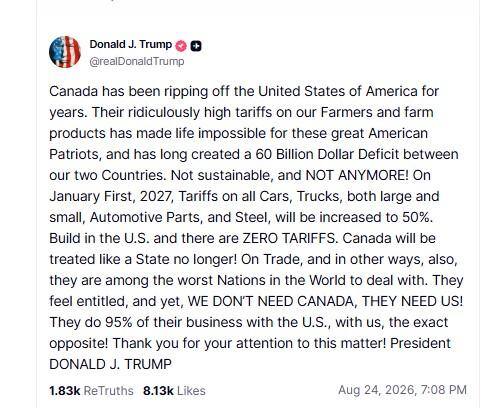
The latest threat follows the immediate implementation of 50% tariffs on around $20 billion worth of Canadian goods after the two countries failed to conclude a long-awaited trade agreement.
The tariffs were first announced in July. Trump had delayed their implementation last week after saying Washington and Ottawa were close to a deal. However, negotiations collapsed shortly before the midnight deadline on August 21.
Also Read: US To Impose 'Toughest Sanctions In History' On Iran: What We Know So far
Canada Prepares Retaliation
Canadian Prime Minister Mark Carney has promised “dollar for dollar” retaliatory tariffs from September 8 on a range of US products, including steel, dairy, appliances, agricultural equipment, paper and electronics.
The list of Canadian exports affected by US tariffs includes hockey sticks, wine, cement, honey, selected clothing, jewellery, furniture and cameras. Some of these products had previously been covered by tariff-free provisions under the United States-Mexico-Canada Agreement (USMCA), which is now due for review.
Trump imposed the 50% tariffs under Section 338 of the Tariff Act of 1930, which allows the president to impose duties of up to 50% on countries accused of discriminating against American businesses.
Carney said Canada had consistently sought long-term partnerships with the US, while Washington had increasingly pursued short-term transactions. He said Canada could not accept the US demands if they compromised its sovereignty, key industries such as metals and vehicles, or its French language and culture.
Trade talks between the two countries have now been put on pause indefinitely, leaving the threat of a wider tariff confrontation hanging over one of the world's biggest bilateral trading relationships.
Also Read: OPINION | India, China And Emerging Politics Of Tariff Evasion

Top Headlines