




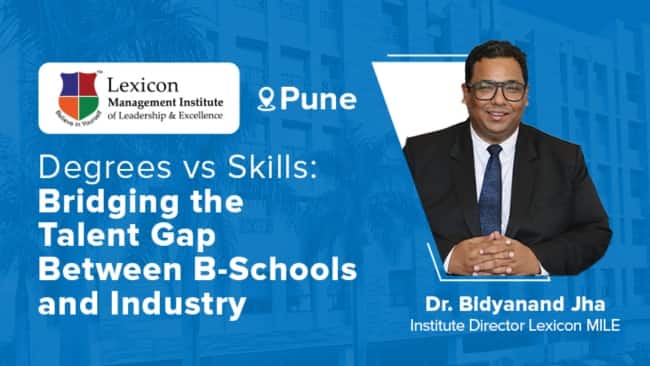
Degrees vs Skills: Bridging the Talent Gap Between B-Schools and Industry
The question isn’t about the number of graduates—it’s about how many are prepared to handle the demands of a dynamic, fast-changing industry from day one.

Each year, thousands of MBA graduates walk out of business schools with degrees in hand and aspirations in their eyes. Yet, many companies still struggle to find candidates who are prepared for the realities of the workplace. This is not just a paradox—it’s a growing problem.
The question isn’t about the number of graduates—it’s about how many are prepared to handle the demands of a dynamic, fast-changing industry from day one. This gap between academic learning and industry readiness is one of the most pressing challenges in business education today.
Understanding the Disconnect
Employers are no longer hiring solely based on technical knowledge or academic excellence. They’re looking for adaptability, critical thinking, emotional intelligence, and the ability to deal with ambiguity. These skills generally don’t come from textbooks or exams; they’re learnt through experience.
According to a 2024 report by the Association of MBAs (AMBA), 39% of employers point to a lack of practical skills among graduates as a major hiring challenge. The Unstop Talent Report 2024 paints an even starker picture: while 82% of HR professionals report clear skill gaps among fresh hires, 91% of students believe their coursework has adequately prepared them for the job market. This mismatch signals a misalignment between academic instruction and industry needs—one that impacts both hiring outcomes and employee success.
In AMBA’s survey, employers highlighted adaptability (44%), resilience (42%), and innovation (41%) as the most critical competencies they expect to need in the next decade. These aren’t traditional subjects in an MBA curriculum. They are developed through real-world experience, interdisciplinary collaboration, and exposure to dynamic problem-solving environments.
What Needs to Change?
To close this gap, institutes need to rethink how they prepare students for the future not just by equipping them with knowledge but by helping them develop the right mindset and competencies to lead.
Lexicon MILE is reimagining this approach. Through its Career Development Cell (CDC), Lexicon MILE takes a structured, hands-on approach to preparing students for the workplace. The CDC is a game-changing initiative designed to:
- Helps Students Understand Industry Needs
- Conducts Mock Interviews & GD
- Creates Job-Ready Graduates
- Skill Assessment of the students
- Employability Training
But the vision of Lexicon MILE doesn’t stop at interviews and assessments. They believe learning happens when students are pushed to engage with the real world. The institute’s innovative experiential learning model is built around this idea. At Lexicon MILE, students learn business not only in classrooms but also through live projects, corporate field visits, leadership talks, and simulation-based learning. They don’t just talk about business—they do business.
Encouraging Innovation from Day One
The workplace of the future will be shaped by people who don’t just adapt but innovate. That’s why Lexicon MILE has made space for entrepreneurial dreams through it’s Innovation & Incubation Centre. This platform supports students in bringing their ideas to life, offering mentorship, guidance, and the ecosystem needed to turn concepts into real ventures.
In doing so, they help students build the confidence to create value—not just follow it. It’s about developing leaders who can either excel within an organization or start one of their own.
Building Future-Ready Talent: A Shared Mission
While institutions like Lexicon MILE are paving the way with future-ready education models, the challenge lies in the broader ecosystem. Businesses must rethink hiring frameworks and place greater emphasis on skill, potential, and practical readiness rather than just academic achievements. Meanwhile, students must be proactive in seeking opportunities for growth beyond the classroom, like through projects, internships, or certifications.
The outdated debate of “degrees vs. skills” no longer applies. Both matter—but they must go hand-in-hand. A degree may open doors, but it’s skills that keep them open.
By aligning education with industry and focusing equally on knowledge, experience, and mindset, we can build a new generation of leaders who are not only employable but also equipped to lead change.
Authored By Dr. Bidyanand Jha, Institute Director, Lexicon MILE
(Disclaimer: ABP Network Pvt. Ltd. and/or ABP Live does not in any manner whatsoever endorse/subscribe to the contents of this article and/or views expressed herein. Reader discretion is advised.)


