




Rajasthan Assembly Election Results 2023 Live
Jhunjhunu Election Result 2023 Live: Rajasthan Assembly Election 2023 Vote Counting Live updates on ABP Live
Jhunjhunu Rajasthan Election Live Vote Counting
Jhunjhunu Assembly Election 2023
| CANDIDATE NAME | PARTY | STATUS |
|---|---|---|
| Brijendra Singh Ola | INC | WON |
| Abhimanyu Singh | IND | LOST |
| Lokpal | IND | LOST |
| Rajendra Singh Bhamboo | IND | LOST |
| Pankaj Dhankhar | OTHERS | LOST |
| Suman | OTHERS | LOST |
| Rashid Khan | AAP | LOST |
| Nisheet Kumar | BJP | LOST |
| Mahendra Singh | BSP | LOST |


Jhunjhunu Assembly Election Results 2023 LIVE: Catch latest win-loss tally and vote counting updates from Rajasthan Election 2023 here. Jhunjhunu constituency number 27 of Rajasthan, was won by BRIJENDRA SINGH OLA in 2018 from Congress who secured 76177 votes. In 2018, the runner up candidate was, RAJENDRA SINGH BHAMBOO from BJP who secured 35612 votes. Winning margin for this seat in 2018 elections was 40565 votes.
Vote counting of Assembly elections 2023 will be held today, 3 December 2023 from 8 AM onwards. Catch latest updates on ABP Live for all details on vote counting, win loss tally and final seats won by each party.
Follow ABP LIVE TV and ABP News YouTube for all latest action around Jhunjhunu Election 2023 LIVE vote counting.
Jhunjhunu Assembly Election 2018 |
||
|---|---|---|
| Brijendra Singh Ola | Inc | WON |
| Rajendra Singh Bhamboo | Bjp | LOST |
| Nisheet Kumar Alias Bablu Choudhary | Independent | LOST |
| Yashwardhan Singh | Independent | LOST |
Assembly Election 2018 Vote Count
| PARTY | CANDIDATE | VOTING | PERCENTAGE OF VOTES |
|---|---|---|---|
| Inc | Brijendra Singh Ola | 76177 | 45.02% |
| Bjp | Rajendra Singh Bhamboo | 35612 | 21.05% |
| Independent | Nisheet Kumar Alias Bablu Choudhary | 29410 | 17.38% |
| Independent | Yashwardhan Singh | 12007 | 7.10% |
Choose your constituency
More Election News

Garena Free Fire Max Redeem Codes (January 20): Grab Rare Skins, Diamonds, More For Free

Pisces Horoscope Today, January 20, 2026: Expense Control Become The Key Focus

Aquarius Horoscope Today, January 20, 2026: Emotional And Health Balance Is Crucial

Capricorn Horoscope Today, January 20, 2026: Family Support Shape A Strong Day Ahead

Sagittarius Horoscope Today, January 20, 2026: Success Follows Every Effort As Finances Flourish

Share Markets Remain Volatile, Sensex Breaches 83,200, Nifty Marginally Down

Scorpio Horoscope Today, January 20, 2026: Financial Progress Is Promising During This Time

Amitav Ghosh Is Writing A Book That Will Remain 'Unread' For 100 Years: All You Need To Know

India@2047 Youth Conclave To Shape Nation's Future With Leaders & Inspiring Visions
-
What is the role of the Election Commission?
The Election Commission of India (ECI), an autonomous constitutional authority established in 1950, is the poll watchdog in the country and is responsible for conducting elections in states, Parliament and the offices of the President and Vice-President. The EC also oversees adherence of political parties to the model code of conduct.
-
What is Article 324?
Article 324 in the Constitution specifies that the superintendence, direction and control of elections and preparation of electoral rolls shall be entrusted to the Election Commission.
-
Why is January 25 celebrated as Voters' Day?
January 25 has been celebrated as National Voters' Day since 2011 to mark the foundation of the Election Commission of India, which was formed on January 25, 1950. It is celebrated in a bid to encourage the youth to participate in the electoral process.
-
What happened in India January 25, 1950?
The Election Commission was established on January 25, 1950. Until 1989, it had only one member - the chief election commissioner.
-
Who is responsible for conducting elections in India?
The Election Commission is responsible for conducting elections in a "free and fair manner" to the state legislatures and Parliament. Elections in panchayats and municipalities are conducted by state election commissions.
-
What is the election process in India?
The election process is a lengthy affair in India. It starts with the Election Commission announcing the schedule for the polls, including dates for filing of nominations by candidates, withdrawal, scrutiny of nomination papers and counting date. The Model Code of Conduct, which is a set of guidelines to be abided by parties and candidates, comes into force from the day the poll schedule is announced.
-
How are MLAs elected?
Members of the Legislative Assembly are representatives of the people of the states as they are directly elected by citizens above 18 years of age. After the polls, the party with the maximum number of MLAs stakes claimed to form the government.
-
How many days before the election does code of conduct come into force?
The Model Code of Conduct comes into force as soon as the election dates are announced by the Election Commission and remains in place until the election process is completed.
-
What is the code of conduct?
The Model Code of Conduct, which was first introduced in 1960, is a set of guidelines on manifestos, processions and general conduct that have to be adhered to by political parties and their candidates in the run-up to elections.
-
Who had the right to vote before India's independence?
Between 1919 and 1929, all British provinces, as well as most of the princely states, gave women the right to vote and, in some cases, allowed them to contest local elections.
-
Who was the first to vote in India?
Shyam Saran Negi, a retired school teacher from Kalpa, Himachal Pradesh, was the first to vote in the first general election of independent India in 1951.
-
When were India's first Lok Sabha elections held?
The first general elections were held in 1951-1952, second in 1957, third in 1962, the fourth in 1967, fifth in 1971, sixth in 1977, seventh in 1980, eighth in 1984-85, ninth in 1989, tenth in 1991, eleventh in 1996, twelfth in 1998, thirteenth in 1999, fourteenth in 2004, fifteenth in 2009, sixteenth in 2014 and seventeenth in 2019. The 2024 polls will be the 18th Lok Sabha election.


-

Navi Mumbai Civic Polls: Shiv Sena and BJP to Contest Separately, No Alliance Announced
-
BMC Election 2026: BJP-Shiv Sena Shinde Finalise Seat-Sharing for BMC Polls, Agreement on 207 Seats
-
Maharashtra Local Polls: Sharad Pawar-Ajit Pawar Alliance Talks Collapse Ahead of Pune Municipal Corporation Elections
-
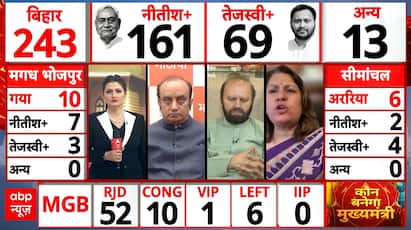
Breaking: Nitish Kumar Races Ahead as JDU Emerges Largest Party in Bihar Trends
-
UP BJP President Election: Pankaj Chaudhary Faces Challenges in Kurmi Vote Consolidation
-
UP BJP President Election: Pankaj Chaudhary Poised to Become New State Chief