


Why Shinzo Abe Was The 'Principal Architect' Of India-Japan Relationship In 21st Century
Book Excerpt: The Importance of Shinzo Abe is a collection of articles that evaluate the late leader's contribution to Japan-India relations and other fields. Read an excerpt from Sanjaya Baru's essay

In December 2006, Prime Minister Shinzo Abe hosted a summit meeting in Tokyo with Singh and the two had agreed that their strategic and global partnership would include a Special Economic Partnership Initiative (SEPI). Affirming the strength of their bilateral relationship within a regional and global context, the two leaders issued a joint statement as follows:
India and Japan are natural partners as the largest and most developed democracies of Asia, with a mutual stake in each other’s progress and prosperity. Indeed, a strong, prosperous and dynamic India is in the interest of Japan, and likewise, a strong, prosperous and dynamic Japan is in the interest of India.
It was clear that the regional and global context that both were alluding to was defined by the rise of China, a common neighbour. It was also clear that after half a century of maintaining a relationship comprising mainly aid and trade, the two countries were now willing to recognize the larger potential of their bilateral relationship. This harked back to the early post-WWII and post-Independence years, when Kishi and Nehru sought to build a new equation between the two nations—but whose intentions were foiled by the Cold War.
Prime Minister Abe’s historic address to the Indian Parliament in August 2007 and his subsequent shaping of the bilateral relationship during his second term in office were defined both by this intrinsic bilateral basis and the evolving regional and global context. It would be limiting to view Abe’s ‘Confluence of the Two Seas’ address as being crafted purely by the ‘China threat’ and considerations pertaining to regional security. Unlike most of his predecessors, and like Mori and Koizumi, Abe sought a firmer foundation for the bilateral relationship going beyond the shared concern about a rising China.
While Abe’s remarks in his address on the Indo-Pacific and shared security challenges continue to attract global attention and have been commented upon by scholars and officials, his remarks on the bilateral relationship between India and Japan are equally important. In fact, the 2007 Parliament address devotes considerable space to a recount of the historical association between the two countries, including the bond between Nehru and Kishi and the significance of the post-WWII bilateral relationship. Abe summed up his thoughts by saying, ‘The friendship that unites India and Japan will no doubt touch the deepest soul of the people of our two countries; of this I am convinced.'
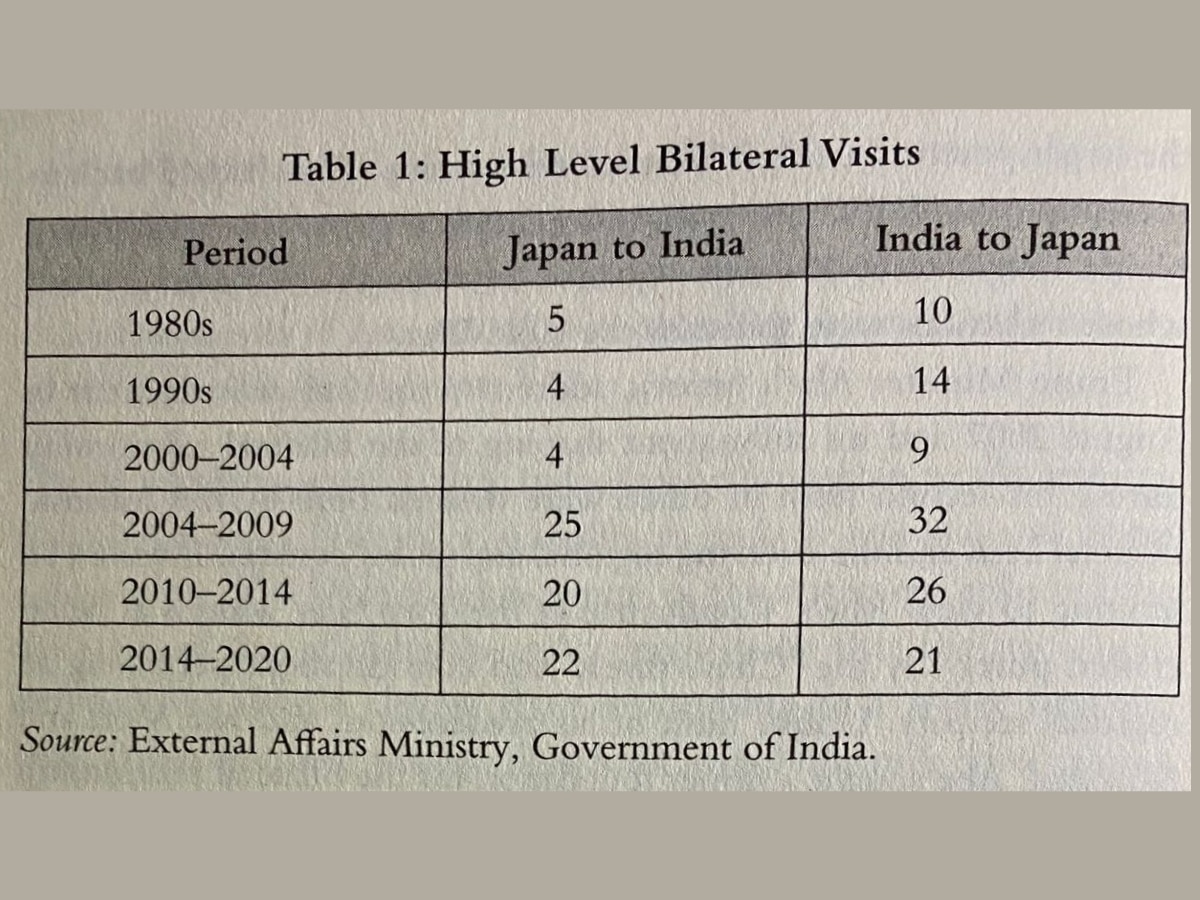
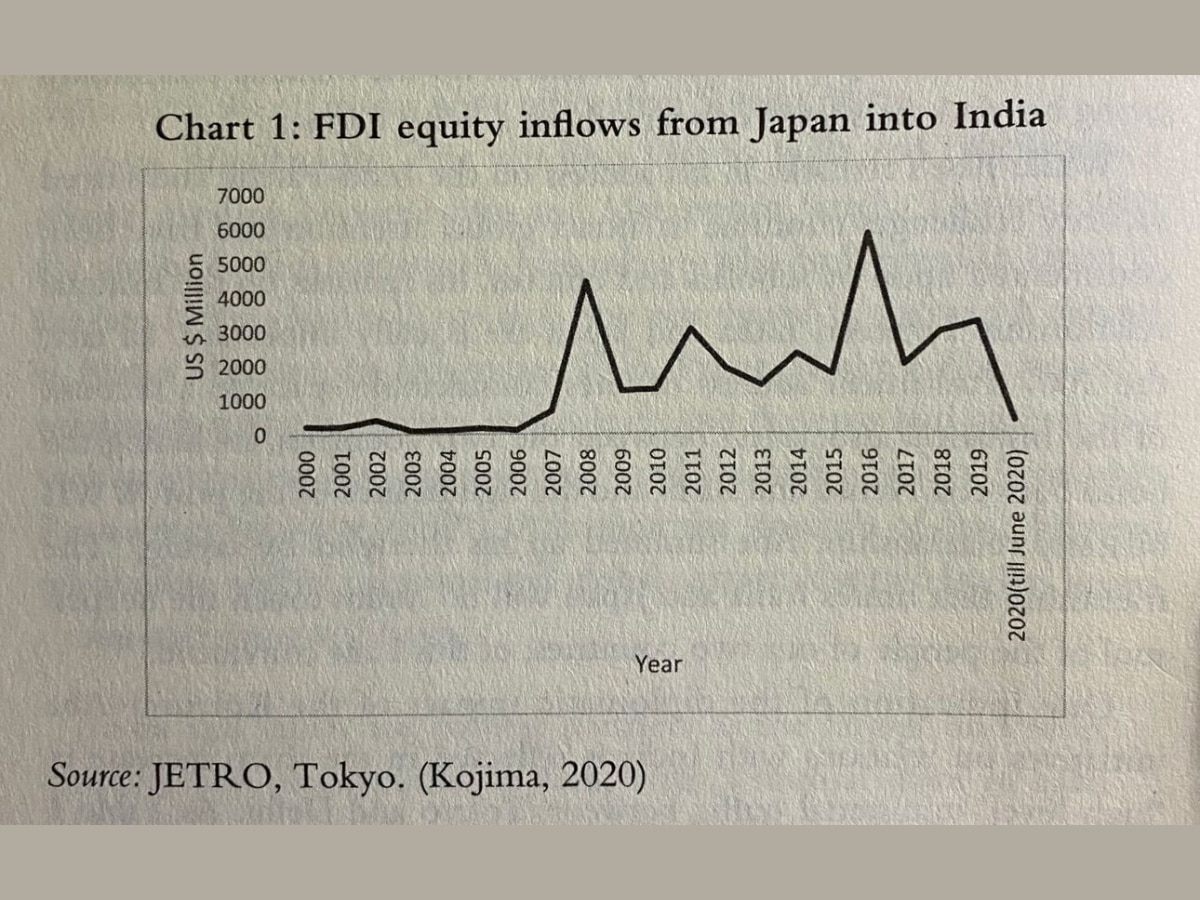
One indication of the diplomatic impact of the Koizumi–Abe initiatives on relations with India is reflected in the sharp increase in ‘high level’ ministerial traffic between Tokyo and Delhi. As Table 1 shows, compared to the very few ministerial visits from Japan to India in the 1980s, 1990s and even up to 2004, there was a steep jump in the period from 2004 to 2009, that has since been sustained. This period also witnessed a sharp rise in foreign direct investment from Japan into India. (Chart 1)
Building on the foundation for the twenty-first century bilateral relationship laid by Koizumi, Abe and Singh, Prime Minister Narendra Modi enhanced the partnership early in his tenure to ‘Special, Strategic and Global Partnership’. At each step the purpose was to bring the two nations closer. Recognizing the low level of people-to-people relationship between both countries—the low population of Indians in Japan made them the smallest group of foreigners from the Indo-Pacific region, with the Chinese far outnumbering them—Abe enhanced visas for Indians and devised policies to allow more Indians to secure entry into Japan.
Under Prime Minister Abe’s visionary leadership, the bilateral relationship acquired a diplomatic and economic momentum that has been sustained. While both countries tend to get distracted from each other from time to time and people-to-people contacts are still minimal, there has been a substantial increase in business-to-business relations. The relationship at the government level has acquired a clear strategic dimension with growing defence ties and a shared vision of what Abe termed as ‘Broader Asia’: an ‘arc of freedom and prosperity’ across the Indo-Pacific region.
In conclusion, it can be said that Shinzo Abe’s initiatives to enhance government-to-government, business-to-business and people-to-people relations between Japan and India make him the principal architect of the India–Japan relationship of the twenty-first century.
This excerpt is part of the book, 'The Importance Of Shinzo Abe: India, Japan And The Indo-Pacific', edited by Sanjaya Baru, and has been published with permission from HarperCollinsIN.
[Disclaimer: The opinions, beliefs, and views expressed by the various authors and forum participants on this website are personal and do not reflect the opinions, beliefs, and views of ABP Network Pvt. Ltd.]
Trending News

Top Headlines