Early Marriage, Poverty, Stereotypes: Issues Hampering Women's Literacy In India
Education plays a pivotal role in empowering women, breaking the cycle of poverty, and promoting gender equality.

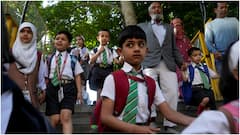
Over the span of 75 years since achieving independence, our nation has made remarkable strides in advancing female literacy rates. The transformation we have witnessed is truly impressive, as the literacy rate for women has increased from a mere 8.86 per cent in 1951 to a promising 65.46 per cent, according to the 2011 census data. As per the government's National Sample Survey report, the current female literacy rate has surged to 77 per cent. Although the gap between male and female literacy rates has progressively narrowed over the years (from 8.86 per cent vs. 27.16 per cent in 1951 to 70 per cent vs. 84.7 per cent in 2022), there remains a significant disparity that requires attention.
This disparity becomes even more pronounced when we consider the divide between rural and urban areas. In rural areas, the literacy rate for women stands at a concerning 65 per cent.
Furthermore, the female literacy rate exhibits substantial variation across states and regions, with Kerala leading the way with an impressive rural female literacy rate of 94 per cent, while states such as Rajasthan, Bihar, Andhra Pradesh, and Telangana lag behind with rates lying in around 50 percentile.
However, there are numerous challenges contribute to this persistent disparity, and a few of them are:
Early Marriage
Early marriage significantly impedes girls' education. These issues are complex, stemming from gender inequality and exacerbated by poverty, limited access to education, detrimental social norms and customs, and a sense of insecurity.
Consequently, a girl's likelihood of discontinuing her education increases during the period leading up to her marriage or shortly thereafter. Once she assumes the roles of a wife and mother, societal expectations often dictate that she prioritises the responsibilities of managing the household, caring for children, and tending to the extended family, thereby abruptly halting women's education.
Stereotypes
Cultural reluctance to allow women to leave their homes after puberty restricts their educational opportunities. This deeply ingrained mindset perpetuates gender inequality and hampers the overall development of women.
Poverty
The prevalence of poverty often prevents parents from affording educational expenses. Economic pressures, combined with gender norms that undervalue girls' education, can cause girls to drop out of school to take on work or care responsibilities more frequently than boys.
When families struggle to pay for school fees and other indirect costs, girls are more likely to be taken out of school than their brothers. This perpetuates a cycle of gender inequality and reinforces the societal perception that investing in girls' education is not a priority.
Limited Resources
Limited access to educational facilities hinders women's education. The absence of nearby schools or educational facilities forces girls to travel long distances, often through unsafe or challenging terrain, to reach the nearest school. This poses significant risks to their safety and security, discouraging many families from allowing their daughters to pursue education.
Women Teachers' Shortage
The shortage of women teachers creates a lack of role models and mentors. Girls perform better in school and are less likely to drop out when they have competent women teachers who encourage them to succeed and act as positive role models. The absence of female teachers also creates an insecure environment in schools. Parents do not allow their girls to attend schools with male-dominated environments.
Inadequate Infrastructure
Insufficient infrastructure facilities lead to low enrolment rates and high dropout rates. The lack of appropriate facilities within schools further hampers women's education. Insufficient classrooms, overcrowded conditions, inadequate sanitation facilities, and a lack of resources such as textbooks and learning materials all create barriers to effective learning.
These challenges disproportionately affect girls, who may face additional cultural and social barriers that make it even more difficult for them to access and thrive in educational settings.
Household responsibilities: Women often face additional responsibilities such as working on farms, family occupations, household chores, or caring for younger siblings. These responsibilities, while essential for the functioning of the household and the well-being of the family, often come at the expense of women's education. The demands of these additional responsibilities create time constraints and physical exhaustion, leaving women with limited energy and time to devote to their studies. The need to contribute to household income or support family livelihoods can compel women to prioritise work over education.
In conclusion, education plays a pivotal role in empowering women, breaking the cycle of poverty, and promoting gender equality. By recognising and addressing the additional responsibilities that women often bear, societies can create an enabling environment that allows women to pursue education and realise their full potential. This, in turn, contributes to their personal development, enhances their economic prospects, and fosters social progress for communities as a whole.
(The author is Kashvi Jindal, Founder, Invest The Change, and Co-Founder, The Youth Platform)
Disclaimer: Crypto products and NFTs are unregulated and can be highly risky. There may be no regulatory recourse for any loss from such transactions. Cryptocurrency is not a legal tender and is subject to market risks. Readers are advised to seek expert advice and read offer document(s) along with related important literature on the subject carefully before making any kind of investment whatsoever. Cryptocurrency market predictions are speculative and any investment made shall be at the sole cost and risk of the readers.
Education Loan Information:
Calculate Education Loan EMI

Top Headlines