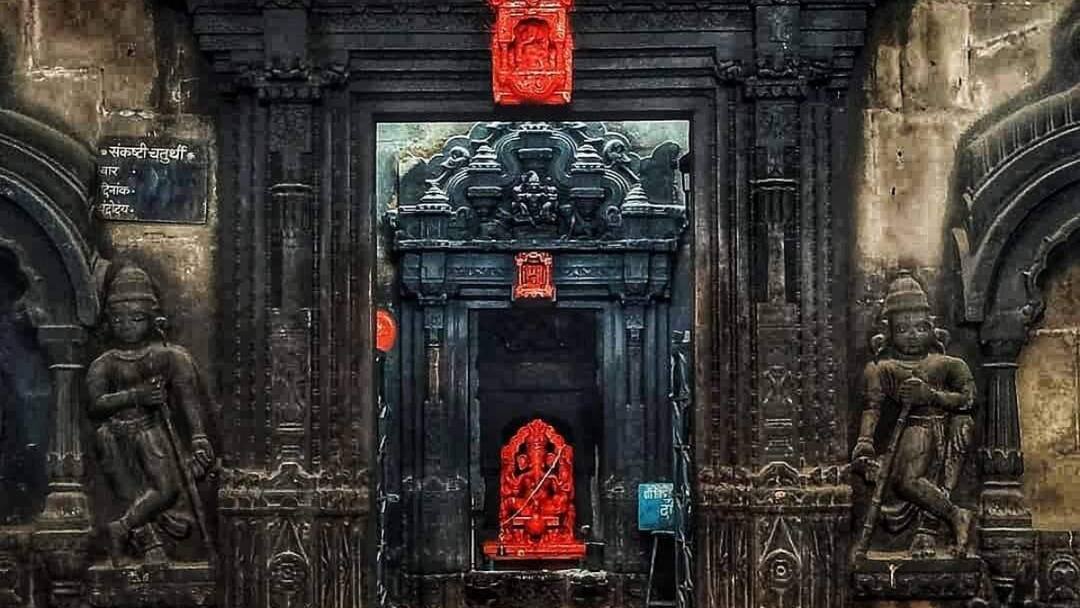
India is home to countless temples that are dedicated to Lord Ganesh. Each of these temples are linked with their own charm and story. But did you know that in Pune lies a temple so unique that it stuns devotees and travellers? The Trishund Mayureshwar Ganpati Mandir, tucked away in Somwar Peth, is the only place in the country where Lord Ganesh is depicted with three trunks, six arms, and riding a peacock instead of his usual Mushak.
As Ganesh Chaturthi 2025 approaches, this rare temple is once again in the spotlight, drawing devotees, historians, and travellers alike.
ALSO READ: Ganesh Chaturthi 2025: 5 Famous Temples Of Lord Ganesh That Hold Timeless Devotion
The Temple That Breaks Tradition
The Trishund Mayureshwar Ganpati Mandir was built between 1754 and 1770 under the guidance of Bhimjigiri Gosavi. This temple is a masterpiece that ombines architectural influences from Rajasthan, Malwa, and South India. Unlike most Ganpati idols carved from clay, the deity here is sculpted in pure black basalt stone.
The temple itself is made of grey basalt, adorned with breathtaking carvings, from peacocks and parrots to elephants in combat, chained rhinos, and mythological figures. At the entrance, two elaborately carved dwarpalakas stand guard, setting the tone for the divine marvel inside.
Why Three Trunks?
The question that intrigues everyone is that why does Lord Ganesh here have three trunks. Devotees nterpret this unique form in different ways. Some believe the three trunks symbolise the holy trinity of Brahma, Vishnu, and Mahesh, representing creation, preservation, and destruction. Others see them as a reflection of time itself, past, present, and future that suggests Ganesh’s mastery over the flow of existence. For many, this rare depiction is a reminder of Ganesh’s immense power to guide devotees through every aspect of life, whether material, spiritual, or intellectual.
A Blend Of Cultures And Inscriptions
Adding to its uniqueness, the temple walls bear inscriptions in Sanskrit, Devanagari, and Persian. this highlights Pune’s rich cultural crosscurrents during the Peshwa era. The sabhamandap leads to the sanctum where the extraordinary idol is enshrined, and beneath it lies the samadhi of Bhimjigiri Gosavi, the temple’s founder.
Every year, especially during Ganesh Chaturthi, the temple attracts thousands of devotees. Offerings of durva grass and modaks are made to the deity, with many believing that prayers here bring wisdom, prosperity, and success in new beginnings.